

Choosing between Samsung and Sonos soundbars often comes down to a battle between cinematic power and ecosystem flexibility. These two brands represent distinct philosophies: Samsung’s all-in-one approach delivers high-performance hardware and immersive Dolby Atmos packages at a competitive price, while Sonos leans on a modular, software-driven ecosystem renowned for multi-room connectivity and sleek design.
Whether you want to transform your living room with a flagship Samsung Q-Series or prefer the refined, expandable audio of a Sonos Arc or Beam, the decision ultimately comes down to trade-offs in soundstage, connectivity, and long-term value. For anyone making a serious home audio investment, understanding these differences is what makes the choice matter.
This guide offers a data-focused comparison to help you navigate modern soundbar technology. We break down the metrics that matter most — from frequency response and dialogue intelligibility to eARC compatibility and smart home integration. By analyzing product families, real-world audio performance, and total cost of ownership, we aim to match the right sound system to your specific room acoustics and content habits. Whether you’re a dedicated gamer, a movie enthusiast, or a music lover, this head-to-head comparison will give you the clarity needed to choose the system that best elevates your home entertainment experience.
Head-to-head overview: what this comparison will do for you
This comparison is structured around six practical areas: product families and ecosystems, measured audio performance, design and everyday use, connectivity and smart features, total cost and upgrade paths, and guidance for common real-world use cases. Each section provides clear metrics, trade-offs, and decision checkpoints to help you quickly identify which option aligns with your priorities.
Use this guide to match a soundbar to your room size, content habits, and budget. You’ll find concise recommendations and the key numbers to compare — read the sections in order or skip straight to what matters most.
Product families and ecosystem strategy
How each brand structures its range
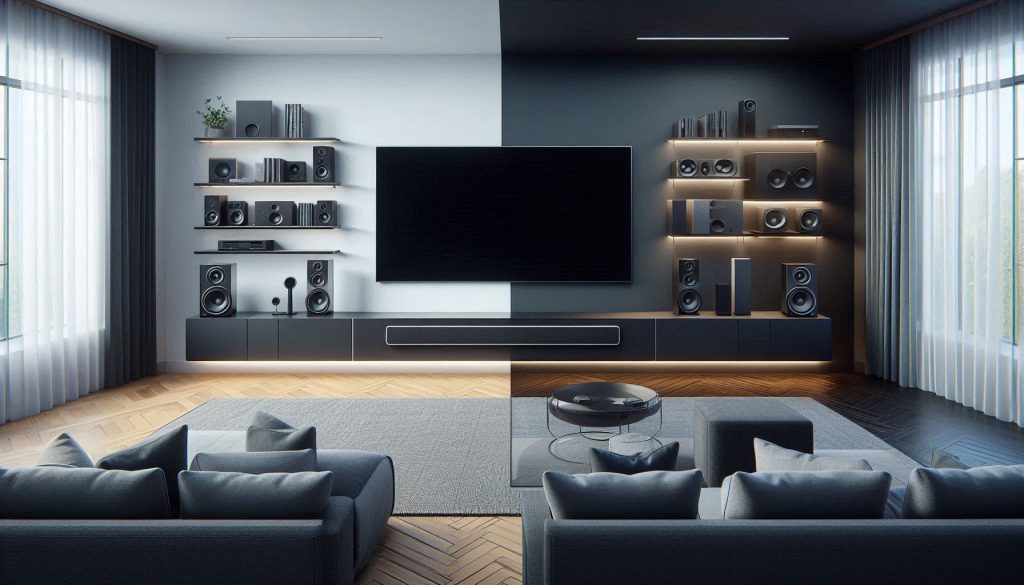
Samsung’s range runs from compact value models to flagship multi-piece systems. Entry models like the Q60 series suit straightforward TV upgrades, midrange bars such as the Q70 and Q800 add Atmos processing, and premium systems like the Q900 and Q990 typically ship with a wireless subwoofer and rear satellites. Samsung leans heavily into TV-first features: deep HDMI/eARC integration, Q-Symphony (which lets the TV and soundbar share audio channels), and bundled surround kits — a strong case for the hardware-focused buyer.
Sonos keeps a tighter lineup: the Ray at the entry level, the Beam Gen 2 as a versatile mid-range option, and the Arc as the premium Atmos bar. Its real strength lies in modular multi-room expansion — you can add a Sonos Sub and pair Era or One speakers for surround sound and whole-home audio through the Sonos S2 ecosystem.
Modular vs all‑in‑one philosophies
Real‑world compatibility to verify
When you’re shopping, check these concrete items in spec sheets and compatibility notes:
Quick examples
If you want a single box that integrates tightly with a Samsung QLED and uses the TV remote, Samsung’s Q-series is the logical choice in the Samsung vs Sonos soundbars decision. If you plan to build multiroom audio across rooms with identical control and later add surrounds, Sonos Arc + Sub + One SL is a proven, low-friction path.
Next up: we’ll translate these ecosystem choices into measurable listening differences — what the numbers and measurements tell you about real‑world audio performance.
Audio performance: measured metrics and listening priorities
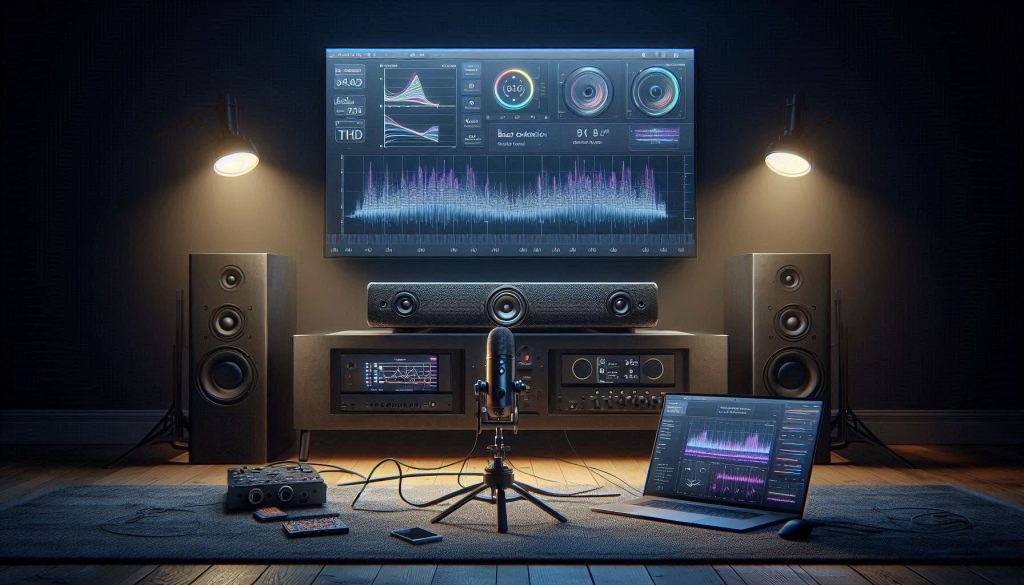
You’ll get a data-driven breakdown of the audio attributes that matter most in the Samsung vs Sonos soundbars category, and how to use measurements alongside listening to pick the right bar for your needs.
Which measurements matter (and what good looks like)
How to interpret numbers with real listening
Numbers tell you headroom and neutrality; listening tells you impact. When you test:
Samsung vs Sonos: tuning philosophies and calibration
Prioritization checklist (quick)
Next, we’ll look at how design and build choices—driver layout, cabinet size, and control ergonomics—affect those measurements and your day‑to‑day experience.
Design, build quality, and everyday user experience

This Samsung vs Sonos soundbars section covers the physical and practical aspects that shape your daily interaction with a soundbar. You’ll get concrete tips and examples so you can anticipate setup time, placement trade-offs, and the real-world conveniences (or annoyances) you’ll live with when choosing between these two Samsung vs Sonos soundbars options.
Form factor and materials
Low‑profile bars (Sonos Beam Gen 2, Samsung HW-S60B) tuck under most TVs and minimize visual clutter; full‑depth models (Sonos Arc, Samsung HW-Q990C) are taller, house larger drivers, and typically deliver fuller bass and wider driver arrays. Sonos favors fabric grilles and matte finishes that age well in living rooms; Samsung often uses metal grills and gloss/soft‑touch plastics for a more “tech” look. Tip: if your TV sits low on a cabinet, measure clearance before buying—full‑depth bars can block IR sensors or on‑screen overlays.
Mounting vs tabletop placement
Wall-mounting gives a cleaner look and can improve imaging when the bar sits close to ear height — use the included brackets and allow 2–3 cm for ventilation. Tabletop placement simplifies cable management and makes subwoofer positioning more flexible. If you plan to add rear or height speakers, factor in power routing, or consider Sonos’s fully wireless satellites versus some Samsung kits that use a wireless sub but wired surrounds depending on the model. Whichever path you take, placement planning is one of the most underrated factors in getting the best from your system.
Controls, displays, and app management
Sonos emphasizes app control and touch buttons — the Arc features capacitive controls and a status LED, and setup walks you through Trueplay tuning. Samsung offers more physical remote buttons and integrates with your TV remote via HDMI-CEC and one-touch pairing through SmartThings. Either way, keep the vendor app installed for firmware updates, as both brands push improvements that meaningfully affect daily use. If tactile remote control matters to you, Samsung has the edge; if app-driven simplicity is your preference, Sonos wins that round.
Latency, lip‑sync, and convenience features
Both brands support HDMI‑ARC/eARC for low latency; lip‑sync issues are usually TV processing: enable eARC, set TV/game mode, or use the soundbar’s lip‑sync adjustment. Samsung’s one‑touch TV pairing can be faster on Samsung TVs; Sonos’ multiroom features make ongoing management and grouping simpler across speakers.
Setup complexity by layout
Quick how-to for your Samsung vs Sonos soundbars setup: use HDMI-eARC, run the app calibration, place the sub on the floor near a wall corner for bass reinforcement, and test with a dialogue clip to check lip-sync.
Connectivity, smart features, and platform integration
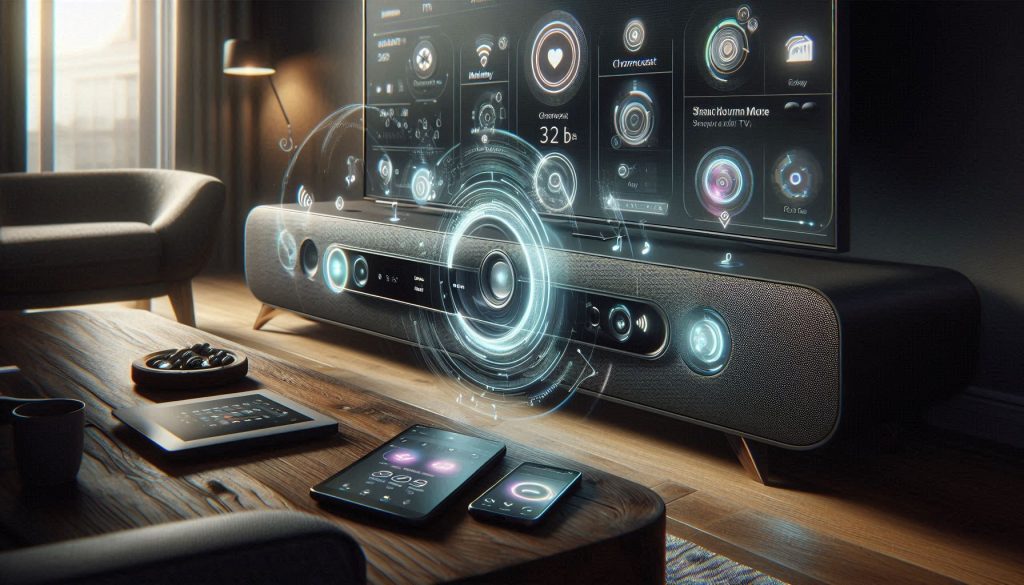
You’ll want a soundbar that plays nicely with your TV, phone, and smart home. This section lays out the practical differences between Sonos and Samsung so you can test compatibility before you buy.
Physical and network connections
HDMI‑eARC is the baseline for Atmos and low‑latency TV audio. Examples: Sonos Arc and Beam Gen 2, and Samsung HW‑Q990C all support eARC; lower‑end Samsung models (HW‑S60B) may offer ARC or optical only. Use eARC when possible; fallback to optical loses high‑bit‑rate formats.
Wireless streaming and multiroom
Sonos builds a Wi-Fi mesh and prioritizes multi-room audio over the network; AirPlay 2 support on the Arc and Beam makes iPhone streaming seamless. Samsung leans on SmartThings, with Chromecast built-in and selective AirPlay support on newer models — check the spec sheet before buying.
Voice assistants and smart services
Sonos supports Amazon Alexa and Google Assistant natively on current flagship bars, while Siri works via AirPlay. Samsung soundbars typically access voice assistants through TV integration, with Alexa available on select models. Streaming service support — Spotify Connect, Apple Music, Tidal — varies by model, so test your primary service in the vendor app before committing.
Third‑party and installer control
For professional integration, Samsung models more often include IR learning and IP/RS-232 options compatible with third-party control systems. Sonos prefers network and CEC control — installers typically use network-based APIs or the TV remote via HDMI-CEC rather than RS-232.
Real‑world testing checklist
Before you finalize a purchase, run these quick checks:
Firmware updates can add or remove features—expect parity to shift over time. Once you’ve verified connections and services that matter, you’ll be set to weigh costs and upgrade paths in the next section.
Price, total cost of ownership, and upgrade paths
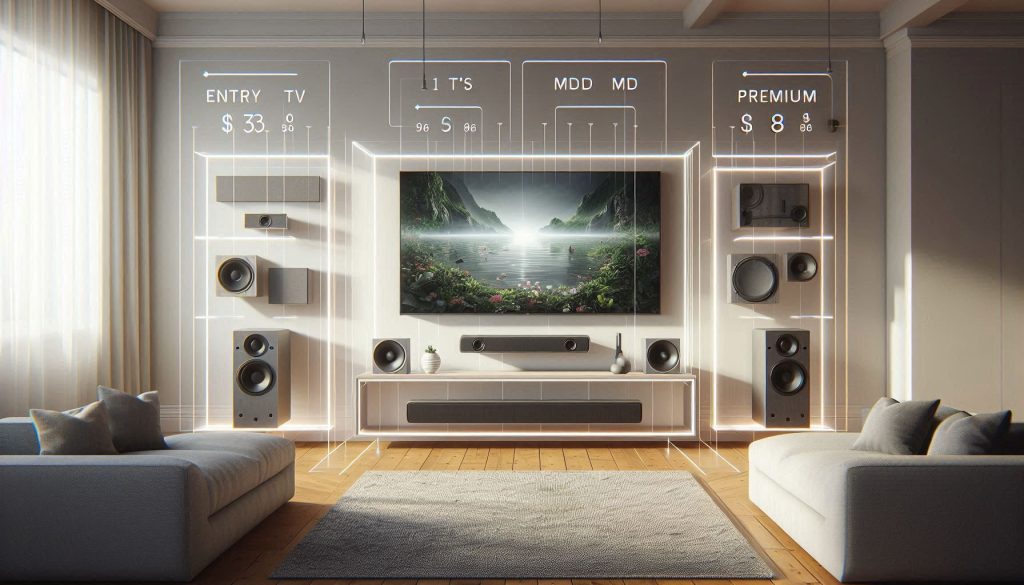
This section gives you a practical view of cost versus long‑term value so you can model whether a bigger up‑front spend saves you money over time.
Price bands and realistic add‑ons
Base soundbars typically sit in three bands: entry ($200–$500), mid ($500–$900), and premium ($900+). Examples: Sonos Beam (Gen 2) is a mid‑band entry into Sonos, Sonos Arc occupies the premium bracket, while Samsung offers everything from inexpensive single‑unit bars to all‑in‑one flagships like the HW‑Q990C that include subwoofers and rear satellites. Crucially, many Sonos systems start with a single bar but expect additional purchases (Sub, One SL rears) to get full surround or extra bass—raising total cost quickly.
Model a true outlay
When planning, add these common line items to the base price:
If you want Dolby Atmos with deep bass and discrete rears, a Samsung premium package may be closer to a single purchase, while a Sonos multiroom surround will often cost more but gives flexible placement and resale options.
Warranty, software support, and resale
Most manufacturers ship one to two year warranties, with extended plans available. Sonos has a strong track record of multi-year software support and backward compatibility, which helps preserve long-term value. Samsung issues regular firmware updates, though feature lifecycles are more closely tied to its TV ecosystem. On resale, Sonos gear tends to hold value better due to ongoing software support and ecosystem demand — factor that in when calculating your net cost of ownership.
Upgrade paths and practical tips
Sonos is highly modular: you can add Subs and rear speakers later and mix models (with some limits). Samsung sometimes ties advanced features to specific models or proprietary rear kits—upgrading may require replacing the bar. Buy with future expansion in mind: prefer bars with eARC, wireless rear compatibility, and explicit vendor support for adding speakers later.
Which one to choose for common real‑world use cases
This section turns the comparison into actionable choices. For each user profile you’ll get a clear recommendation, the tradeoffs you accept, and the quick compatibility checks to run before buying.
Movie enthusiast — immersive surround and Atmos
Choose: Samsung flagship packages (HW‑Q990C or similar) or Sonos Arc + Sub + One SL rears.Tradeoffs: Samsung often gives stronger discrete Atmos object recreation and deep single‑purchase bass; Sonos delivers cleaner room‑filling overhead imaging with a modular upgrade path.Compatibility checks:
Music lover — stereo accuracy and streaming fidelity
Choose: Sonos Arc or Beam (Gen 2) paired with Sonos Sub or Era speakers.Tradeoffs: Sonos typically wins for stereo imaging, consistent streaming integrations, and multi‑format support; Samsung can be great but prioritizes home‑theater tuning.Compatibility checks:
Apartment dweller — compact and neighbor‑friendly
Choose: Sonos Beam (Gen 2) or Sonos Ray; Samsung slim midrange bars if you need TV‑centric features.Tradeoffs: Smaller Sonos bars give tight, controlled bass and smart volume leveling; Samsung may offer more virtual surround for less space but with stronger low end.Compatibility checks:
Gamer — low latency and multiple inputs
Choose: Samsung mid/high models with dedicated game modes or Sonos if you prioritize voice chat and streaming simplicity.Tradeoffs: Samsung often provides lower input lag, multi‑HDMI inputs, and Q‑SYNC features; Sonos emphasizes wireless simplicity but may require adapters for multi‑device routing.Compatibility checks:
Multiroom user — whole‑home simplicity
Choose: Sonos ecosystem (Arc/Beam + Era + One SL).Tradeoffs: Sonos gives the simplest, most reliable multiroom syncing; Samsung works with select TVs and SmartThings but is less flexible for mixed‑brand whole‑home setups.Compatibility checks:
With these use‑case matchups in mind, move on to the Conclusion for a compact decision checklist and next steps.
Decision checklist and next steps
Use this checklist to finalize your choice: define your top audio priorities (dialogue, music, movie immersion), verify connectivity and ecosystem compatibility with your phone, TV, and smart home, and budget for any required extras like a subwoofer, rear speakers, and cables.
Where possible, audition your shortlisted models in a realistic listening environment and weigh measured performance against your room constraints. Choose the option that best matches your content habits and acoustics — and let your specific needs, not marketing, drive the final decision.