

In the modern open-concept home, the kitchen is no longer a walled-off workstation — it is the hub of social interaction, remote work, and relaxation. But this architectural shift means a noisy appliance can quickly turn a peaceful evening into a frustrating wall of mechanical hums and sloshing water. This is why quiet smart dishwashers have become a priority for modern homeowners — it’s not just about luxury, it’s about preserving the acoustic integrity of your living space.
The quietest smart dishwashers allow for uninterrupted conversation and focused concentration, while also serving as a hallmark of superior engineering, often indicating better insulation and more durable, vibration-resistant components. Ultimately, investing in one of these smart dishwasher means choosing both peace of mind and a machine built to last.
Choosing the right model requires looking past the flashy smart apps and into the science of sound. From understanding dBA ratings and how manufacturers measure decibels, to identifying the mechanical features that actually dampen noise — such as brushless inverter motors and multi-layer insulation — there is a lot to consider when shopping for a quiet smart dishwasher.
This guide walks you through the essential technical specs, helps you decode marketing claims with third-party data, and gives you a practical framework to ensure your new dishwasher delivers high-tech performance without the noise.
Why quietness matters when you choose a smart dishwasher
You want a dishwasher that performs reliably without turning your kitchen into a noisy zone. Noise affects concentration, conversation, and sleep in open-plan homes — and it can signal mechanical strain, since louder cycles often indicate poorer insulation, cheaper mounts, or aggressive wash patterns. Prioritizing sound level helps you avoid interruptions and long-term service issues.
This article covers how noise is measured, which smart features influence sound, and what engineering reduces it. You’ll learn to read lab decibel ratings, compare third-party tests against user reports, and apply practical installation and maintenance tips. A buying framework and checklist at the end will help you match quiet performance to your specific living situation.
Smart Dishwashers equipped with sensors adjust their performance for optimal cleaning.
High-quality Smart Dishwashers provide quieter operation compared to traditional models.
How dishwasher noise is measured and what the numbers mean
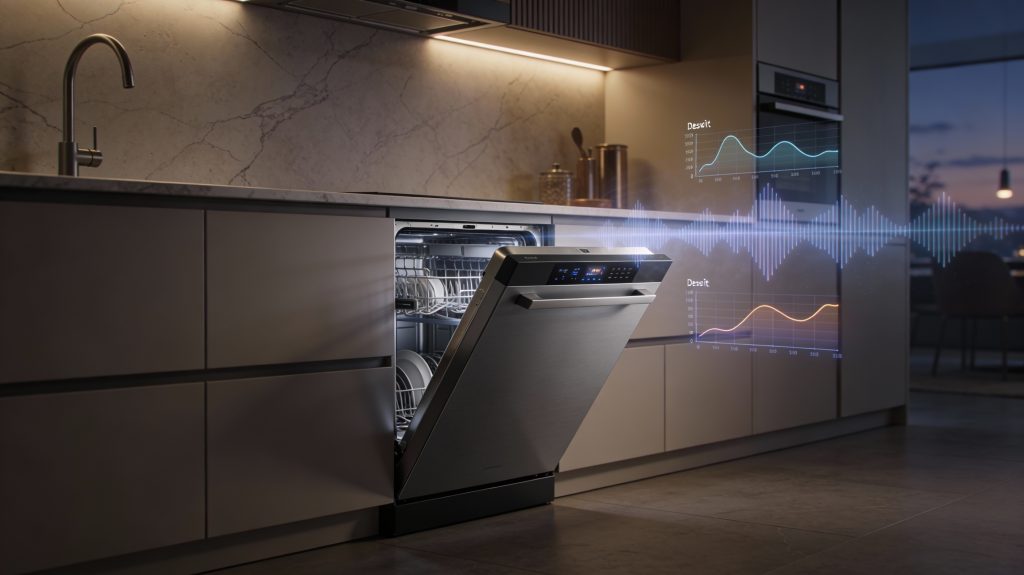
Decibels, dB vs dBA: the basics
Noise is reported in decibels, a logarithmic scale. Most appliance manufacturers use dBA — an A-weighted value that approximates how humans perceive sound, emphasizing mid-range frequencies while down-weighting very low ones. A small numeric change is meaningful: an increase of 3 dBA is noticeably louder, while 10 dBA sounds roughly twice as loud to the human ear. This is why even a few decibels can separate a truly quiet dishwasher from a disruptive one.
Common test conditions that change the number
Manufacturers’ quiet‑ratings are only comparable if test conditions match. Watch for:
What the numbers mean in real rooms
Use these practical ranges as a rule of thumb for modern dishwashers:
For example, high-end models from Bosch and Miele often advertise ratings in the low 40s or even high 30s dBA, while budget lines typically sit in the high 40s to low 50s.
Single numbers vs. real‑world perceived loudness
A single dBA rating hides frequency content and intermittent noises. A 44 dBA dishwasher with a clear tonal pump whine can feel louder than a smooth 47 dBA model. Watch for:
What to demand from specs and reviews
Next up: you’ll see how smart features like sensors, pumps, and app‑controlled cycles can change those noise characteristics — and which features to favor for quiet performance.
Which smart features influence noise and why

Smart capabilities change not just what a dishwasher does, but how it runs — and that directly affects sound. Below are the smart features you’ll commonly encounter, the noise they typically add or remove, and quick actions you can take to keep things quiet.
Motors and inverter drives (usually quieter)
Brushless DC (BLDC) motors paired with inverter/variable‑frequency drives let the machine run at precisely the speed needed for the job. That reduces tonal whine and harsh on/off transitions.
Pumps, pressure, and steam functions (can be louder)
High‑pressure circulation pumps and steam cycles improve cleaning and drying but increase flow turbulence, motor load, and inside‑cabinet pressure — all audible as whine, hiss, or higher broadband noise.
Soil sensors and auto‑extending cycles (neutral to mixed)
Soil sensors make the machine run only as long as needed, reducing overall noise exposure by avoiding unnecessary heavy cycles — though they can also extend runtime with extra rinses or boosts when loads are dirtier than expected.
Rapid/express cycles (usually louder)
Short cycles crank pump and heater output to cut time — and noise goes up accordingly.
When shopping for Smart Dishwashers, consider both noise levels and features.
Connectivity, chimes, and relays (annoying clicks or tones)
Smart apps, voice prompts, and mechanical relays produce distinct non‑continuous noises: chimes, clicky solenoid/relay sounds when valves actuate, and Bluetooth/BLE pairing beeps.
Quick checklist: what to prioritize
Next, we’ll look at the physical design and engineering choices (insulation, mounts, sound baffles) that make these smart systems feel even quieter in your kitchen.
Design and engineering features that reduce dishwasher noise
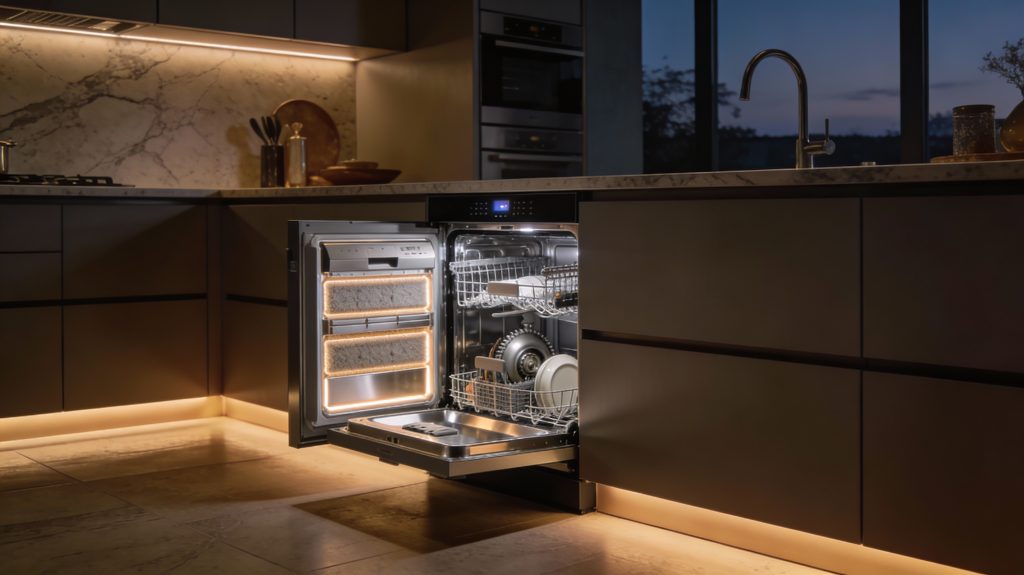
Beyond motor and cycle choices, the cabinet’s construction and component isolation determine how loud a dishwasher actually sounds in your kitchen. Here is what to look for, why each element matters for both airborne and structure-borne sound, and how the right combination produces the quietest results.
Multi‑layer insulation and insulated door panels
Dense insulation layers (foam, quilted mats, or mass layers) absorb airborne sound from the pump and spray jets before it escapes the cabinet. An insulated, heavy inner door panel adds mass that lowers resonance — that’s why models that advertise “triple insulation” or a “sound package” often deliver noticeable silence. Premium lines like Bosch 800 Series and Miele G‑7000 pair thick door insulation with interior sound mats.
Anti‑vibration mounts and dampers
Structure‑borne noise travels through the tub and into your cabinetry. Rubber mounts, spring dampers, and cinched motor mounts decouple vibrating parts from the frame, cutting the rattles and low‑frequency thumps you feel more than hear. If you live in an open‑plan layout, these mounts matter most — they keep the whole floor from humming.
Sound‑absorbing inner liners
A stainless‑steel tub lined with a sound‑absorbing layer reduces tonal ringing and high‑frequency spray noise. Plastic tubs without added damping can act like a drum; look for language like “sound‑absorbing interior” or photos showing interior padding.
Low‑vibration pump designs and sealed spray‑arm configurations
Pumps designed for low turbulence (BLDC pumps, balanced impellers) produce less airborne hiss. Sealed or streamlined spray‑arm assemblies reduce cavitation and sudden pressure changes that create high‑pitched whistles. Together these reduce both continuous broadband noise and intermittent squeals.
Investing in Smart Dishwashers is a step towards modernizing your kitchen.
How to evaluate build quality from specs and photos
Smart Dishwashers help keep your kitchen organized by handling tasks efficiently.
If you combine dense insulation, damped mounts, a sound‑treated tub, and a low‑vibration pump in one model, you’ll eliminate both airborne hissing and structure‑borne rumble — the recipe for a dishwasher you can run while talking in the next room.
How to evaluate noise claims: lab numbers, third-party tests, and user reports
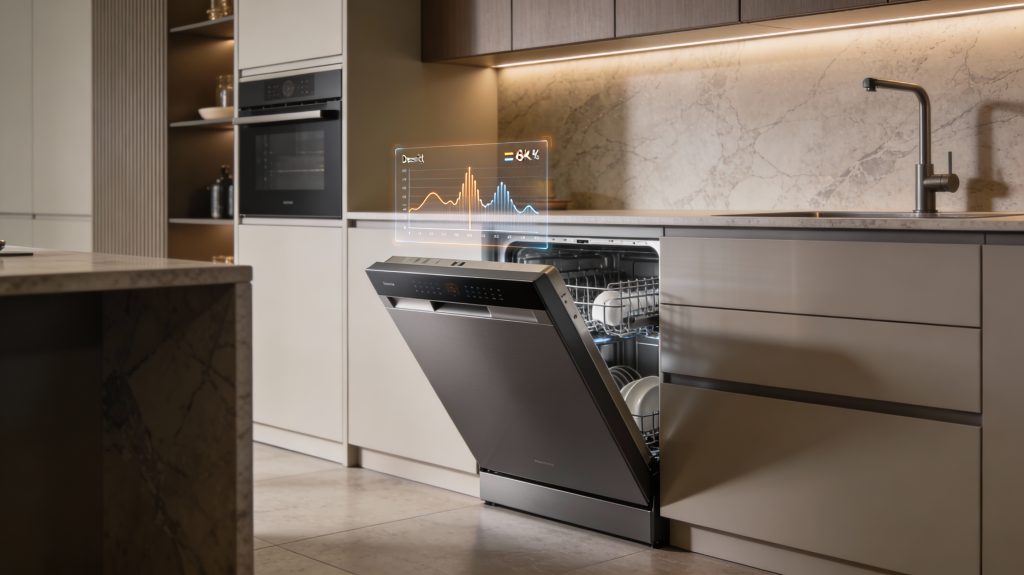
You’ve seen a dB number on the spec sheet — now verify it. Treat manufacturers’ noise ratings as a starting point and follow a short, practical workflow to separate marketing from real performance.
Verify test methodology first
Look for how the number was produced:
Seek independent lab testing and accredited reviews
Third-party testing reduces bias. Prioritize results from:
Read user reports for patterns, not single complaints
User comments reveal real-world problems machinesheets miss. When reading reviews, scan for consistent issues:
Smart Dishwashers operate more quietly, making them ideal for open-concept spaces.
Understand cycles and load conditions
Different cycles sound different:
In-store listening and home measurements
Tips for meaningful tests:
By combining method-checked lab numbers, trusted third-party reviews, and pattern-focused user feedback — plus a short in-store or at-home check — you’ll get a reliable picture of real-world noise performance as you keep narrowing candidates.
Installation, placement, and maintenance tips that keep performance quiet
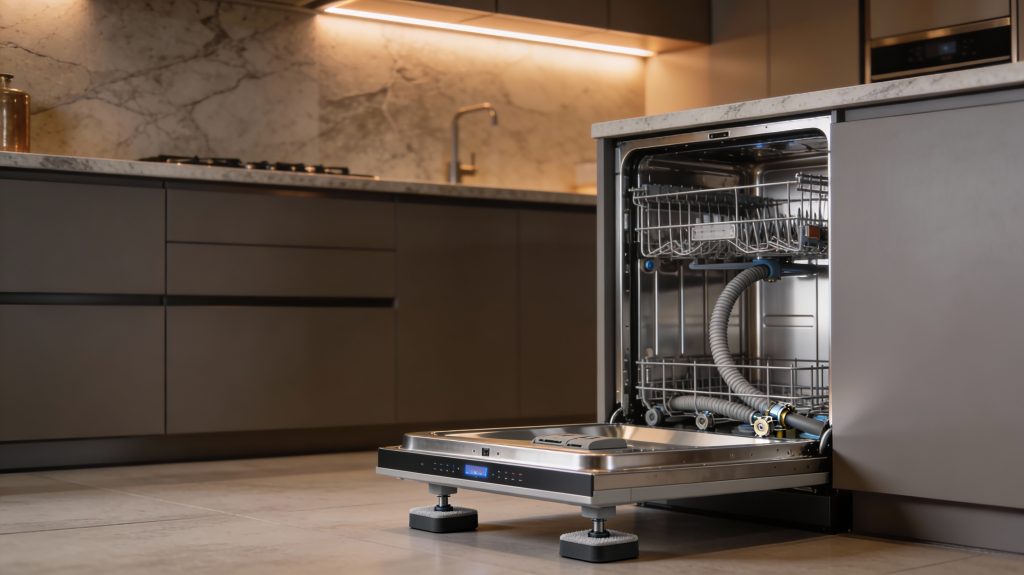
Even a whisper-quiet dishwasher will complain if it’s loose, misaligned, or neglected. Use these practical fixes and quick checks to preserve low noise in real homes.
Leveling, feet, and mounting
Get the machine perfectly stable. Adjust the leveling feet until the dishwasher sits square and doesn’t rock when you press on any corner. Tighten the locknuts so feet don’t drift.
A homeowner I know stopped a persistent mid-cycle thump by simply tightening the feet and adding rubber pads under them — the thump disappeared.
Isolate and insulate connection points
Loose panels, hoses, and brackets create rattles and low-frequency hums. Secure and cushion:
Clearances, routing, and water pressure
Follow manufacturer clearance specs for side, front, and top — tight cabinet gaps increase transmitted vibration. Route hoses so they don’t contact panels or floor; use clamps to hold them away.
Check your water pressure (many manuals specify acceptable PSI). If pressure is unusually high and you hear valve banging at fill, install a pressure‑reducing valve or a quieter inlet hose assembly.
Routine maintenance that prevents noise escalation
Small maintenance keeps noise low and performance high. On a monthly or quarterly cadence:
Simple retrofit options
If remodeling isn’t on the table, try these low‑cost upgrades:
These steps often cut perceived noise substantially without professional work. Next, you’ll learn how to convert this practical groundwork into a buying checklist tailored to your home and habits.
A practical buying framework and quiet-dishwasher checklist for your situation
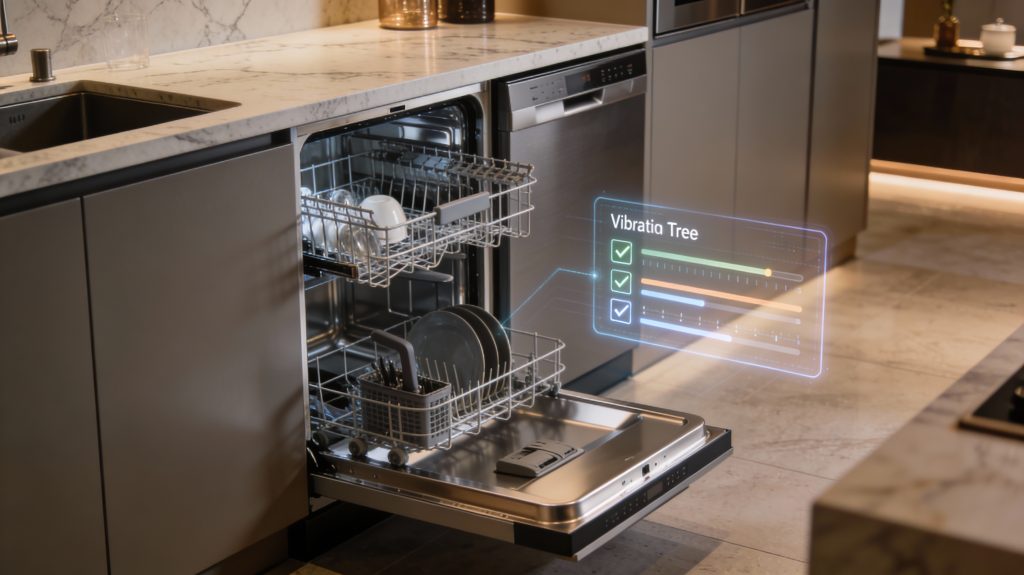
This section turns the earlier detail into a shopping tool. Use it to rank what matters, set realistic dBA targets for your home, and run quick tests so you leave the store confident.
Smart Dishwashers have revolutionized the dishwashing experience for many households.
Rank priorities and set a dBA target
Decide what you value most: absolute quiet, fast cycles, or smart integration. Suggested quietness thresholds (practical, not idealized):
If you entertain frequently or need very short cycles, increase tolerance by ~2–3 dBA and plan for sound mitigation (pads, foam).
Prioritized checklist of specs and features to compare
Use this checklist when comparing models or lineups.
Examples: Bosch’s higher‑end lines and Miele’s flagship models are repeatedly cited for low noise and robust insulation; many LG/Samsung inverter-driven units are quiet on normal cycles.
Questions to ask retailers or installers
Ask these before you buy or accept installation:
With Smart Dishwashers, you can enjoy convenience and high-tech functionality.
Quick in‑store test script (2–3 minutes)
Request a demo or play a model running:
When to accept trade‑offs
If you need very fast or sanitize cycles, accept +2–3 dBA for those modes but ensure quiet normal/eco cycles meet your threshold. For tight budgets, choose a mid‑range quiet model and invest in anti‑vibration pads and insulation to reach your comfort level.
Armed with this framework and checklist, you can narrow options logically and confidently move toward the final decision.
Choosing a quiet smart dishwasher that fits your home
You now have the technical background, evaluation methods, and a practical checklist to choose from today’s smart dishwashers. Balance measured decibel ratings, smart features, and engineering trade-offs — prioritizing insulation, motor type, and cycle options that meet your noise tolerance. Verify claims with third-party tests and real-user feedback, and factor in installation, cabinetry, and maintenance to preserve quiet performance over time.
Use the buying framework to weigh price, connectivity, and noise levels against your household habits, and test shortlisted models in person when possible. With data-driven choices and correct installation, you’ll get a dishwasher that combines silent operation with the features you actually use.