

The best luxury appliance is the one noticed on a busy Tuesday, not only during a showroom demo.
A steam oven that revives leftovers without turning edges rubbery, a dishwasher that removes baked-on pans overnight, or an induction hob that holds a low simmer without scorching: these are upgrades with repeatable value. Their benefit appears in ordinary meals, cleanup, and the occasional crowded dinner—not in a feature list.
Before paying for a premium model, track the household’s friction points for a week. Frequent batch cooking can justify a larger, flexible oven; daily entertaining may justify quiet, fast dishwashing. A built-in coffee system used twice a month rarely earns its cabinet space. The useful test is simple: would its absence be felt several times each week?
- Prioritize performance that changes a recurring task: faster preheat, quieter cleanup, steadier temperature, or easier loading.
- Treat app controls, novelty modes, and elaborate displays as extras unless they solve a documented household habit.
-
Count weekly touchpoints
A dishwasher used after every meal or a quiet hood used for every sauté affects the kitchen far more than an occasional party appliance.
PrioritizeUpgrades that remove a task repeated most days.DeprioritizeImpressive functions used only a few times a month. -
Measure the bottleneck
Identify where cooking stalls: loading dishes, clearing steam, wiping greasy surfaces, or waiting on a weak burner. Spend where the delay and annoyance recur.
PrioritizeA machine that shortens cleanup or clears air at the source.DeprioritizeExtra modes that do not change the slowest part of the routine. -
Value invisible performance
A well-racked dishwasher and properly ducted range hood can save more effort than a niche steam oven. Better ventilation also limits grease film and lingering odors.
PrioritizeCapacity, easy filters, low noise, and effective capture.DeprioritizeBrand status, touchscreen complexity, or headline features alone.
For each candidate, estimate uses per week × minutes of friction removed. Then factor in space, noise, cleaning burden, and installation cost.
A hood that makes nightly cooking less smoky and a dishwasher that handles cookware reliably usually beat a specialty appliance that produces one excellent result on weekends. Luxury earns its place when the improvement is felt repeatedly, not merely admired in a showroom.
Plan the infrastructure before the cabinetry
A premium appliance is a construction decision, not a finishing touch. Before cabinet drawings are released, confirm the manufacturer’s installation specification—not just the advertised width. A nominal 36-inch range may require side clearances, a deeper counter cutout, and a larger path through the house; verify the actual opening and clearance requirements for a 36-inch range first.
Check what the room can support
Create an appliance schedule with model numbers, cut-sheet dimensions, and utility demands. The installer should verify:
- Electricity: voltage, amperage, dedicated circuits, and panel capacity; induction and speed ovens can require substantial 240-volt service.
- Gas and ventilation: gas-line size, shutoff location, duct route, roof or wall termination, and whether local rules require makeup air.
- Structure and plumbing: floor support for heavy ranges, water and drain connections, and a level, reinforced opening for tall oven stacks.
Fuel choice belongs in this review, too. The practical differences in dual-fuel and gas range installation extend beyond cooking performance: dual fuel needs both a gas connection and suitable electrical capacity.
Finally, protect service access. Specify removable panels, reachable shutoffs, and required pull-out clearance behind built-ins. Confirm local code requirements with the permitting authority and installer before ordering. Altering ducts, circuits, or cabinet boxes after stone counters are installed is where a seemingly refined upgrade becomes an expensive compromise.



Choose heat that matches the menu
A range or cooktop earns a major share of the appliance budget when it will be used hard: several burners running at once, frequent sautéing, long braises, or baking that demands steady oven heat. Width alone is not capacity. A 36-inch model with usable burner spacing and an oven that fits the household’s largest sheet pan is more valuable than a crowded 48-inch statement piece with specialty burners that rarely light.
Induction is the strongest daily-performance choice for cooks who value speed, low simmer stability, and easy cleanup. Its surface stays comparatively cool, while power changes are immediate and precise. Confirm that existing cookware is magnetic; cast iron can be used safely on induction, but lift rather than slide it to avoid marking the glass.
Gas still suits cooks who prefer visible flame feedback, use rounded woks, or regularly char peppers and tortillas. It requires effective ventilation and rewards careful burner testing: the smallest burner should hold a quiet, stable simmer, while the largest should heat a wide skillet evenly. Sealed burners simplify cleanup, but do not mistake high BTU claims for better low-end control.
Dual-fuel pairs a gas top with an electric oven, making sense where open-flame cooking and consistent baking are both priorities. It adds installation complexity and cost, so a high-quality all-induction range is often the more practical answer for baking-focused households.
Before choosing a premium badge, cook through the actual workload in a showroom: test knob clarity, pan clearance, griddle usefulness, oven rack travel, and cleaning access. For brand-specific differences in burner layout, service support, and oven features, compare the tradeoffs between Wolf and Thermador ranges rather than buying on styling.
Place the largest skillet and stockpot on adjacent burners. If handles collide or the controls cannot be read at a glance, the extra width is not working hard enough.
Ventilation that protects the kitchen
A powerful range without effective exhaust turns searing, frying, and simmering into lingering odor, airborne grease, and moisture. Those contaminants settle on cabinet fronts, ceiling paint, and nearby upholstery; a ducted hood removes them rather than recirculating some of them through a filter.
Match the hood to the cooking surface, not merely the cabinet. Its capture area should equal or exceed the range width, with adequate depth over the front burners. Select airflow from actual burner output and cooking habits using a sizing calculation for hood airflow, then confirm that the blower can overcome the planned duct run.
Spend on the whole system
- Keep ducting short, straight, smooth, and correctly sized; every elbow, reduction, and long run weakens capture.
- Prioritize a low sone rating at normal speed. A quiet hood is far more likely to run throughout cooking.
- High-capacity systems may require a dedicated air path to replace exhausted air. Check when makeup air becomes necessary before permits and drywall.
Budget the hood, exterior termination, ductwork, electrical work, and makeup-air controls as one package—not as an accessory added after cabinetry.


Buy capacity for simultaneous cooking, not for the appliance wall
-
Record the conflicts
For two typical weeks, note every time roasting, baking, reheating, or holding food required different temperatures. A 425°F chicken and 325°F dessert running at once is a real case for separate cavities; a crowded holiday once a year is not.
-
Confirm usable cavity space
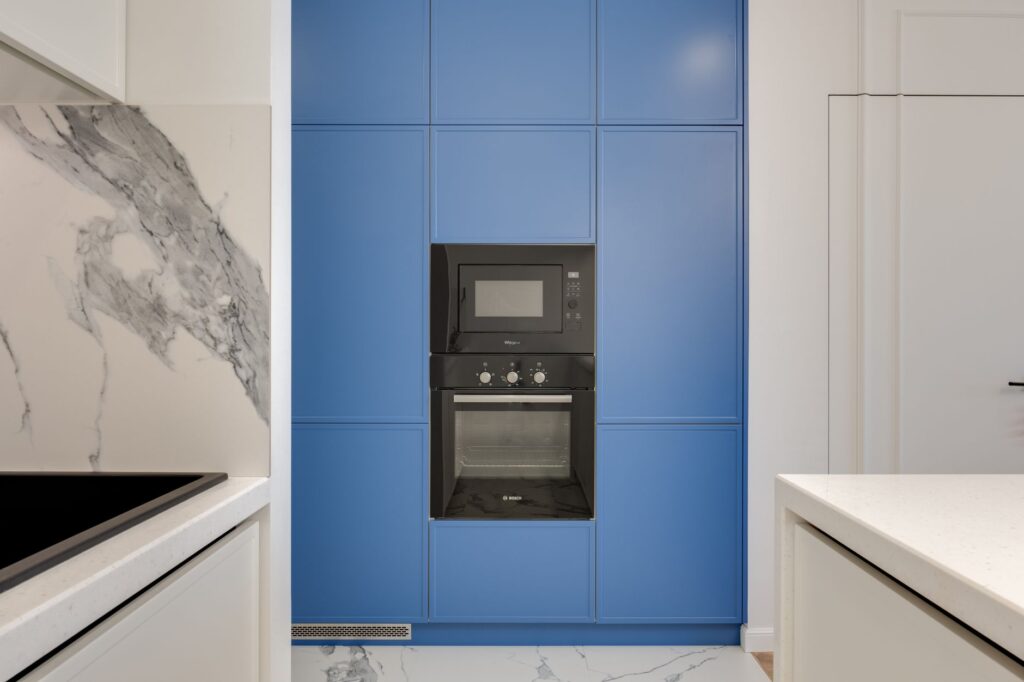
Measure the largest sheet pan, Dutch oven, and roasting pan—not just listed cubic feet. A well-racked single oven handles two trays at one temperature; a second oven earns its footprint when different temperatures overlap regularly.
-
Treat convection as a throughput tool
True convection with a rear heating element shortens and evens multi-rack roasting and cookie batches. It does not solve temperature conflicts, and recipes may need a 25°F reduction or earlier doneness checks.
-
Choose steam for the right menu
Combi-steam adds moisture control for bread, vegetables, fish, and gentler reheating. It is valuable for frequent use, not merely because the mode sounds premium; see when a steam oven justifies a dedicated space.
-
Use speed cooking to replace a daily appliance
A speed oven can reheat, crisp, and cook small portions faster than a conventional cavity, especially when it replaces a countertop microwave. The practical differences are clearer in this speed-oven and microwave comparison.
-
Keep smart features narrowly useful
Remote preheat, probe alerts, and completion notifications prevent missed timing. App recipes and cameras rarely change the workflow; all core controls should remain usable at the oven.
A premium dishwasher can be the kitchen’s most noticeable luxury upgrade because it removes a chore that returns every day. It earns its price when it accepts the household’s real mix of cookware, glasses, lunch containers, and serving pieces without a second wash. Quiet operation matters most in open plans: a machine running around 40–44 dBA can run after dinner without taking over conversation.
Prioritize results that prevent friction:
- Adjustable racks and dedicated spray zones for tall pots, stemware, and heavily soiled pans in the same load.
- Effective drying, especially for plastic containers; look for a door-opening or fan-assisted system rather than assuming a heated cycle solves it.
- Simple upkeep, including removable filters, accessible spray arms, and clear leak or error alerts.
A matching cabinet front is attractive, but a panel-ready installation’s practical tradeoffs—added panel weight, alignment, and less obvious controls—should not outweigh proven wash performance. Confirm that the installer can level the unit and leave access to the water connection and drain hose; poor installation can make even an excellent machine noisy or unreliable.
For households deciding between the leading premium approaches, compare Miele and Bosch by loading and drying priorities, not badge appeal. Bring a typical dirty load to the showroom mentally: if its largest pans, daily glasses, and plastic containers cannot be placed without blocking spray arms, the upgrade will not change cleanup.
Specialty tools for frequent hosts
A warming drawer earns its cabinet space when meals regularly arrive in stages: plates held at serving temperature, a roast resting while vegetables finish, or several dishes waiting through a buffet. It is not a substitute for an oven, and it often displaces the deep drawer storage that busy kitchens need. Before specifying one, test the intended routine against the realities of holding food for guests and confirm a dedicated electrical circuit, correct cutout ventilation, and reachable service access.
A built-in ice maker is strongest at a beverage station used several times a week—not as a prestige add-on beside a refrigerator ice dispenser. It needs a water line, shutoff valve, drain or approved pump, filtration plan, airflow clearances, and a route to pull the unit forward for cleaning. Mineral scale and neglected bins quickly affect output; even cloudy cubes from an ice maker can point to water quality or maintenance. Reserve nearby storage for glasses, scoops, and cleaning supplies.
Buy the service plan, not just the appliance
A premium appliance becomes expensive quickly when installation excludes electrical work, water filtration, ventilation commissioning, or panel alignment. Obtain a written scope that assigns responsibility for each connection and confirms who corrects a failed startup.
Before ordering, check local authorized technicians, typical call-out times, and whether common parts are stocked domestically. A beautiful dishwasher is less impressive during a two-week outage; knowing how to trace a leak beneath a new dishwasher also prevents minor installation faults from becoming cabinet damage.
Budget for filters, descaling supplies, and annual cleaning. For connected ovens, confirm which functions remain available without Wi-Fi, plus the length of software support. Favor brands with clear parts diagrams, accessible filters, and warranties that cover labor as well as components.
Choose the model with a reachable service network and available parts—even if its showroom finish is less dramatic. Reliability preserves the kitchen routine.
Spend in the order the kitchen works
- Fund wiring, gas, ducting, water, drainage, and service clearances before visible finishes.
- Require a realistic weekly use case before allocating cabinet space to a specialty appliance.
Start with infrastructure and daily performance: correct electrical capacity, ducted ventilation, dependable cooking, and a quiet dishwasher. These upgrades affect nearly every meal and protect the room itself.
Next, pay for workflow capacity—additional oven space, flexible dishwasher loading, or refrigeration that prevents bottlenecks during normal cooking. Leave ice makers, warming drawers, and other entertaining-focused extras until last. A luxury appliance earns its footprint only when it makes a recurring task faster, cleaner, quieter, or more reliable, ideally several times each week.