
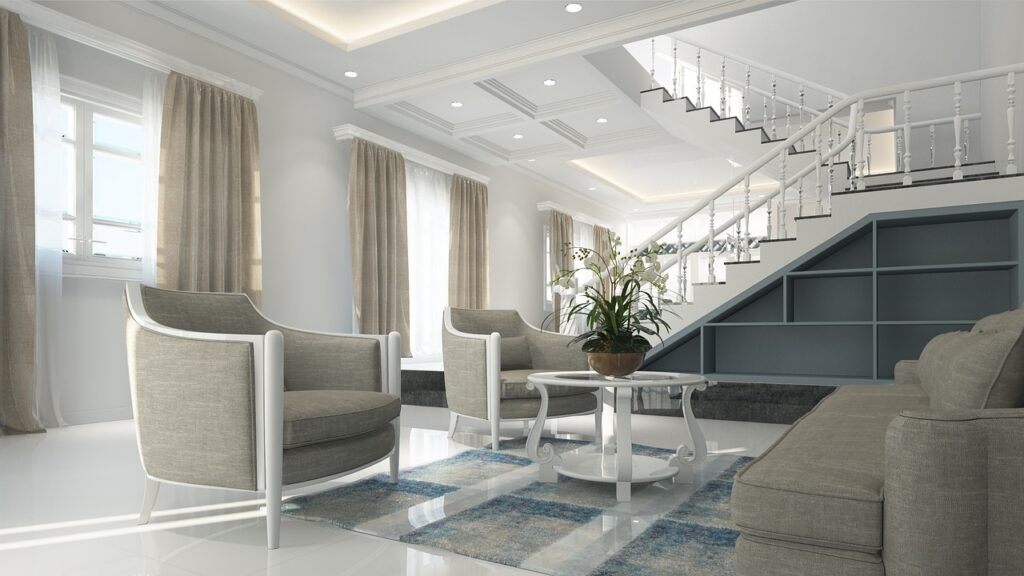
A refined room is judged by how it supports everyday life, not by its price tags.
A velvet sofa can look spectacular in a showroom yet make a sitting room feel stiff if there is nowhere to place a drink, read under proper light, or cross the room without clipping a table. Luxury begins with ease.
Start by giving each room one clear job, then edit everything that interferes with it. In a living room, establish a conversation area with seating close enough to speak comfortably—typically 7 to 10 feet across—then add a substantial rug that lets at least the front legs of every seat rest on it. Choose fewer, better-finished pieces rather than filling every wall and corner. Natural materials, tailored upholstery, generous lamp light, and clear walking routes create the calm associated with high-end interiors because they are proportioned for real use, not merely display.
- Keep major circulation paths about 30 to 36 inches wide.
- Use layered lighting: ambient ceiling light, task lamps, and low-level accent light.
Make Every Purchase Serve the Whole House
-
Build a palette with room to breathe
Choose two or three quiet foundation tones, then repeat them in changing values: warm white walls, oat upholstery, and tobacco wood, for example. Limit metals to one dominant finish and one supporting finish so rooms connect without looking matched.
ChooseUndertones that agree in daylight, from room to room.SkipA separate color scheme and competing metal finish in every room. -
Repeat materials, not identical furniture
Aged brass, oak, wool, linen, leather, and veined stone gain authority when each appears more than once. Vary the form and finish—an oak dining table can sit comfortably with darker oak nightstands—rather than buying coordinated sets.
ChooseA small material vocabulary recurring across major rooms.SkipPerfectly matched suites or a new statement material in each space. -
Spend where scale is felt
Prioritize correctly sized sofas, substantial rugs, tailored upholstery, layered lighting, and natural surfaces before decorative objects. A generous rug and a well-proportioned lamp alter the room more than a collection of costly accents.
ChooseInvestment pieces that define comfort, proportion, and light.SkipSmall luxury accessories compensating for undersized basics. -
Run each item through plan, fit, and use
Before ordering, mark its footprint and clearance on the floor, confirm delivery access, and test the daily reality: feet on the coffee table, wine at dinner, pets on the sofa, and cleaning around it. Specify performance fabric, sealed stone, or washable construction where the household demands it.
ChoosePieces that fit the plan, the route in, and the household routine.SkipDelicate finishes or oversized furniture chosen only from a showroom image.
Set the tone at the door
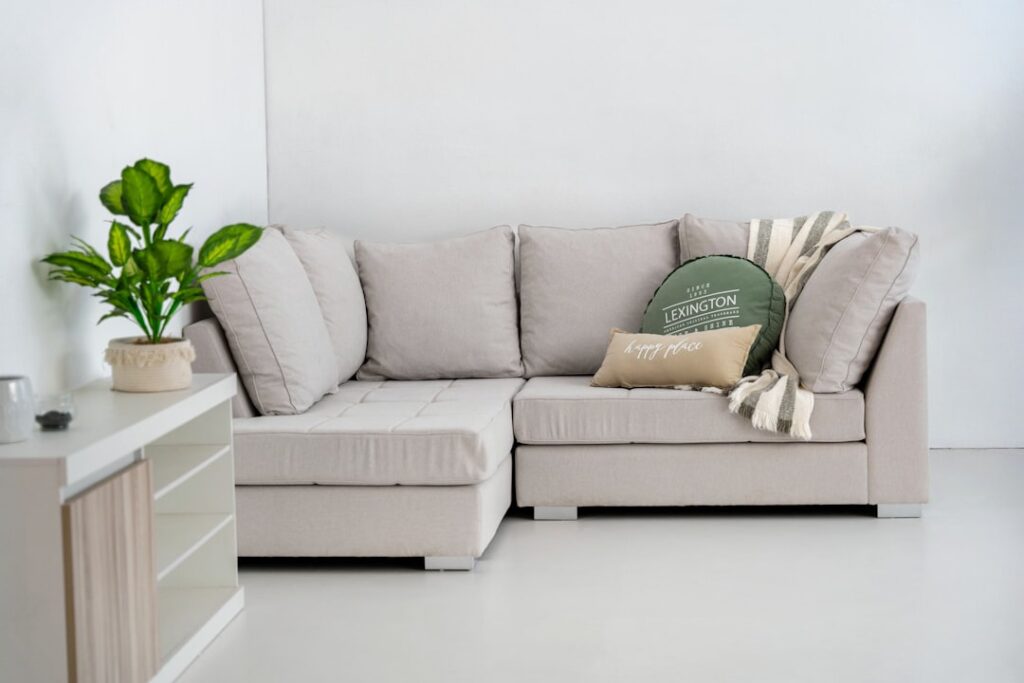
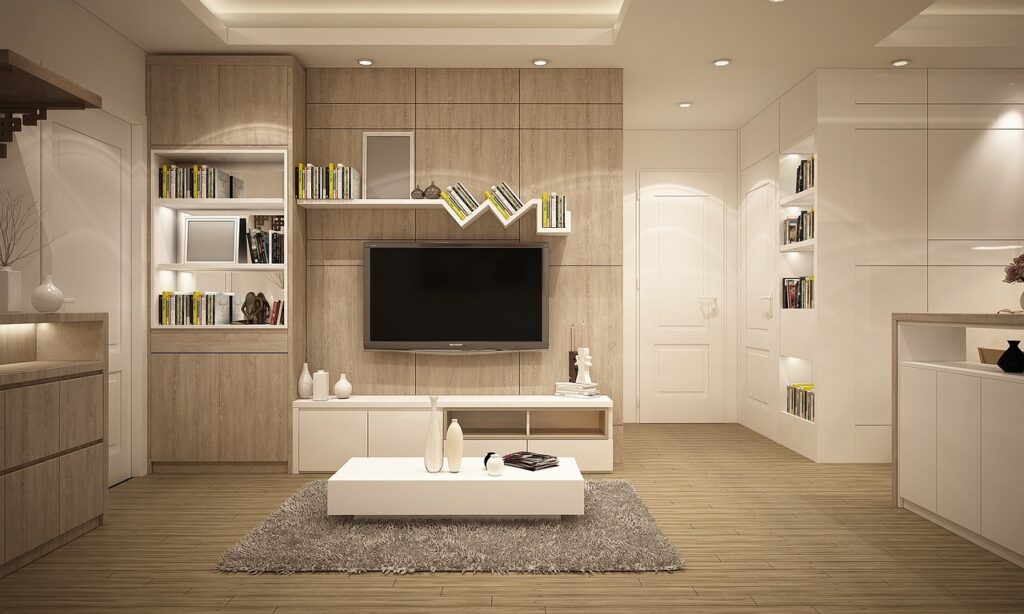
Begin with one substantial focal gesture: an oversized mirror, a sculptural console, or a large framed work—not several competing accents. Its scale should relate to the wall, leaving breathing room around it.
Layer warmth underfoot with a dense wool runner and a lamp or pair of sconces that cast a soft pool of light. A console needs a genuinely useful landing zone for keys, post, and a small tray; keep at least half its surface clear.
Build concealed storage that guests never need to notice into a closed bench, drawer unit, or shallow cabinet. Finally, test the route with a bag and coat in hand: the path from door to living area should remain unobstructed, ideally 36 inches wide.
Stand at the front door after dark. If the eye lands on shoes, cables, or crowded hooks before the focal piece, add closed storage or remove an item.
Make the living room feel finished
The best living rooms establish a clear composition from the doorway: one confident seating group, a focal point, and enough open floor to understand the room at a glance. Start with the circulation route, not the sofa. Keep the main path from entry to seating, windows, or adjoining rooms about 30–36 inches wide, and avoid placing a chair where it becomes an obstacle rather than an invitation.
Anchor the conversation area with a rug large enough to carry the furniture. In most rooms, the front legs of every major seat should sit on it; a generously sized rug that reaches beyond the sofa’s ends makes the arrangement feel deliberate. Face chairs toward the sofa or each other, rather than lining every piece along the walls. Allow roughly 14–18 inches between seating and coffee table, with side tables close enough to set down a drink.
Choose materials that improve with use
Luxury is not a room full of delicate finishes. Select a sofa in tightly woven wool blend, performance linen, mohair, or quality velvet; reserve pale bouclé and open-weave textiles for low-traffic accents. A substantial wood, upholstered, or stone-topped coffee table gives the group weight, but natural stone needs prompt spill care and coasters. Mix material temperatures—soft upholstery, a warm timber finish, aged metal, and one tactile rug—rather than matching every surface.
Light faces, art, and surfaces
Use three light sources: ceiling light for general illumination, table or floor lamps at seated height, and an accent light for art or a bookcase. Lamps should light faces without exposing bare bulbs; dimmers make the difference between daytime utility and evening atmosphere.
Over a sofa, artwork should relate to its width rather than float like a postage stamp: a single work or grouping around two-thirds the sofa width usually holds the wall. Keep shelves and tables edited. A stack of books, a low bowl, and one sculptural object often look more considered than a dense collection of small accessories. Empty space is part of the display.
Common failures are easy to spot: a rug too small for the furniture, too many occasional chairs choking the path, and a ceiling fixture expected to do all the work. Removing one redundant piece often produces a more expensive result than adding another.
Mark sofa, chair, and rug edges with painter’s tape. Walk the route from the doorway, sit in each planned seat, and place a tray where the coffee table will be. If movement feels pinched or a drink has nowhere to land, revise the plan before ordering.




Make the dining room work beautifully
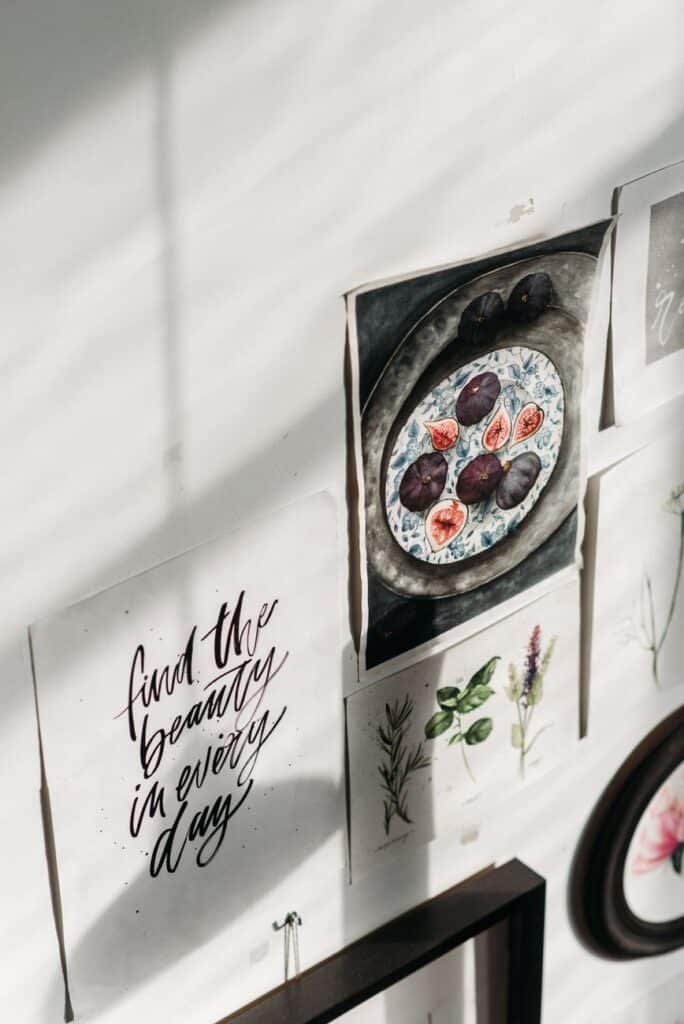
The dining table and its fixture should read as a single focal point, not competing objects. Choose a chandelier about one-half to two-thirds the table width; a long rectangular table usually needs a linear fixture or a pair of pendants. Hang it 30–36 inches above the tabletop, then confirm that seated guests can see one another without the fixture cutting across sightlines.
Comfort is the real luxury test. Dining chairs need supportive backs, a seat height near 18–20 inches, and enough depth to sit through a full meal. Leave at least 36 inches from the table edge to walls or furniture for pulled-back chairs; allow 42 inches on a main passage.
Keep texture under control
Use a low-pile wool rug, flatweave, or tightly woven natural-fiber blend that extends 24–30 inches beyond the table on every side. Chairs should slide without snagging. Pair tactile elements—linen shades, wood grain, leather, or a softly veined stone top—with smooth, durable surfaces, keeping the room rich rather than cumbersome.


Make the bedroom feel quietly indulgent
Treat the bed as the room’s architectural anchor. Center it on the strongest uninterrupted wall, then choose a headboard that reads at the right scale: roughly 48–60 inches high suits most standard ceilings, while taller upholstered or paneled designs can carry a larger room. Leave enough side clearance for proper nightstands rather than squeezing in undersized pieces.
A bedroom rug should be felt before it is seen. For a king bed, an 8-by-10-foot rug is the practical minimum; a 9-by-12 usually gives a more generous landing zone. Position it so at least 18–24 inches extends beyond both sides and the foot of the bed.
Build comfort into the daily routine
Use bedside lamps or pendants with warm, dimmable bulbs, ideally controlled from the bed. Full-height drapery mounted close to the ceiling makes windows appear taller; combine a lined decorative panel with blackout lining or a discreet blackout shade for dependable sleep.
Keep textiles disciplined: crisp percale or breathable sateen sheets, a substantial duvet, one coverlet, and no more than two or three decorative cushions. Reserve contrast for texture—bouclé, washed linen, wool, or velvet—instead of introducing competing colors. A concealed charging drawer, a water carafe, and a soft-close hamper make the room feel considered every day.

Make the bathroom feel like a private suite
Bathroom luxury is judged at arm’s length. Start with light: fit dimmable overhead lighting for general use, then place sconces on both sides of the mirror at face height. Use warm 2700–3000K bulbs with high color rendering; overhead-only light creates unflattering shadows.
Keep the vanity deliberately spare. A tray can hold hand soap and one daily-use item; toothbrushes, chargers, and spare products belong in drawers. Repeat one finish across the faucet, mirror frame, hooks, and hardware—or limit the room to two finishes with a clear dominant metal.
Choose dense, absorbent towels rather than decorative stacks. Two matching bath sheets per regular user, folded or hung evenly, feel more considered than a crowded rail. Decant cotton pads and bath salts into lidded glass or ceramic vessels, and use a lined basket or cabinet bin for toilet paper and cleaning supplies.
Wipe faucets, shower frames, and metal accessories dry after heavy use to prevent mineral spotting. Wash towels without fabric softener, which coats fibers and reduces absorbency; tumble dry on low and avoid overloading the machine. For unlacquered brass, expect a changing patina—do not use abrasive polish unless a bright finish is the intended look.
Keep the working rooms composed
Make function disappear into the finish
A luxury kitchen looks calm because its working parts have assigned homes. Specify full-height pantry storage, appliance garages, drawer dividers, and pull-out bins before styling open shelves. Keep counters to the coffee machine, one beautiful tray, and daily essentials; matching canisters look better than a collection of branded packages.
In an office, run cables through a desk grommet and under-desk raceway, then hide routers and chargers in a ventilated cabinet. Use closed storage for paper and supplies, with only a task lamp, one framed object, and a current notebook left visible. A dimmable desk lamp with a focused beam prevents the room from feeling like a workstation after hours.
Repeat the details
Carry the same hardware finish into kitchens, offices, and laundry rooms, even when the cabinetry changes. Tactile choices—oak, honed stone, ribbed glass, woven baskets—add depth without visual noise. In utility areas, decant detergents only if labels remain clear, and reserve open shelving for neatly folded linens or durable baskets. Operational order is not an accessory: it is what allows selective styling to read as intentional.
Install, test, then refine
-
Confirm the room on site
Mark door swings, outlets, vents, radiator clearance, and walking routes. Check dimensions against the actual room, not the plan alone.
-
Set the anchor pieces first
Place rugs, beds, sofas, tables, and major storage before buying lamps or art. Test chair pull-back, seating depth, and sightlines in use.
-
Add the finishing layers
Fit window treatments, lighting, art, and textiles only after furniture positions are fixed. Their scale depends on settled geometry.
-
Review from daily viewpoints
Assess each room from the doorway, primary seat, and bed; then in daylight and at night. Open drawers, move chairs, vacuum beneath pieces, and check for glare.
-
Edit for ease
Remove anything that blocks movement, collects clutter, or needs constant adjustment. Keep surfaces useful, not merely styled.
- A successful luxury room works comfortably before it photographs beautifully.
- Maintenance is a design test: accessible floors, durable finishes, and restrained surfaces preserve the result.
The finished home should feel generous rather than crowded: every major piece is correctly scaled, every route is clear, and every decorative layer earns its place through comfort, function, or lasting visual interest.