
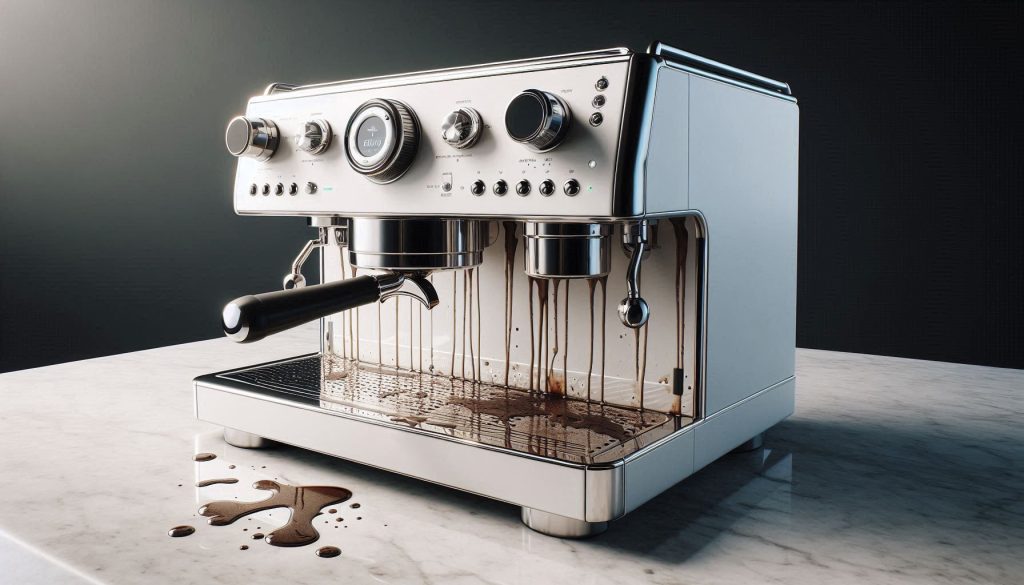
If you’ve noticed a steady drip while your machine is idle or a messy spray during extraction, you’re likely dealing with a leaking group head. This common issue is rarely a sign of a dying machine; instead, it is almost always caused by a hardened or worn-out group gasket. For about $10 and twenty minutes of your time, you can replace this critical seal, restoring the 9 bars of pressure necessary for a perfect crema. Ignoring the leak doesn’t just make a mess—it leads to inconsistent shot quality, temperature instability, and potential long-term water damage to your machine’s internal components.
This comprehensive guide breaks down the anatomy of your brew group to help you diagnose symptoms like wet puck edges or lateral spray. We will walk you through a DIY gasket replacement using affordable materials like Viton or Silicone, which offer superior heat resistance compared to standard rubber. Whether you own a home luxury model like a Rancilio Silvia or a prosumer E61-style machine, learning to maintain this $10 part is the most cost-effective way to extend your equipment’s lifespan and ensure every shot is pulled to professional standards.
Why a Leaky Group Head Matters — and How a Small Fix Can Save Your Machine
You rely on consistent extraction and a dry group head to make high-quality espresso. A leak at the group head undermines shot quality, wastes water and energy, and accelerates component wear. This article shows how to diagnose the common group head leak, explains why the gasket is often the culprit, and walks you through a straightforward, low-cost replacement that frequently costs around $10.
You’ll get a data-informed overview of symptoms, group head anatomy, common causes, and a step-by-step gasket replacement procedure with the tools and parts you need. The guide also covers validation testing, calibration tips, and when to escalate to a technician. By the end you’ll be able to decide whether to DIY or call a pro — saving money and protecting your machine’s lifespan. It’s a small fix with big returns, fast.
Recognizing a Group Head Leak: Symptoms, Risks, and Immediate Troubleshooting
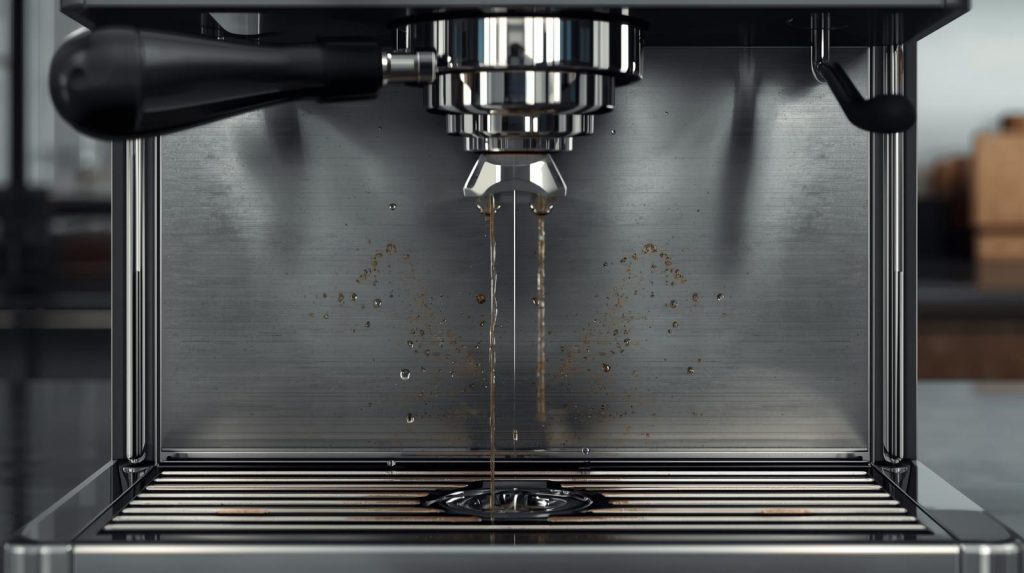
What each symptom tells you
A few distinct patterns point to different failure modes:
For example, a Rancilio Silvia with a 10-year-old gasket often shows steady drips; a busy Linea Mini with high backpressure may show spraying during peak runs.
Quick checks you can do right now
Perform these three low-effort tests to confirm the leak source:
- Visual inspection — remove the portafilter, wipe the gasket area, look for cracks, flattened rubber, or trapped coffee grinds.
- Dry-towel test — hold a dry white towel under the group, run a 3–5 second manual flush and watch the wet pattern (central drip vs. lateral spray).
- Controlled extraction — run one short extraction with a clean basket; note if leakage starts immediately when pressure builds.
Quantifying the impact
Leaks aren’t just messy. A 1-drip-per-second leak (about 1 drop ≈ 0.05 ml) wastes ~4.3 liters per day if continuous — and even intermittent drips accelerate corrosion and scale. More importantly, a poor seal lets brew pressure bleed off, increasing shot variance and under-extraction by a noticeable margin (0.5–1 bar in many home machines).
Short-term mitigations
Until you replace the gasket, reduce further damage by:
These checks will help you separate true gasket issues from other problems. Next, you’ll learn how the gasket fits into the group head so you can see why a $10 replacement often fixes all of this.
Group Head Anatomy and the Role of the Gasket: How Seals Keep Pressure and Water Where They Should Be
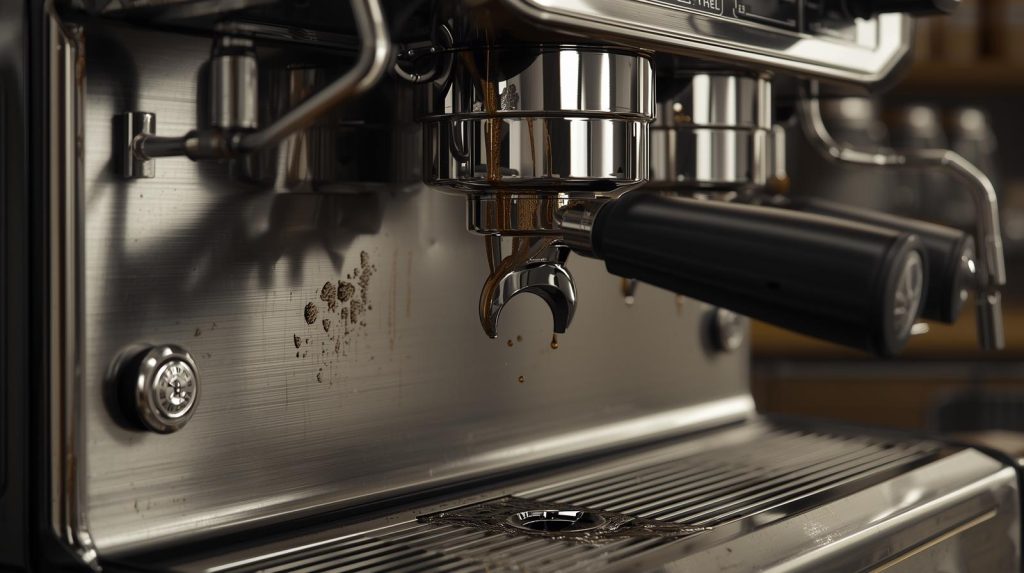
Quick parts tour
You need to see the group head as a small pressure chamber assembled from simple parts that must align precisely:
On an E61-equipped machine (La Marzocco / Rocket / Bezzera) these parts are familiar; on Rancilio Silvia or commercial Linea Mini units, dimensions and tolerances follow the same principles.
How the gasket actually seals
The gasket is the only element that keeps 9–15 bar (or whatever your group reaches) from leaking where the portafilter meets the group. It does this by compression: when you insert and lock the portafilter, the gasket compresses a millimeter or two to form a continuous, airtight ring. That compression must be even; small deviations (a torn gasket, uneven shower screen, or warped portafilter rim) create paths for water to escape.
Tolerances matter: surface finish, concentricity of the portafilter rim, and gasket thickness are measured in tenths of a millimeter in well-built machines. Even minor flattening or a hard spot in the seal causes pressure bleed and lateral spray.
Typical gasket materials and how they age
Common materials you’ll encounter include:
Repeated thermal cycling and steam exposure make gaskets harden, crack, or permanently deform. A busy café group (Linea Mini under heavy back‑to‑back shots) will age a gasket much faster than a home machine.
Practical short checks
Before you replace anything, inspect the gasket for flat spots, tears, or embedded coffee. Check shower screen flatness and portafilter rim concentricity — a new gasket only helps if these mating surfaces are sound.
Next up: you’ll see the common failure modes and a straightforward $10 replacement you can do at home.
Common Causes of Leaks at the Group Head: Wear, Misalignment, and System-Wide Contributors

You’ll learn the most frequent root causes behind group head leaks and how to prioritize them. Below are the failure modes, how they show up, quick tests you can run, and how likely each is compared with a bad gasket.
Gasket wear and compression set
How it shows: Continuous weeping when the portafilter is locked in; thin, flattened-looking rubber.How to test: Visually inspect and push the gasket—if it feels hard or won’t rebound, it’s shot. Swap in a known-good gasket if available.Likelihood vs gasket fault: This is the canonical problem — the single most common cause. Treat it as the starting point.
Hardened, cut, or torn gaskets
How it shows: Localized spray or a slit that bleeds at a single spot; coffee grounds embedded in cuts.How to test: Remove and flex the gasket under bright light; small cuts are obvious. Run your finger around the mating surface for burrs.Likelihood: Very common in machines that see steam—almost as likely as general wear.
Portafilter rim damage or burrs
How it shows: Splashing on one side only, or a leak that tracks along the rim despite a new gasket.How to test: Rotate the portafilter while locked and watch where the leak appears; use a magnifier to inspect the rim for dents or burrs.Likelihood: Common on older or cheaper portafilters (Gaggia Classic, some Breville batches); less likely than gasket wear but an easy miss.
Misaligned group rails / warped group
How it shows: Uneven compression—gasket looks compressed more on one side; difficult to lock or feels “high” on one ear.How to test: Measure gasket compression at multiple clock positions or compare how the portafilter sits; check mounting screws for looseness.Likelihood: Less common, more likely on machines disassembled frequently or after impact.
Debris and coffee-ground buildup
How it shows: Intermittent leaks that improve with a cleaning flush.How to test: Remove gasket and shower screen, clean thoroughly, and run a blind flush.Likelihood: Very common and easily fixed—always check before parts swapping.
Damaged shower screen or dispersion plate
How it shows: Spray from multiple small points and poor shot distribution.How to test: Remove screen; look for warping or missing holes. Replace with models from IMS or distributors for E61/Rancilio/Linea fit.Likelihood: Less common than gasket issues but common in high-volume use.
Excessive pump or boiler pressure
How it shows: Violent sprays, blow-by under normal gasket condition, or blowing out new gaskets quickly.How to test: Measure brew pressure with a gauge (aim ~9 bar at the puck); inspect OPV settings on pump-driven machines.Likelihood: Rare compared to gasket wear, but critical to check if gaskets fail repeatedly.
The $10 Gasket Fix: Parts, Tools, and a Step-by-Step Replacement Procedure
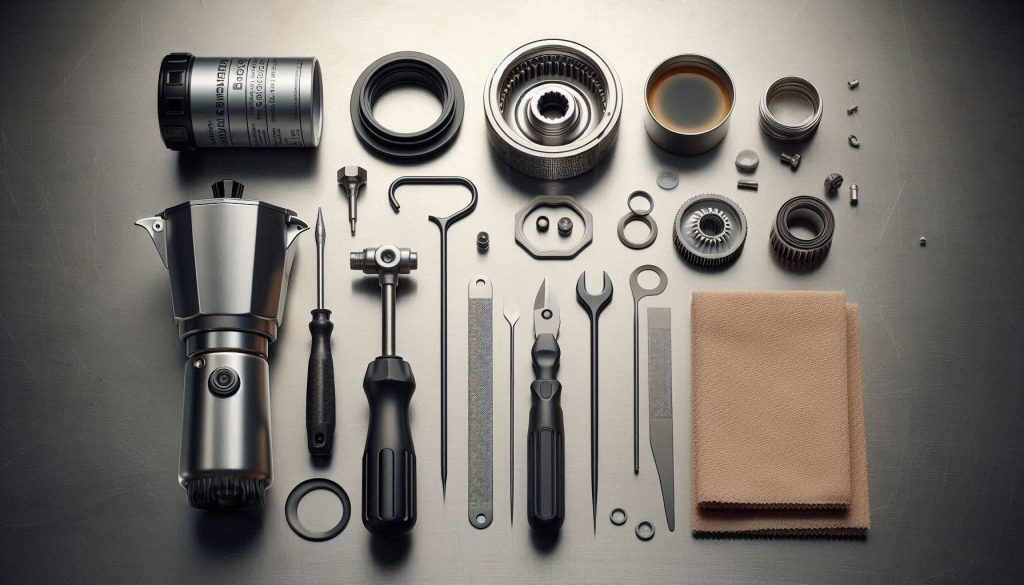
Parts: what to buy (and why)
Tools and safety
Step-by-step replacement (plan 20–40 minutes)
- Remove the portafilter and drip tray; unscrew and remove the group cover or chrome housing using the correct hex/Phillips bits.
- If present, remove the shower screen/s, noting orientation; keep screws organized.
- Use the pick tool to pry out the old gasket—work slowly around the circumference to avoid gouging the metal seat.
- Clean the seating area with a lint-free cloth and brush; remove coffee oils and scale. Wipe to a dry, smooth finish; no rag fibers left behind.
- Test-fit the new gasket dry to confirm size and seating depth. The gasket should sit flush without bulging into the brew path.
- Lightly coat the gasket outer lip with approved silicone grease only if your manual permits—this aids initial seating.
- Install the gasket evenly, pressing around the ring with your thumbs. Reinstall the shower screen and cover in the reverse order.
- Tighten screws evenly (star pattern for multiple screws) until snug; avoid over‑torquing—finger tight plus a small turn is usually sufficient. If a torque spec exists, use it.
Common mistakes & tips
Validating the Repair: Tests, Calibration, and Signs of a Successful Replacement

After you install the new gasket, verify the repair with objective checks rather than trusting looks alone. Use the routine below to catch lingering issues early.
Idle pressure & leak test
Under-extraction test (real-world check)
Visual inspection intervals
Interpreting drips vs persistent leaks
Break-in behavior & tuning
Quick completion checklist
If all boxes are checked, the gasket replacement is behaving as intended — if not, the next section covers escalation and cost/benefit choices.
When a Gasket Replacement Isn’t Enough: Escalation Paths and Cost-Benefit Considerations

When the $10 gasket doesn’t stop the leak, you need a systematic way to decide whether to keep troubleshooting, call a pro, or retire the machine. Below are the failure modes that plain gasket swapping won’t fix, the diagnostic signals for each, repair options with typical cost ranges, and a short decision framework to help you choose.
Failure modes and how they present
Typical repair options & rough costs (U.S. retail/labor ballpark)
Decision framework: DIY, pro, or replace
Practical sourcing and warranty tips
With those escalation paths clear, you can weigh cost, downtime, and risk and decide the right next step toward a dry, stable group head.
Practical Takeaway: Fixing Leaks Without Guesswork
A leaking group head is often a failed gasket and is fixed quickly and affordably. Use the diagnostic steps to confirm the leak source, inspect the gasket for wear or deformation, and replace it with a quality $10 part. Follow the step‑by‑step procedure and keep your tools and parts clean to avoid introducing new issues now.
If leaks persist after a careful replacement, follow escalation guidance: check alignment, group screen, and boiler pressure, then consider professional service. Repairing the gasket yourself saves time and money in most cases—replace, test objectively, and enjoy consistent shots.