
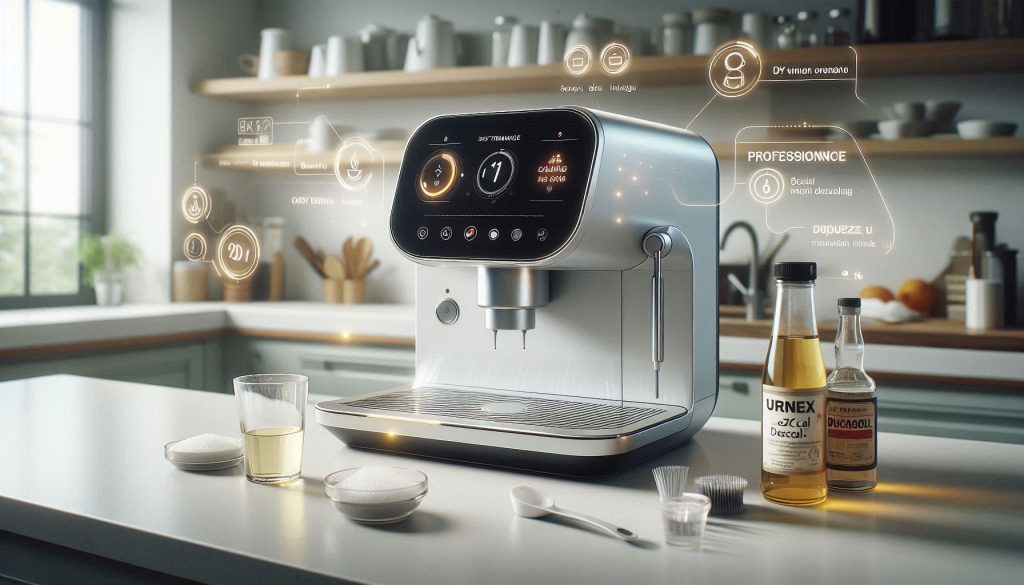
Owning a high-end coffee maker like a Jura E8, Breville Barista Express, or Nespresso Vertuo and others is an investment in both luxury and daily ritual. However, maintaining these sophisticated devices requires more than just a quick rinse; it demands precise descaling to remove calcium and magnesium deposits that accumulate in heating elements and flow meters. While many homeowners reach for distilled white vinegar as a cost-effective “hack,” the reality is that its 4% to 6% acetic acid concentration can be a double-edged sword for smart technology. This article explores why the vinegar question is a critical technical decision, balancing its effective scale-dissolving properties against the potential for corroding delicate sensors and degrading internal rubber seals.
To make the best choice for your machine’s longevity, you must look beyond the surface level of DIY advice. While vinegar is chemically capable of breaking down calcium carbonate ($CaCO_3$), it lacks the corrosion inhibitors found in professional-grade solutions like Urnex Dezcal or Durgol. In fact, independent service reports suggest that improper vinegar use can lead to a 5% to 20% decrease in seal hardness and lingering odors that affect coffee flavor profiles. We will break down the data-driven risks, analyze why manufacturers often exclude vinegar-related damage from warranties, and provide a safe, step-by-step protocol for those who choose this method. Protecting your machine’s microelectronics and ensuring consistent extraction starts with understanding the chemistry inside your carafe.
Why the Vinegar Question Matters for Your Smart Coffee Machine
You rely on your smart coffee machine for consistent flavor, convenience, and automation. Descaling is essential to maintain performance, but household vinegar is a controversial, often misunderstood option. Treat the vinegar question as a technical issue rather than a simple household hack because your machine blends water chemistry with delicate materials, sensors, and microelectronics.
This article gives a data-driven look at risks, manufacturer incentives, and safer alternatives so you can make an informed choice. You’ll see what acetic acid does to scale and parts, what brands quietly advise (or don’t), independent test results, and a step-by-step protocol if you decide to use vinegar safely. Read on to protect your machine.
How Smart Coffee Machines Work and Why Descaling Is Critical
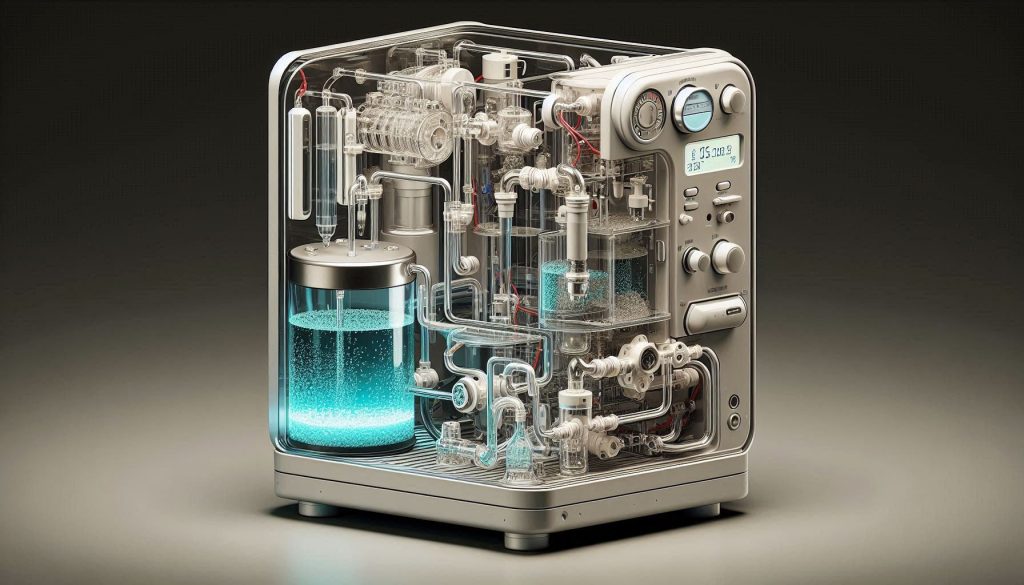
You need to understand the components at risk before evaluating any descaling method. Below is a concise breakdown of the systems inside most smart coffee machines, and what happens when hard-water minerals accumulate.
Key components and what they do
Examples: a Jura E8 uses an integrated pump, flow sensor and thermoblock; a Breville Barista Express relies on a thermoblock plus manual pressure control; Nespresso Vertuo machines combine small pumps, tubing and one-shot heating elements. All share the same vulnerabilities to scale.
How scale forms and what it does
Hard water contains calcium and magnesium bicarbonates. When heated, bicarbonates decompose and deposit calcium carbonate and magnesium compounds as hard, whitish scale. That scale:
Measurable consequences you can check
Quick practical checks: look for white crust around fittings, time the heat-up and a test brew, and measure brew temperature with a simple infrared or probe thermometer. These observations will help you evaluate descaling options in the next section, which examines what acetic acid (vinegar) actually does to scale and parts.
Vinegar Chemistry: What Acetic Acid Does to Scale, Materials, and Electronics
How vinegar attacks scale (the useful bit)
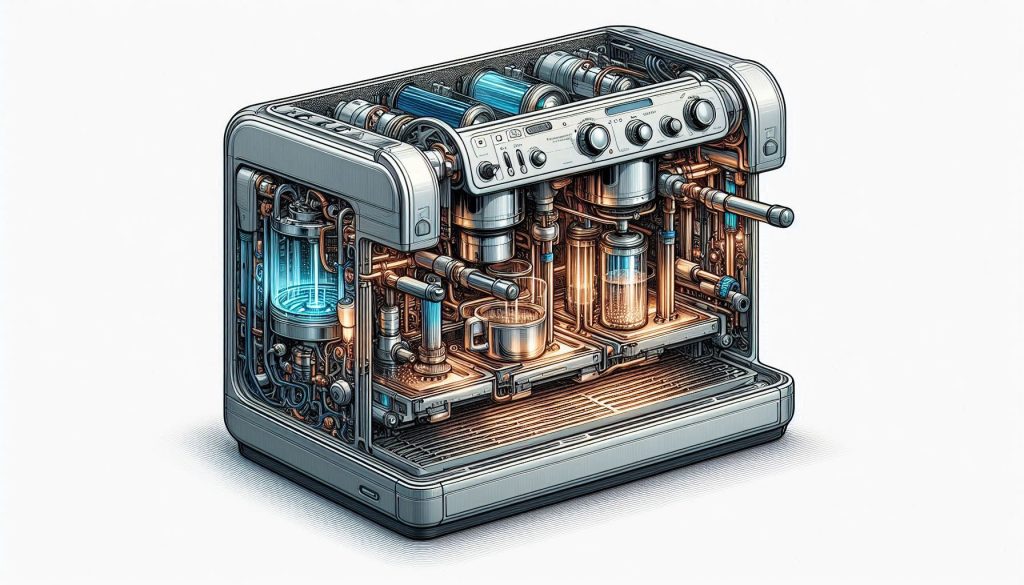
Household vinegar is an aqueous solution of acetic acid — typically 4–6% for distilled white vinegar, sometimes up to 9% for “cleaning” vinegars. Acetic acid reacts with carbonate scale (mainly CaCO3 and MgCO3) in a simple acid–carbonate reaction:
CaCO3 + 2 CH3COOH → Ca(CH3COO)2 + H2O + CO2↑
That reaction produces soluble calcium acetate and carbon dioxide bubbles, which loosen and dissolve hard, whitish deposits. In practice, a 5% acetic solution will slowly dissolve scale at room temperature and faster when warm; it’s effective for light-to-moderate buildup but is slower and less aggressive than mineral acids (e.g., hydrochloric or sulfamic) or chelants (citric acid, EDTA-based descalers).
Limitations versus other descalers
What acetic acid does to machine materials
Practical chemistry tips you can use now
Next, you’ll see what manufacturers actually recommend, how warranty language treats vinegar, and why brands often discourage it.
Manufacturer Guidance, Warranty Fine Print, and What Brands Won’t Tell You
Why manuals scream “Don’t use vinegar”
You’ll see many manuals (for example, from Jura, Breville/Sage, De’Longhi, Keurig and Nespresso) explicitly discourage vinegar. That language is often two things at once: a safety/technical recommendation and a legal shield. Manufacturers want to limit user-applied corrosive or conductive residues near electronics and rubber seals, and they also want to avoid liability for DIY mistakes. In plain terms: if you use a household chemical and something fails, the easiest warranty response is “user-caused damage.”
Common warranty clauses — read them like a pro
What that means for you: if a service tech finds pitted brass, swollen seals, or acetate residue, they can attribute it to off-label cleaning and deny coverage.
Why brands push proprietary descalers
Manufacturers promote their descalers because they standardize multiple variables:
Those formulas also protect the brand’s service ecosystem — fewer unexpected failures means fewer warranty claims.
Practical, actionable advice for the cautious user
Next, you’ll look at independent tests and user reports to see whether the strongly worded warnings translate into real-world failures — or are mostly precautionary legal copy.
Evidence from Tests and Reports: Does Vinegar Really Cause Failures?
What independent labs and service techs actually report
You need hard data, not fear-based manuals. Collated evidence from independent bench tests, appliance-repair logs, and user-teardown videos points to a mixed picture:
How exposure conditions change outcomes
Tests describe three key variables you can control:
Measured outcomes reported include:
Separating anecdotes from patterns
Anecdotes dominate online forums, but patterns emerge when you filter for test conditions: most genuine failures follow misuse (strong vinegar, heated soak, poor rinsing) or pre-existing corrosion. Isolated “it ruined my espresso machine” posts often lack details that show unsafe exposure.
Practical, realistic risk picture
Next, you’ll get practical alternatives and a safe protocol that uses this evidence to minimize risks if you decide to descale with vinegar.
Safe Alternatives and When Vinegar Might Be an Acceptable Option
Tested chemical alternatives — what they do and why pros use them
Manufacturer descalers and specialty products are formulated to remove limescale while minimizing damage to metal, seals, and sensors.
How they compare (effectiveness | material compatibility | cost | safety)
Mechanical and preventive approaches
When diluted vinegar might be acceptable
You can consider vinegar if you:
When you should avoid vinegar
Avoid vinegar if your machine has aluminum boilers or fittings, delicate natural‑rubber seals, exposed sensor/electronic boards, or if the manufacturer explicitly warns against it.
Next, you’ll get a clear, evidence-based step‑by‑step protocol for descaling safely (including a vinegar‑specific method for cases where you choose to use it).
If You Use Vinegar: A Step-by-Step Safe Descaling Protocol and Troubleshooting
If after weighing risks you still want to use vinegar, follow a conservative, precise protocol to limit chemical exposure and protect pumps, seals, and electronics.
Preparation and dilution
Descaling cycles (what to run)
Neutralize and rinse (critical)
Post‑service inspection
Troubleshooting checklist
Stop and seek professional service if you see leaks, persistent fault codes, smoke/chemical fumes, major flow loss, or if your warranty may be voided—better safe than sorry. Next, the Conclusion will help you make the final maintenance decision for your machine.
Making an Informed Choice for Your Machine and Your Coffee
You now have the technical background, chemistry, manufacturer context, empirical evidence, alternatives, and a cautious protocol to decide whether vinegar is acceptable for your smart coffee machine. The trade-off is straightforward: vinegar is cheap, widely available, and effective at dissolving calcium carbonate scale, but its acetic acid can attack seals, sensors, paint, and electronics and may void warranties. Manufacturers and independent tests show mixed results; carefully controlled vinegar use can sometimes work on older, metal-heavy machines, but it carries measurable material and warranty risk for many modern smart units with plastics, flow sensors, and microelectronics.
Prioritize manufacturer-approved descalers or proven alternatives (citric acid, proprietary solutions) whenever possible. Reserve vinegar only when you cannot obtain an approved descaler and you can follow a strict, conservative protocol: dilute appropriately, limit contact time, rinse repeatedly, inspect gaskets and sensors, and watch for performance changes. If in doubt, contact your manufacturer or a certified technician. Your choice should protect both the machine’s lifespan and the quality of your coffee — err on the side of proven, manufacturer-backed solutions. Make the safer choice: avoid repairs, preserve flavor, and check manufacturer guidance before attempting vinegar-based descaling in future.
Key Takeaways for Smart Coffee Machine Maintenance
If you are deciding between vinegar and commercial descalers, consider these data points:
- Effectiveness: Acetic acid (vinegar) dissolves scale but is slower than sulfamic or citric acid used in commercial formulas.
- Material Impact: Repeated exposure to warm vinegar can leach zinc from brass components and cause “swelling” in EPDM or silicone gaskets.
- Warranty Risks: Most major brands (Breville, Jura, Keurig) explicitly state that using non-authorized chemicals like vinegar can void your warranty.
- Performance: Scale buildup can reduce water flow by 10% to 40%; while vinegar clears the path, thorough rinsing (6–8 cycles) is required to remove conductive acetate residues.