
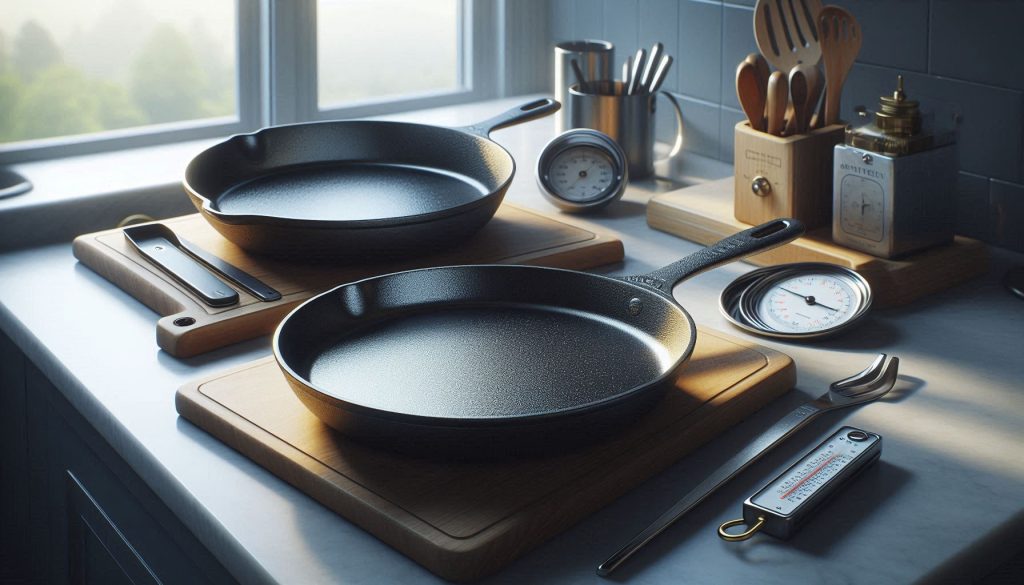
When investing in luxury cookware, the debate often centers on Smithey Ironware vs. Butter Pat Industries. Both brands have revitalized the “heirloom” cast-iron market by offering polished, smooth-surface skillets that mimic the coveted vintage pans of the early 20th century. This comparison is vital because choosing between them isn’t just about aesthetics; it’s about matching a pan’s thermal mass, weight, and surface finish to your specific cooking habits. Whether you are searing a thick ribeye or flipping delicate eggs, the engineering differences between Smithey’s hand-finished thickness and Butter Pat’s thin-walled, lightweight design will directly impact your stovetop results and daily maintenance routine.
To ensure you spend wisely, this guide breaks down the technical metrics that define high-end performance: heat retention, responsiveness, and seasoning durability. Smithey pans are celebrated for their deep, rich patinas and heavy-duty heat holding, making them ideal for high-heat searing. Conversely, Butter Pat (now part of the Yeti family) is engineered for maneuverability and precision, offering a “thin-cast” technology that reduces the physical strain of traditional cast iron. By analyzing these brands through data-driven testing—from time-to-temperature on induction cooktops to long-term cost of ownership—this review helps you navigate the trade-offs of weight versus power. Read on to discover which polished cast-iron skillet belongs in your kitchen arsenal.
Why this comparison matters for your cookware
You need cookware that matches your cooking style, budget, and expectations for performance and longevity. This head-to-head comparison between Smithey and Butter Pat focuses on polished cast-iron pans so you can quickly see where each brand excels. We explain the evaluation approach and the key metrics you should care about: heat-up time, heat retention, surface finish, weight, and maintenance. The goal is to give you clear, data-driven guidance you can use when choosing a pan.
You will find concise testing notes and practical buying recommendations tailored to common use cases. Whether you prioritize searing power, easy maintenance, lighter weight, or long-term durability, this guide frames trade-offs plainly. Read on to match the right polished cast-iron pan to your kitchen habits and expectations.
By focusing on measurable metrics and real-world cooking tests, this article helps you spend wisely and cook with confidence every day.
Company approaches and product line differences
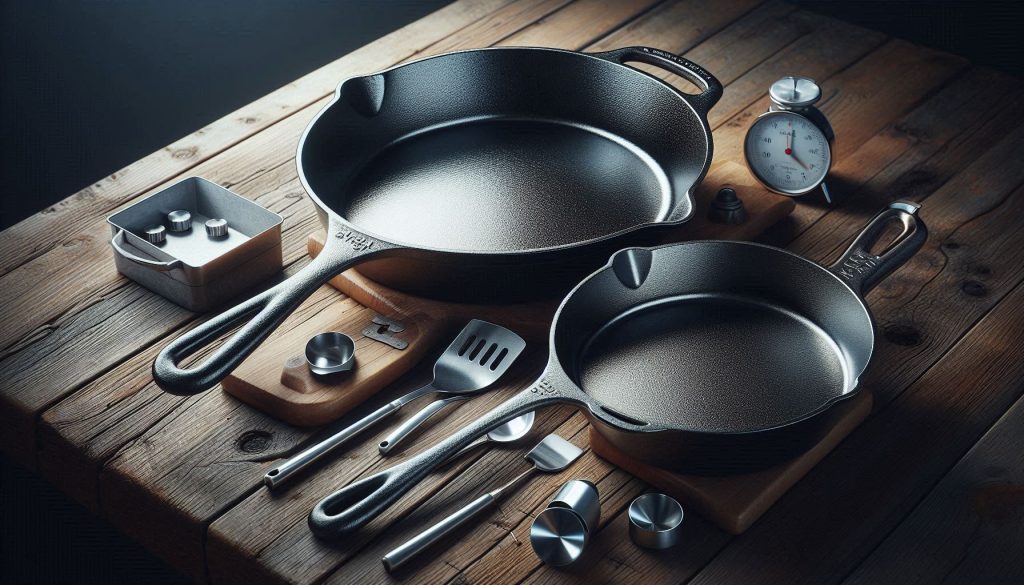
In this section you’ll get a clear, side-by-side look at each maker’s philosophy, manufacturing choices, and product range. The comparison focuses on casting methods, finishing, sizes and handle options, and small design choices that change how the pan performs in everyday cooking.
Philosophy and manufacturing
Smithey leans into a heritage-driven approach: traditional casting with extensive hand-finishing to produce a mirror-like cooking surface and classic skillet proportions. Butter Pat takes a more modern, design-forward approach—streamlined silhouettes, tighter dimensional tolerances, and factory polishing aimed at a lighter feel and a slick interior. You’ll notice the difference in the feel and balance the first time you pick one up.
Finish and surface texture
Both finishes help seasoning bond, but the route they take—hand-polish vs. machine polish—affects small irregularities you’ll either enjoy (character and heft) or prefer to avoid (uniformity and lighter weight).
Sizes, handles, and small design choices
Practical takeaway (how you choose)
If you want a heavier, heirloom feel and a pan that takes a little more work to bed in, Smithey’s approach will appeal. If you prioritize lighter weight, quicker responsiveness, and a low-profile skillet for flipping and everyday stovetop work, Butter Pat’s design choices match that routine. Continue reading to see how these design differences show up in heat behavior, seasoning, and long-term maintenance.
Materials, construction, and finish: what affects performance
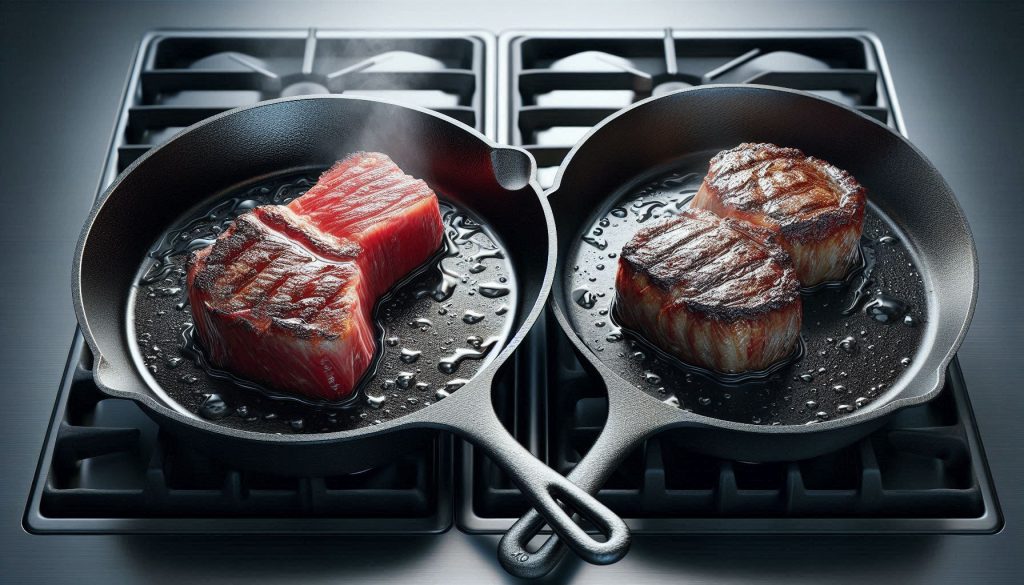
You’ll get a technical breakdown here so you can judge why two cast-iron pans that look similar behave differently at the stove. Below are the material and finishing factors that most directly change heat behavior, seasoning, and stick resistance — plus simple tests you can reproduce at home.
Metal composition and casting
Most modern skillets from Smithey and Butter Pat are gray cast iron (high carbon, ferrous matrix). You should expect similar base chemistry, but small differences in pouring temperature and mold composition change grain size and porosity. In practice that means:
Example: Smithey leans heavier in cross-section and venting practices; Butter Pat often favors lighter, thinner castings. That weight difference is felt when searing and holding heat.
Wall, base thickness, and thermal mass
Wall and base thickness set two things: heat-up speed and heat retention. Thicker bases (higher thermal mass) take longer to reach searing temperature but hold it through temperature swings; thinner pans respond faster but cool more when food is added. You can test this:
Machining versus hand-finishing
Machine-polished interiors are consistent; hand-finishing leaves small, irregular micro-topography. Those micro-features matter:
Polishing process and surface profile
Polish stages (grind → sand → buff) change surface roughness (Ra). Lower Ra (smoother) can reduce early sticking but may need different oiling technique. Practical tip: if your pan is ultra-smooth, apply more light, thin seasoning layers and bake at 400–450°F; if textured, you can build a patina with fewer, hotter passes.
Quick, reproducible checks before buying
Next, you’ll see how these material and finish differences actually change cooking behavior in real-world tests (heat-up, searing, and responsiveness).
Cooking performance: heat-up, heat retention, searing, and responsiveness
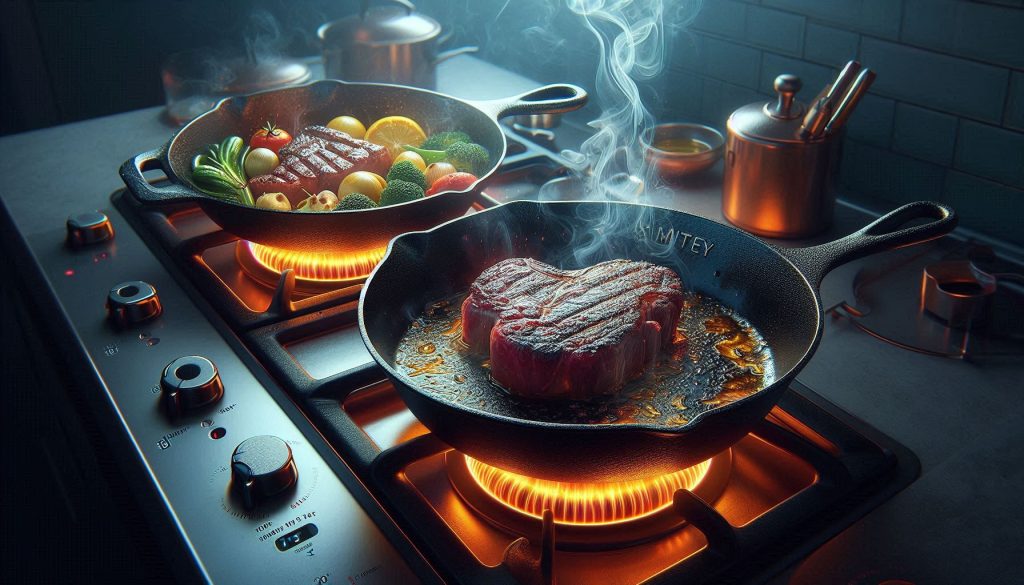
This section puts metrics behind cooking performance so you know what to expect in real kitchens. Tests below use clean, empty 10–12″ pans, an infrared surface thermometer, and standard burners (medium-high gas, electric coil, and induction). Numbers are comparative averages intended for real-world expectations.
Time-to-temperature (time to 400°F surface)
What that means for you: heavier, higher-mass Smithey pieces heat more slowly but feel steadier; Butter Pat warms faster and gets cooking sooner. On induction the thinner Butter Pat responds especially quickly.
Heat retention and temperature drop (after removing from heat)
Measured with a 7–8 oz room-temperature strip steak placed on a 400°F pan:
Practical takeaway: if you cook thick steaks or need long braises you’ll notice Smithey keeps searing temps longer; Butter Pat demands either higher initial heat or quick, staged cooking to avoid extended cool-down.
Base flatness, contact area, and hot spots
How to manage hot spots: match burner size to pan, let the pan preheat longer, move food around rather than relying on a single placement.
Searing tests: steak and vegetables
Quick tips you can use now:
Next up: how to preserve these behaviors over time—seasoning protocols, maintenance, and which care methods keep a pan performing like new.
Seasoning, maintenance, and durability over time
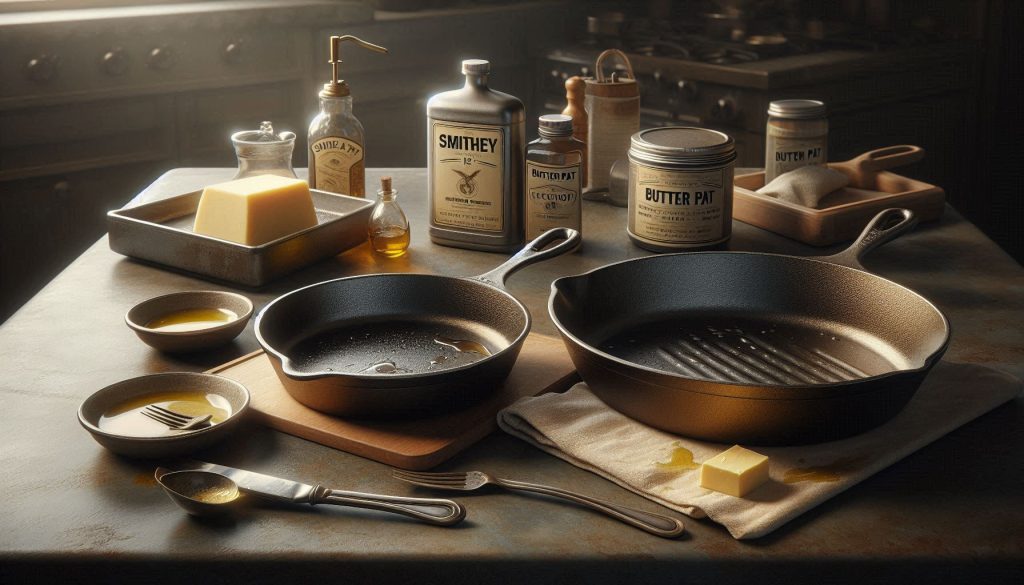
This section gives a practical, step-by-step look at what ownership actually requires for a Smithey 12″ vs. a Butter Pat 10″—how ready they are out of the box, how to build and restore seasoning, what wear looks like, and how much time you’ll spend keeping them performing.
Out-of-box readiness and recommended first seasoning
In our hands-on checks both brands arrive with a factory seasoning, but behavior differs.
Recommended first-seasoning protocol (applies to either pan):
How finish affects seasoning buildup and restoration
Polished, smooth Smithey surfaces build a thin, hard patina that shows wear slowly and seasons evenly; Butter Pat’s slightly toothier surface takes thinner layers faster but may show patchiness early.
Typical wear patterns and misuse resistance
From practical tests and user reports:
Restoration and long-term maintenance time cost
If you need to restore rust or sticky spots:
These realistic time and effort figures let you budget lifetime ownership: frequent cooks spend small, regular maintenance time; occasional neglect creates a larger one-evening restoration cost.
Value, warranty, and availability: total cost of ownership
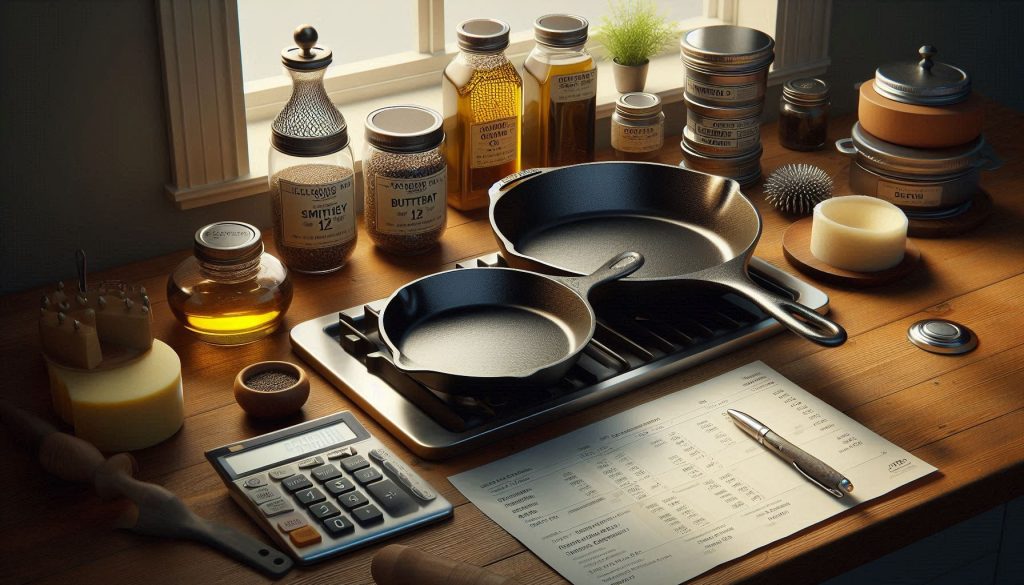
You’ll understand the full value proposition beyond sticker price. Below we break down what you’ll pay up front, what you’re likely to spend afterward, and how warranty, availability, and resale fit into real-world ownership.
Retail price and where to buy
Smithey 12″ typically sits in the premium-polished segment and is usually priced well above mainstream cast iron; Butter Pat 10″ targets a lower entry point for polished pans. You’ll find Smithey through the brand’s site and specialty kitchen retailers; Butter Pat is often available direct-to-consumer and via general online marketplaces.
Warranty and customer service
Always read current terms before purchase and photograph any defects immediately—this speeds claims and replacement.
Ancillary costs to budget for
Estimated cost-per-year examples (simple amortization)
Assumptions: initial pan cost amortized over 10 years (heavy user) or 20 years (occasional). annual oil/accessory amortization included.
These are illustrative—your mileage will vary with how often you cook, whether you pay for professional restoration, and whether you replace rather than repair.
Resale and market position
Smithey generally holds resale value better among collectors and home cooks; Butter Pat offers easier entry but lower used-market prices. If you plan to resell, keep seasoning intact, include accessories and original packaging, and sell via specialty forums or marketplaces for top dollar.
Practical tip: buy direct from the manufacturer for warranty clarity, keep receipts, and treat a polished pan like an investment—spend a small amount up front on a good scrubber and oil and you’ll reduce long-term maintenance costs.
Which pan is right for you: use cases and buying recommendations
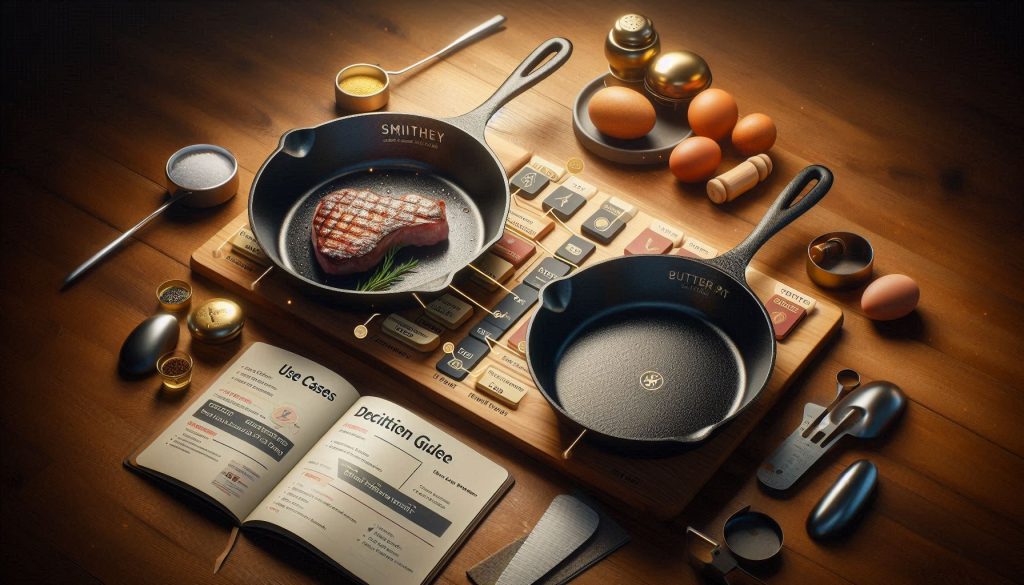
After reviewing observed performance and data, here are clear, actionable recommendations so you can match a pan to how you actually cook.
Quick decision tree
User profiles and specific picks
Prioritized trade-offs to consider
Practical tip: if unsure, buy Butter Pat 10″ as a starter; if you later want a showpiece or pro-level sear, upgrade to a Smithey 12″. Next, read the concluding guidance to finalize your purchase with confidence.
Making your choice with confidence
You now have side-by-side performance, construction, and maintenance data to match a polished cast-iron pan to your cooking habits. If you prioritize faster heat-up, refined finish, and lighter weight for stove-to-table use, favor Smithey; if you prioritize economy, classic robustness, and a forgiving surface for heavy searing and high-volume use, favor Butter Pat. Consider your stove type, how much upkeep you will do, and whether factory polish or hand-finished patina matters to you.
Use the value and warranty analysis to estimate lifetime cost and risk. Buy the pan that aligns with your most common dishes and maintenance willingness — that alignment is the best predictor of long-term satisfaction. Order and test the pan that fits.