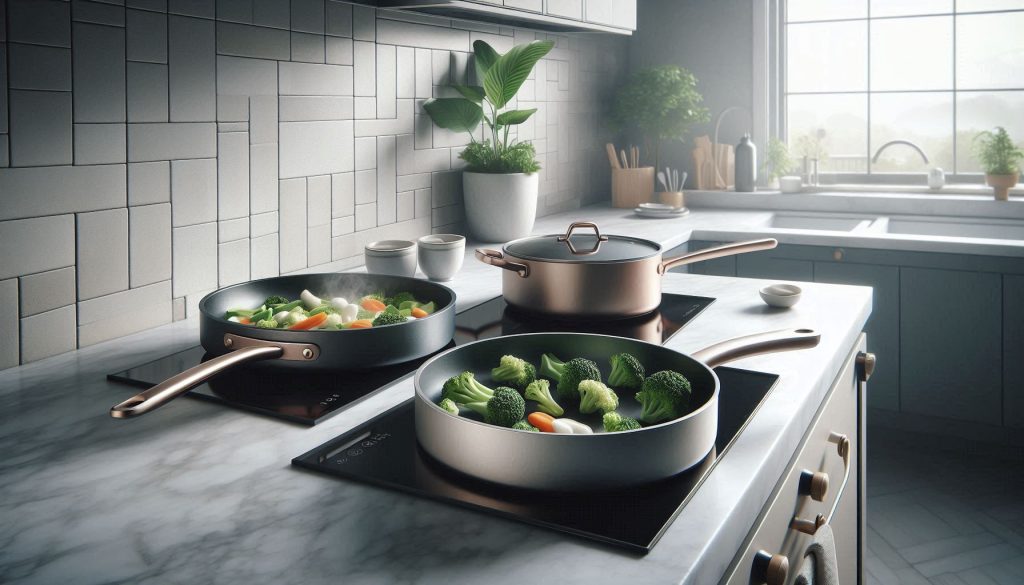
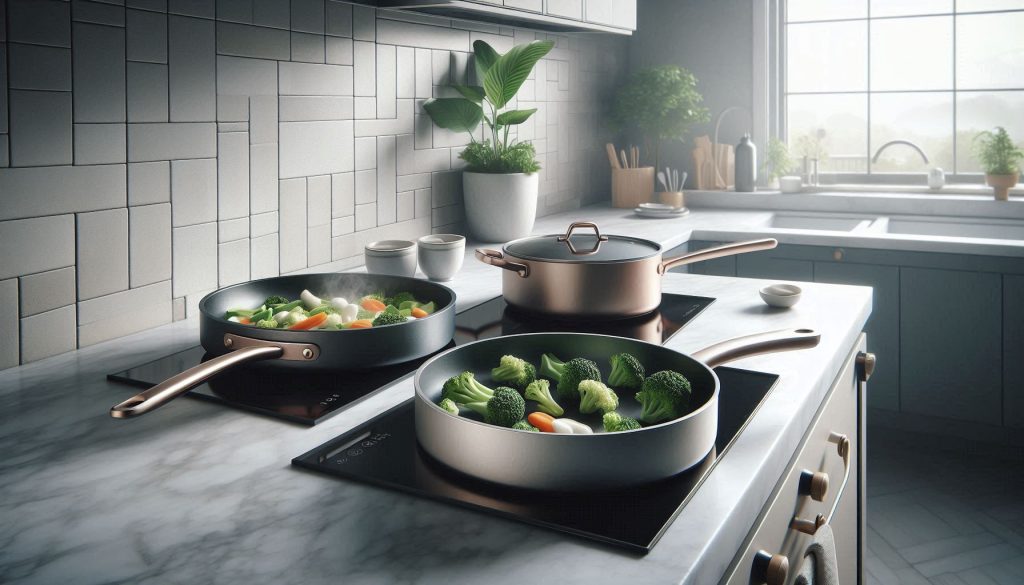
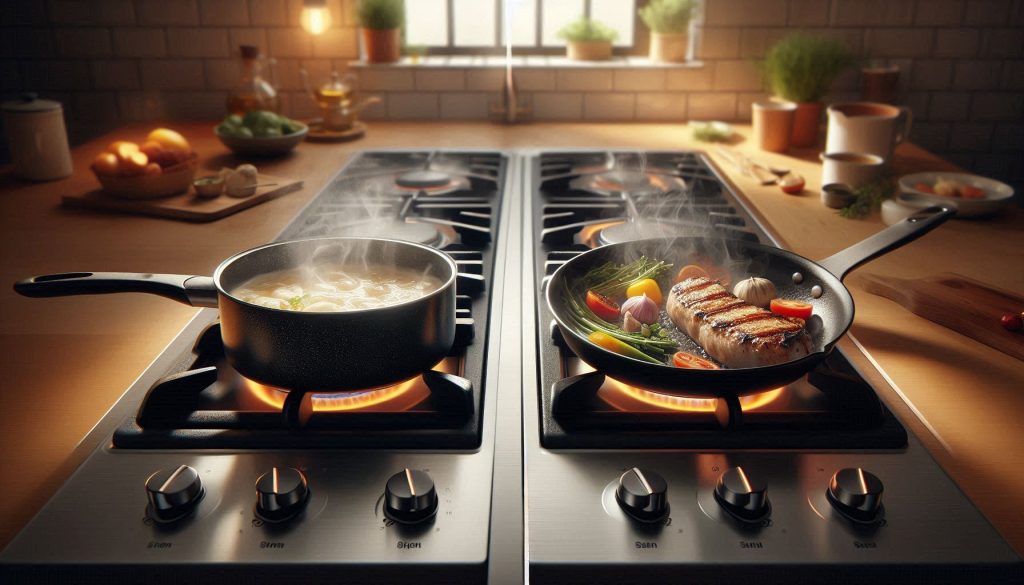
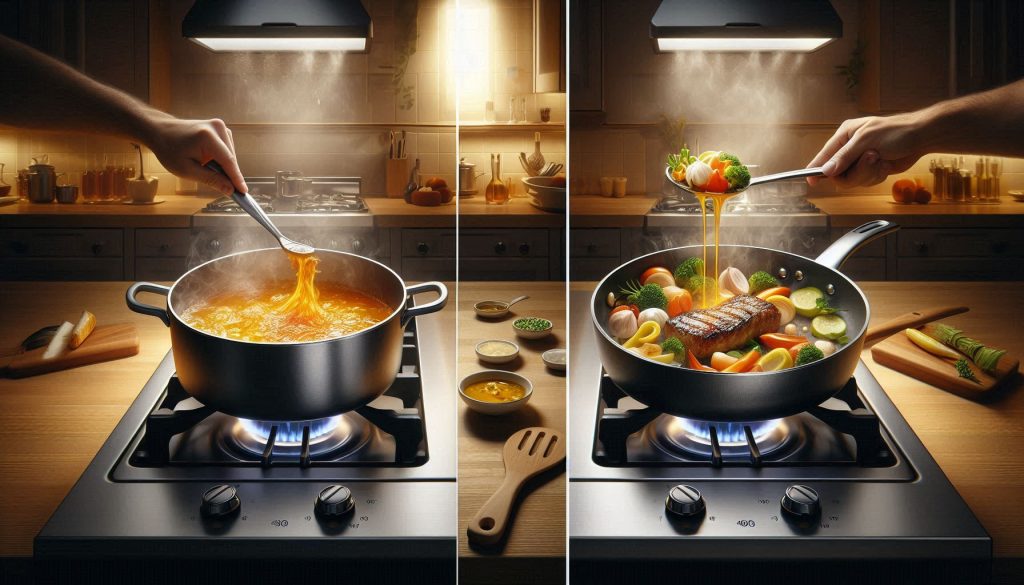
Elevating your kitchen with non-toxic luxury means finding the perfect intersection of high-end performance and chemical safety. While traditional nonstick pans have long relied on “forever chemicals” like PFAS and PFOA, modern culinary enthusiasts are shifting toward healthier alternatives that don’t sacrifice style. This guide provides an evidence-based comparison of Xtrema, Caraway, and GreenPan, evaluating their material safety, heat distribution, and long-term durability. By focusing on third-party lab results and construction quality, we help you navigate the “greenwashing” often found in home goods to find cookware that truly protects your family’s health.
Choosing the right eco-friendly cookware requires understanding the difference between fully vitrified ceramic and ceramic-coated metal. Whether you prioritize the absolute inertness of Xtrema’s 100% ceramic design or the rapid heat conductivity of Caraway and GreenPan’s aluminum cores, your decision impacts both your cooking results and your home’s environmental footprint. We analyze critical factors such as thermal decomposition thresholds, abrasion resistance, and lifecycle costs to ensure your investment stands the test of time. Read on to discover which non-toxic luxury brand aligns with your cooking routine and safety standards.
Why Non-Toxic Luxury Matters in Your Kitchen
You want cookware that performs like high-end gear without adding hidden chemical risk. Studies show everyday nonstick use can raise exposure to harmful compounds, so choosing materials matters. This article compares Xtrema, Caraway, and GreenPan across measurable criteria so you can decide with confidence.
We define non-toxic practically: materials and finishes that avoid PFAS, PFOA, heavy metals, and known migrant contaminants under normal cooking conditions. Evaluation draws on independent lab tests, manufacturer disclosures, safety certifications, and real-world cooking metrics.
Next, we examine Materials and Safety to see which construction truly minimizes chemical risk. Then we cover Performance and Durability—how they cook, last, and fit your routine. Finally, we assess Environmental Footprint, Lifecycle Costs, and Practical Buying Guidance so you can weigh health, longevity, and sustainability.
Read on for a clear, data-driven comparison to match your values and kitchen needs without compromising style either.
1
Materials and Safety: Which Construction Truly Minimizes Chemical Risk?
Understanding cookware construction is the key to minimizing chemical exposure in the kitchen.
You’re choosing between two fundamentally different strategies: a fully vitrified ceramic pot (Xtrema) versus metal core pans finished with ceramic-based nonstick coatings (Caraway, GreenPan). Those choices determine the chemical risks you’ll face, how you should test for safety, and the realistic ways each can fail in everyday use.
How the constructions differ — and why that matters
Xtrema: fully vitrified, 100% ceramic body and interior glaze. There’s no polymer coating to decompose or delaminate; the surface is inorganic glass fired at very high temperatures. That eliminates PFAS/PTFE/PFOA risks that are inherent to many polymer nonstick finishes.
Caraway and GreenPan: aluminum or aluminum-alloy cores for heat conduction, with a ceramic-based nonstick layer (GreenPan’s Thermolon, Caraway’s proprietary ceramic coating). These are still “coatings” bonded to metal — they can wear, abrade, or delaminate over time. The metal core can be exposed if the coating fails.
Why this matters for you: inorganic surfaces lower the risk of volatile fluorinated decomposition products. Coated metal systems concentrate risk in two ways — loss of coating (particles, flakes) and potential exposure to the substrate metal (aluminum, nickel in stainless-steel layers) if the barrier is compromised.
Which lab tests and measurements actually tell you something
When a brand says “non-toxic,” ask for specific, third‑party data. The laboratory methods that meaningfully evaluate chemical safety are:
ICP‑MS (inductively coupled plasma mass spectrometry) or XRF for heavy metals: measures lead, cadmium, and other elements in the surface or in food simulant after extraction. You want values below detection limits or at least far under regulatory migration thresholds.
GC‑MS (gas chromatography–mass spectrometry) and TGA/GC for thermal decomposition: detects volatile organic compounds (VOCs) and decomposition products when coatings are heated to realistic misuse temperatures.
Abrasion and wear testing plus particle analysis (SEM, particle counters): quantifies how much coating is lost under simulated utensil use (cycles of scraping/abrading).
Standardized leach/extraction tests with food simulants (acidic, alkaline, fatty) at cooking temperatures to mimic real food contact.
Look for ISO/IEC 17025–accredited lab reports rather than internal tests. Statements of “PFAS‑free” should be backed by targeted analyses for common PFAS families (and ideally a broad-screening PFAS assay).
Realistic failure modes to watch for
Coating abrasion and flaking: repeated scraping with metal utensils or abrasive pads accelerates loss. Independent abrasion tests simulate thousands of strokes and compare mass loss (mg) or % surface loss.
Thermal decomposition: polymer-based coatings (PTFE) degrade at high temperatures; ceramic-based coatings have higher thresholds but can still off‑gas under extreme misuse. GC‑MS/TGA data tell you at what temperatures VOCs appear.
Delamination: inadequate bonding or thermal cycling can create voids; once delamination begins, flakes and underlying metal exposure follow.
Thermal shock and chipping (ceramic pots): vitrified ceramic can crack or chip if dropped or moved from very hot to cold surfaces; chips are a failure mode but not the same chemical risk as a polymer coating flake.
A short real-world example: if you habitually sear on high heat, a coated aluminum pan that hasn’t been validated for repeated 450°F misuse is more likely to show off‑gassing or rapid abrasion than a vitrified ceramic pan — but that ceramic pan is at higher risk for cracking if you dunk it in cold water.
What to demand from brands (and what acceptable thresholds look like)
Ask for:
ICP‑MS/XRF reports showing lead and cadmium below detection limits (or in the low ppb range). Look for the lab method and LOD (limit of detection).
GC‑MS/TGA off‑gassing data across a temperature range up to at least 500°F (260°C) with clear reporting of detected compounds and their concentrations.
Abrasion/wear test protocols with quantified results (mass loss after X cycles) and SEM images of the worn surface.
ISO/IEC 17025 accreditation for the testing lab, plus compliance statements to FDA or EU food-contact regulations (EC 1935/2004).
Acceptable signals: “no detectable PFAS by targeted assays,” metal migrants below lab LODs, and abrasion loss quantified and contextualized (e.g., <0.5% mass loss after 5,000 cycles). Absence of data = question the claim.
Practical safety rules you can use now
Use medium heat unless a product’s thermal decomposition data justifies higher temperatures.
Avoid metal utensils on coated surfaces; that reduces abrasion and particulate risk.
Inspect cookware for chips, cracks, or flaking; replace if coating is compromised or if you see particulate loss.
Prefer vendors who publish independent lab reports, name the labs, and specify methods and LODs.
Next up: we’ll take those materials-and-safety realities into the kitchen — comparing how these constructions actually cook, how long they last under real use, and which fits your routine and maintenance habits.
2
Performance and Durability: How They Cook, Last, and Fit Your Routine
How cookware materials change the way heat, food release, and durability show up in everyday cooking.
You need cookware that behaves the way you cook. Below is a practical, test-driven comparison of how fully vitrified ceramic (Xtrema) and metal-core ceramic-coated pans (Caraway, GreenPan) heat, release food, survive daily wear, and integrate with your stovetop and cleaning habits.
How to evaluate performance — trust these test protocols
Use or ask for results from reproducible tests, not marketing copy:
Timed heat‑up: measure minutes to reach target surface temperature (e.g., 350–375°F) on a specified burner and power setting. This shows responsiveness.
Thermal imaging / surface thermography: reveals hot spots and radial evenness across the cooking surface.
Quantitative stick tests: cook standardized eggs, pancakes, and seared steaks, then rate release by force needed (e.g., using a kitchen spatula across a set distance) or by a simple 0–5 stick scale.
Abrasion and utensil‑scratch testing: cycle a standardized nylon/metal scraping protocol and report mass loss or surface damage after X cycles.
Oven/heat‑abuse ramp: hold empty pan at stepped temperatures and run GC‑MS/TGA to detect off‑gassing thresholds; useful for safe max temps.
When brands publish those data, you can see real differences instead of promises.
Typical cooking behaviour: heat-up, distribution, and responsiveness
Metal-core, coated pans (Caraway, GreenPan): heat up faster because aluminum cores conduct quickly. That means better responsiveness for quick temperature changes (flip from sauté to sear). Thermal imaging usually shows quicker center heating but can have slight edge-to-edge gradients depending on base thickness. These pans are generally better for fast searing and rapid stir-fry work.
Monolithic ceramic (Xtrema): heats more slowly and holds heat well. It’s less “snappy” when you change burner settings, but it maintains steady temperatures, which is excellent for braises, oven-to-table use, and sauces that need stable low-to-medium heat. Thermal imaging often shows very even surfaces once fully heated.
Practical note: if you frequently do high-heat searing, you’ll appreciate the responsiveness of a thick metal-core pan (for example, GreenPan’s pro lines or heavier Caraway skillets). If you braise, roast, or make delicate sauces, a Xtrema pot’s heat retention is an advantage.
Nonstick release and everyday cleaning
Initial release: Ceramic-coated metals usually deliver superior immediate nonstick release for eggs, crepes, and low-fat frying when new. Expect excellent out-of-the-box performance with Caraway or GreenPan.
Long-term release: Coated surfaces lose release as abrasion accumulates. Monolithic ceramic may feel less slick initially, but it doesn’t flake; with proper seasoning/oiling it remains serviceable for years.
Cleaning: Coated pans often advertise dishwasher safety, but hand-washing extends life. Xtrema tolerates aggressive cleaning but is sensitive to thermal shock (no dunking from oven to cold water).
Utensil sensitivity: Avoid metal on coated surfaces — repeated metal contact accelerates abrasion. Vitrified ceramic tolerates metal better without chemical risk but can chip if hit.
Recommended operating temperatures and care
Metal-core coated pans: follow manufacturer max-temp guidance. As a rule, avoid prolonged dry‑heating above ~450–500°F unless the brand publishes higher safe limits and off‑gassing data.
Xtrema / vitrified ceramic: can tolerate higher stable oven temperatures and repeated high-heat use, but avoid thermal shock. Don’t move a blazing-hot ceramic pot directly to a cold surface or run under cold water.
Durability: how cookware fails and when to retire it
Coated metal failure modes: abrasion, loss of release, scratches that accumulate into partial delamination. Retire when you see persistent sticking that doesn’t improve with oil, visible flaking, or exposed substrate metal.
Monolithic ceramic failure modes: chipping, cracking, crazing. Retire if structural cracks allow leakage, or if multiple chips create hygiene or performance issues.
Other signs to retire: warped bases that prevent firm stovetop contact, or off odors/smoke that suggest surface degradation.
Warranty and support matter: check whether warranties cover normal wear vs manufacturing defects, what proof is required, and real customer-report turnaround times. Brands that publish independent test data and have responsive claims processes reduce your cost‑of‑ownership risk.
Which fits your cooking life? Practical scenarios
High-heat searing & quick weekday dinners: a heavy metal-core coated pan (e.g., GreenPan Valencia Pro, Caraway skillet) gives rapid heat and good initial nonstick; keep a stainless or cast-iron partner for heavy searing.
Gentle eggs, low-oil breakfasts: a new Caraway or GreenPan pan is the easiest for fuss‑free release; expect to replace sooner with heavy use.
Everyday longevity with chemical stability: Xtrema is attractive if you prioritize a fully inorganic surface and consistent long-term chemistry — accept more weight and cautious handling to avoid chips.
Oven-forward cooking and one-pot meals: Xtrema’s heat retention and oven safety are strong advantages.
Next, we’ll put these performance and durability realities into lifecycle perspective — comparing environmental footprints, lifecycle costs, and concrete buying guidance to help you choose the right non‑toxic luxury for your kitchen.
3
Environmental Footprint, Lifecycle Costs, and Practical Buying Guidance
How cookware materials change the way heat, food release, and durability show up in everyday cooking.
You care not only about immediate safety and performance but about upstream and downstream impacts. Below is a practical, data‑driven way to think about environmental footprint, lifecycle costs, and the evidence you should demand before you buy.
What lifecycle metrics matter (and why)
Think of a pan’s impact as more than what’s on the label. Key metrics to weigh:
Raw‑material impacts: energy and emissions to extract aluminum vs. to mine and fire the clays/glazes used in vitrified ceramic.
Production emissions/energy intensity: aluminum smelting + coating lines are energy intensive; firing ceramic requires sustained high heat—both have measurable carbon footprints.
Product longevity: the single biggest lever. A longer‑lasting pan spreads upstream impacts over more years.
Recyclability / end‑of‑life: aluminum cores are readily recycled if the coating can be separated; monolithic ceramics are hard to reclaim but can be down‑cycled as aggregate.
Transport footprint: heavier cookware increases shipping emissions; local manufacture reduces transport miles.
How these interact with human‑health questions: a fully inorganic, heavy Xtrema pot may have a higher upfront manufacturing footprint and weight (higher transport emissions) but offers long chemical stability and potentially much longer usable life. Coated metal pans (Caraway, GreenPan) can have lower first‑mile weight and faster heating, but coatings require chemical processing and may need replacement sooner — increasing lifetime emissions and the chance of off‑gassing if abused.
Estimating true cost-per-year (simple math you can use)
Calculate realistic total cost per year:
Add purchase price + a conservative replacement cost estimate over expected life.
Divide by expected usable years (use durability/warranty + your cooking habits).
Include probable repair/retirement events (e.g., re‑coating rarely offered; full replacement likely).
Example:
Caraway skillet: $150, realistic life = 3–5 years with heavy daily use → $30–$50/yr.
Xtrema 100% ceramic pot: $300, realistic life = 8–12 years with careful use → $25–$37.50/yr.
You can see a higher upfront price can pay off if the product actually lasts. Factor in the “replacement hassle” and whether you’ll tolerate a degraded nonstick surface before replacing.
Third‑party evidence to request (don’t buy blind)
Ask to see, and prefer products with:
EPDs (Environmental Product Declarations) or full LCAs for cradle‑to‑gate or cradle‑to‑grave impact data.
Material declarations (BOMs) showing substrate, binders, and surface chemistries.
Independent lab reports (GC‑MS, TGA) for off‑gassing at typical and abusive temps.
Certifications for recycled content or manufacturing emissions (where available).
Real customer warranty claim statistics or repair/return rates.
Brands that publish EPDs or independent tests make it easier for you to compare apples to apples.
A simple decision matrix (quick scoring)
Score 1–5 (5 best) across priorities and add totals — use this on the showroom page:
Priority: Absolute inertness / chemical minimalism
Xtrema: 5
Caraway: 3
GreenPan: 3
Priority: Fast, high‑heat performance
Xtrema: 3
Caraway: 4
GreenPan (pro lines): 5
Priority: Environmental footprint over lifecycle (if fully utilized)
Xtrema: 4 (long life offsets heavy production)
Caraway: 3
GreenPan: 3
Priority: Budget / lowest cost-per-year with heavy replacement
Xtrema: 3
Caraway: 4
GreenPan: 4
Use the totals to match the brand to your priorities (absolute inertness favors Xtrema; rapid cooking favors GreenPan/Caraway).
Practical buying guidance — which to choose when
If absolute chemical minimalism is your top priority: choose fully vitrified ceramic (Xtrema). Accept weight, careful handling, and verify the company’s LCA or material declarations.
If fast, reliable nonstick and quick heat response fit your routine: pick a well‑made metal-core ceramic coat (Caraway or GreenPan Pro). Inspect warranty terms and published abrasion/off‑gassing tests.
If you want long‑term value and sustainability: favor the product that publishes independent durability tests, offers reasonable warranty support, and — crucially — you are willing to treat gently to realize lifespan claims.
Checklist: What to ask before you buy
Do you have an EPD or independent lifecycle assessment for this model?
What is the expected usable life under “regular home use,” and what does the warranty actually cover?
Are there independent lab reports for off‑gassing at high temperatures?
What materials and processes are used in the coating and substrate? Any recycled content?
How should I retire/recycle this item at end‑of‑life?
Armed with these answers you’ll be ready to weigh immediate safety against lifetime environmental and financial costs. Next, we’ll draw this together into a clear set of criteria and specific next steps to help you finalize your choice.
Choosing Your Non-Toxic Luxury: Clear Criteria and Next Steps
You should prioritize three decision criteria: (1) material construction and independent safety data — prefer fully ceramic or hard-anodized aluminum with independent lab reports for heavy metals and PFOA/PFAS-free verification; (2) real-world performance and durability — look for verified abrasion, adhesion, and high-heat cycling tests or reputable long-term user reviews; and (3) lifecycle and cost — factor replaceability, repairability, and end-of-life recyclability into the total cost. Use these to rank options by which trade-offs (weight, heat responsiveness, longevity) matter most to your cooking routine.
Before buying, request one or two documents: the brand’s third‑party chemical test report and a warranty/repair policy. Immediate care steps: season if recommended, avoid metal utensils and thermal shock, clean gently without abrasive pads, and follow manufacturer heating limits. Doing this turns cookware into an evidence-based, long-lasting investment for your kitchen and health.