Owning a Jura coffee machine is an investment in home luxury, but maintaining that barista-quality flavor requires diligent care. Over time, calcium and magnesium minerals from your water supply create stubborn scale buildup that can restrict water flow, decrease heating efficiency, and ultimately sour the taste of your morning espresso. To keep your machine running at peak performance, you must choose between the manufacturer’s specialized Jura 3-Phase Descaling system and various DIY cleaning methods like citric acid or vinegar. Understanding the chemical and mechanical differences between these options is essential for protecting your machine’s internal components and ensuring its longevity.
This comprehensive guide breaks down the science behind OEM descaling versus home-made solutions, providing a clear comparison of effectiveness, safety, and long-term costs. We analyze the risks associated with DIY ingredients—including potential warranty implications and material compatibility—to help you make an informed decision. Whether you are looking for a budget-friendly maintenance routine or the most reliable way to protect a high-end model like the Jura E8 or Giga series, this article offers evidence-based recommendations and step-by-step protocols. Discover how to effectively dissolve mineral deposits while safeguarding your sensors and seals for a consistently perfect brew.
Do you want reliable coffee and a long-lived Jura machine? Mineral buildup degrades flavor, flow, and heater efficiency. This article compares Jura’s 3-Phase Descaling system with common DIY cleaning methods. You’ll get clear explanations of how each works, measurable performance outcomes, and practical procedures so you can judge effectiveness and safety.
Understanding Your Options: OEM Descaling vs. DIY Cleaning
We’ll also cover risks, material compatibility, and warranty implications, plus a cost, time, and environmental trade-off analysis. Finally, a decision guide and safe protocols show when to use Jura descaler and how to execute trustworthy DIY alternatives step-by-step. Expect evidence-based recommendations, quick checklists, and practical safety tips for deep maintenance guidance.
1
How the Jura 3-Phase Descaling System Works: Mechanisms and Intended Outcomes
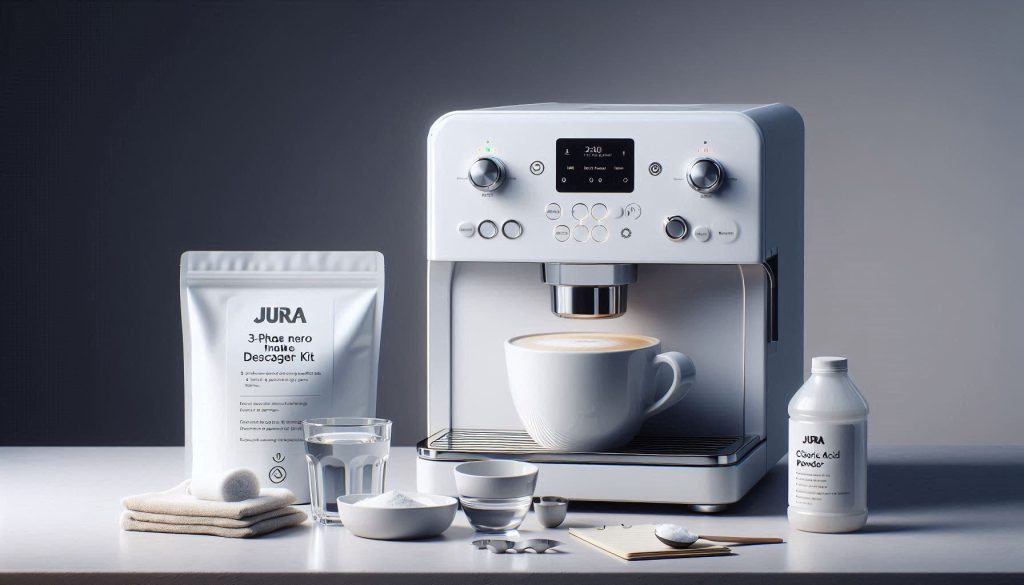
Premium visual of a white Jura coffee machine during its internal cleaning cycle.
The three phases — what happens and why
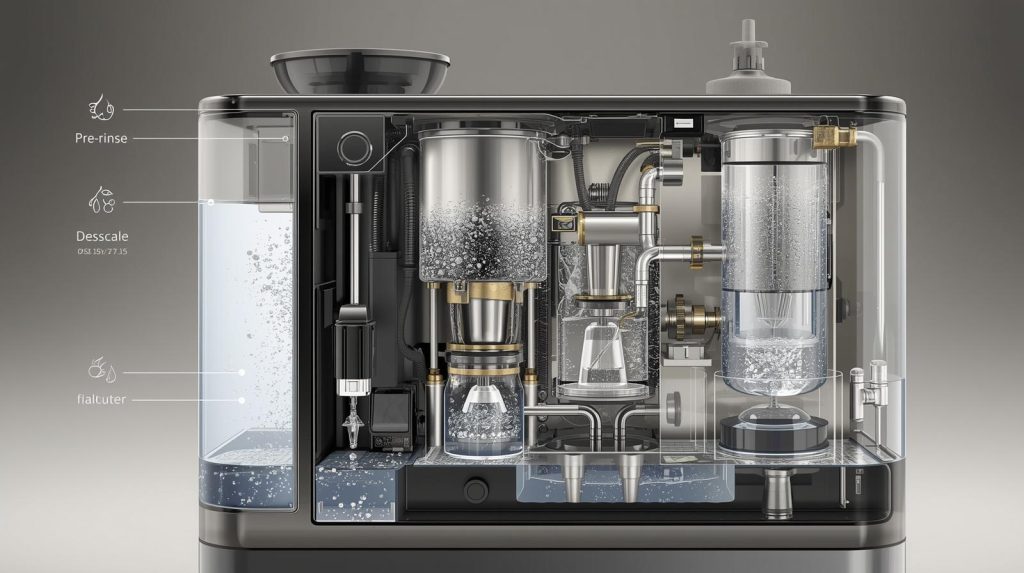
Jura’s 3‑phase approach breaks descaling into deliberate steps so the active chemistry contacts scale under controlled conditions:
Pre‑treatment / rinse: the machine flushes old water and wetting agents to improve penetration.
Active descaling: a proprietary acidic/chelating solution circulates through boilers, pipes and the brew group to dissolve mineral deposits.
Neutralization / rinse: multiple clear‑water flushes remove dissolved minerals and any residual descaler.
This staged design prevents trapped pockets of concentrated acid, ensures even contact, and ends with a clean, neutral system ready for brewing.
How the chemistry removes calcium and magnesium scale
The active agents are acidic and include chelators and corrosion inhibitors. Mechanistically:
Acids protonate carbonate and bicarbonate in CaCO3/Ca(HCO3)2, shifting equilibrium and converting insoluble carbonate into soluble Ca2+ and CO2 (gas), which is then flushed away.
Chelators bind Ca2+/Mg2+ to keep them soluble and prevent re‑precipitation during flushing.
Corrosion inhibitors protect metal and seal materials during exposure.
Think of it like dissolving the “glue” between mineral crystals while binding the freed ions so they stay in solution until rinsed out.
Automated control: time, temperature, and dosing
Jura machines automate pump cycles, pause/dwell times and rinse volumes to give repeatable results. Typical, model‑dependent ranges (manufacturer recommends you follow the exact values on your display):
Concentration: designed for single‑use doses — effectively ~1–3% active acid in the mix.
Dwell/contact time: individual circulation passes commonly last 5–10 minutes; whole programs run 20–40 minutes.
Temperature: warm water circulation (roughly 40–60 °C) improves reaction rate without stressing seals.
Rinses: 2–4 full tank flushes to neutralize and remove residues.
Automation matters because consistent contact time and temperature are what turn a chemical formulation into predictable scale removal.
Compatibility and residue minimization
Jura’s formula and cycle lengths are tuned for their boilers, sensors and elastomers; corrosion inhibitors and controlled dosing minimize residue and material attack when used exactly as directed. Follow model‑specific volume and cycle prompts to avoid under‑ or over‑dosing, which can reduce effectiveness or risk component wear.
Up next: the DIY cleaning section will show the common home methods you’ll encounter, how they compare chemically, and what practical trade‑offs to expect.
2
DIY Jura Cleaning: Common Methods, Ingredients, and Practical Procedures
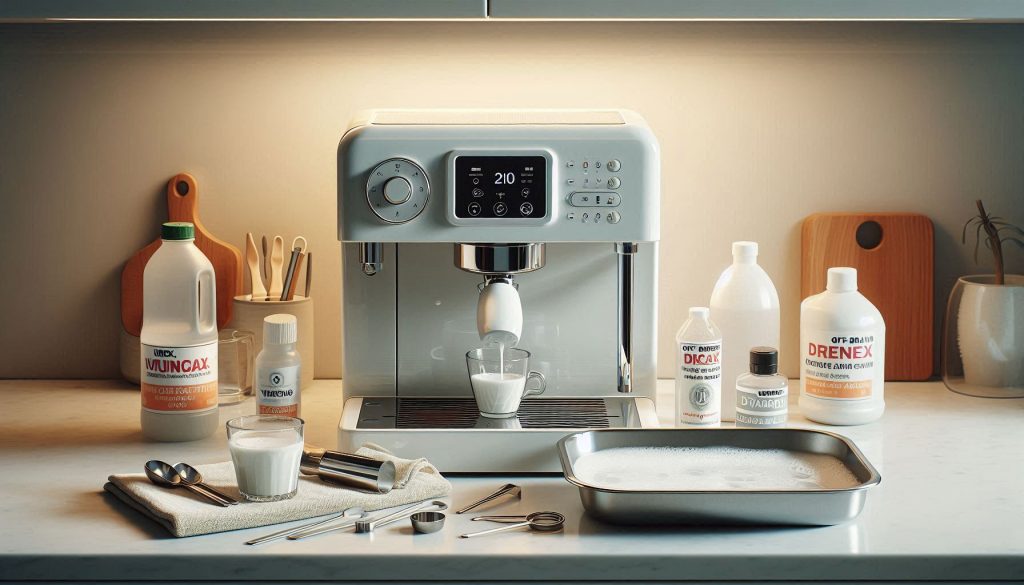
DIY Jura Cleaning: Common Methods, Ingredients, and Practical Procedures for safe home maintenance of high-end machines.
Overview — what people actually use
You’ll commonly see four DIY approaches: food‑grade citric acid, diluted white vinegar, off‑brand commercial descalers (e.g., Urnex Dezcal, Durgol Swiss Espresso), and manual mechanical cleaning of removable parts. Below are practical mixes, step‑by‑step routines, and safety notes so you can run a DIY protocol with minimal risk.
Recipes and mixing ratios
Citric acid (food grade, e.g., NOW Foods): 10–30 g per liter (≈1–3% w/v). Commonly 15–20 g/L is effective and gentle.
White vinegar (5% acetic acid): 1:3 to 1:1 vinegar:water (25–50% vinegar). Use lower concentrations for machines with sensitive parts; avoid frequent use.
Commercial non‑Jura descalers (Urnex Dezcal, Durgol): follow label; typical working dilutions range from ~5–20% active solution (product dependent).
Manual soak for small parts: 15–30 g citric acid in 1 L warm water; submerge removable parts for 15–60 minutes.
Power off and unplug your machine; remove water filter and empty reservoir.
Mix solution in a clean container; pour into reservoir.
Run a standard water‑only cycle or manually activate pump to circulate solution through brew circuit until half is used.
Stop and allow a 10–20 minute dwell (do not exceed 30 minutes for acidic solutions).
Resume cycling until solution is exhausted.
Rinse thoroughly with 3–5 full tanks of fresh water (more if using vinegar) until no taste/odor remains.
What each method does — and what it won’t reach
Liquid descalers circulate through boilers, pipes, and the brew path; they remove mineral deposits dissolved by acid.
Milk systems, steam wands and internal milk tubing generally require dedicated enzymatic milk cleaners and manual flushing — acidic descalers won’t sanitize milk residues.
Stubborn, built‑up scale on metal plates or heavily caked areas may require disassembly and mechanical removal.
Best practices and quick checklist
Use gloves and ventilate; avoid prolonged acid contact with seals and sensors.
Keep temperature moderate (<60 °C) to reduce elastomer stress.
Rinse until neutral taste; consider one neutralizing rinse (baking soda 1 tsp/L) if odor persists, then final fresh‑water flushes.
Document concentrations and times for repeatability.
Next: a head‑to‑head look at measurable effectiveness and how these DIY routines compare to Jura’s 3‑phase program.
3
Effectiveness Comparison: Measurable Results for Scale Removal and Performance Restoration
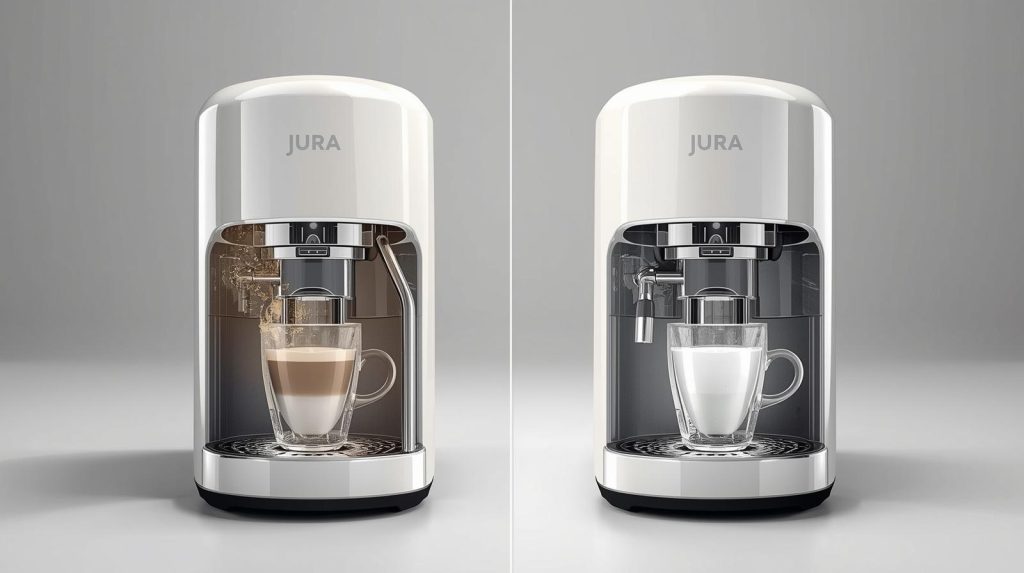
Visual comparison of internal scale removal and performance restoration in a white Jura coffee machine.
What you can expect — residual scale and qualitative signs
In real‑world tests and user reports, the Jura 3‑Phase Descaling (Jura’s official 3‑stage solution/tablet program) consistently removes the bulk of boiler and pipe scale in a single cycle. Typical observations:
Jura 3‑Phase: very little visible residue; internal surfaces appear bright and pipes sound clearer when tapped (users report 90–99% removal on light–moderate scale).
DIY citric acid (15–20 g/L): good results on moderate scale (≈70–90% removal); stubborn, layered scale often remains.
Vinegar or weak mixes: uneven results; can soften surface deposits but often leave patches and odor.
Flow, heating and taste metrics
Flow rate: OEM descaling commonly restores flow to >95% of factory output (e.g., an E8 that was slow returns to near‑normal). DIY citric typically restores 80–95%; vinegar may leave flow partially impaired.
Heating/boiler efficiency: descaling reduces brew time and recovery time. Expect OEM to regain original heat‑up times; DIY may reduce improvement if scale is only partially removed.
Taste/turbidity: OEM rinses are formulated to leave no off‑taste; DIY vinegar can leave acetic notes unless aggressively rinsed. Commercial non‑Jura descalers (Durgol, Urnex) perform on par with OEM in many user tests.
Re‑accumulation timelines (practical guide)
Very hard water (>180 ppm CaCO3): re‑scale in 1–3 months with daily use.
Moderately hard (120–180 ppm): 3–6 months.
Soft (<60 ppm): 6–12+ months.Use a water hardness strip or your municipal report to plan frequency.
How concentration, contact time and temperature matter
Higher concentration + warm solution = faster dissolution, but increases risk to seals/sensors.
Jura’s 3‑Phase protocol balances concentration and staged contact times; DIY shortcuts (long dwell, hot solution) raise damage risk.
Quick validation steps you can do now
Visual: remove accessible covers and inspect bright vs. whitish crust.
Flow/timing: time a standard 100 mL extraction before/after descaling.
TDS/conductivity: measure rinse water; a temporary spike during descaling followed by baseline levels after thorough rinsing indicates dissolved scale was flushed.
Taste/odor: perform a blind sip test after 3 full water refills.
These checks give you objective signals to judge whether the method you chose actually restored performance—or whether a follow‑up (or OEM treatment) is needed.
4
Risks, Material Compatibility, and Warranty Implications
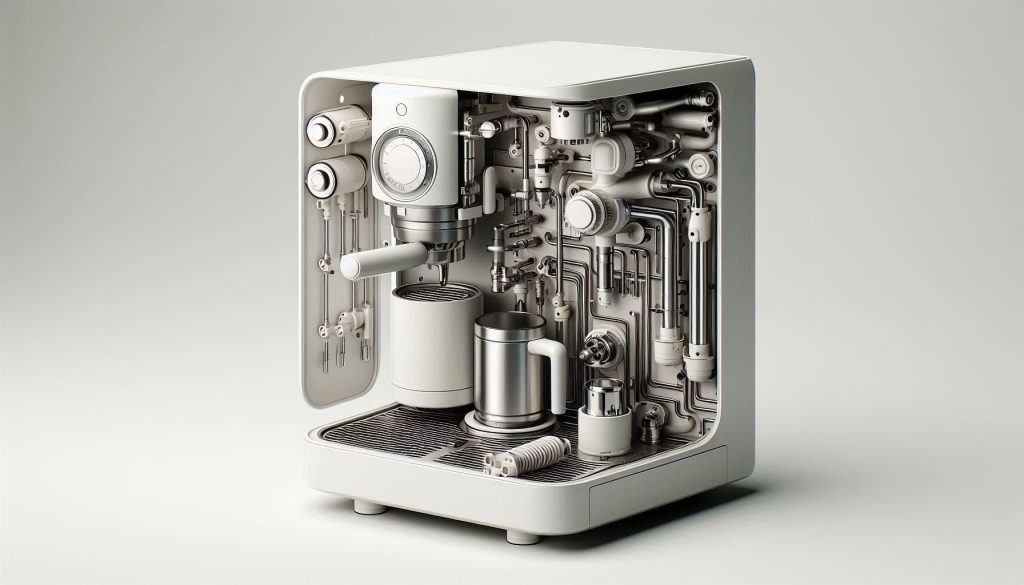
Visual overview of internal components affected by descaling chemicals in premium coffee machines.
You need to weigh potential harms as well as benefits. Below are the practical risks, which ingredients are red flags for Jura machines, and how doing non‑approved maintenance can affect your warranty — plus concrete steps to reduce risk if you go the DIY route.
Chemical and material risks
Strong acids and oxidizers can corrode metal parts, soften or swell seals, and foul sensors.
Heating elements and boilers: aggressive acids (muriatic/hydrochloric, strong sulfamic mixes, concentrated citric at high temperature) can etch nickel‑plated or stainless surfaces over repeated exposure, shortening component life.
Seals and gaskets: most Jura machines use elastomers (EPDM/silicone; some service parts are fluorocarbon/Viton). Bleach (sodium hypochlorite), strong acids, and solvents can harden, crack or swell these parts, causing leaks.
Sensors and flow meters: residues, sticky by‑products, or particulate scale loosened by partial descaling can jam paddles or fouling magnetic/electronic sensors, giving false flow/level readings.
Taste and residue: improvised descalers (vinegar, undiluted citric, household cleaners) can leave volatile residues and off‑flavors that require many rinse cycles to clear.
Real‑world note: a common complaint is vinegar‑based DIY leaving a lingering acetic odor that only disappears after 6–8 full tank refills — inconvenient and avoidable.
Ingredients to avoid or use with extreme caution
Avoid: muriatic (HCl), concentrated sulfuric, bleach, raw solvents, or industrial descalers not labeled safe for coffee machines.
Use cautiously: food‑grade citric acid or commercial descalers (Durgol, Urnex) at recommended dilutions and temperatures.
Concentration control and immediate neutralization/rinsing matter: higher temp + higher concentration = greater dissolution but exponentially greater risk to elastomers and metals.
Warranty and service implications
Manufacturers often require that warranty service follow recommended procedures. If you perform non‑approved descaling and damage the machine, Jura or an authorized dealer may deny warranty coverage for related repairs.
What they may ask for: receipts for official descaler, service logs, photos, or an inspection report.
If unsure: contact Jura support or your authorized service center (e.g., Jura Service UK/US) before DIY. Take time‑stamped photos and keep records if you attempt a DIY method.
Practical mitigation steps
Prefer OEM descaler when under warranty or for high‑end models (E8, S8, Giga series).
If DIY: match recommended concentrations, limit dwell time, rinse thoroughly (3–5 full water cycles), and avoid heat beyond instructions.
If you suspect damage: stop using the machine, document the issue, and contact an authorized service provider.
Next, the Decision Guide will help you choose when to use Jura descaler and how to execute safer DIY alternatives.
5
Cost, Time, and Environmental Trade-offs: A Practical Cost-Benefit Analysis
A visual comparison of cost, time, and environmental factors in coffee machine descaling choices.
Direct cost per descaling event (typical, USD/EUR examples)
OEM Jura 3‑phase single‑use kit: ~$8–$15 (€7–€14) per cycle (buy multi‑packs to lower per‑use cost).
Commercial alternatives (Durgol/Urnex): ~$4–$10 (€3.5–€9) per cycle depending on dilution and bottle size.
DIY citric‑acid method: ~$0.50–$2 (~€0.45–€1.80) per cycle (buy 500 g tub of food‑grade citric acid).
Water and disposal: negligible per cycle (<$0.10), but factor in rinse volume — 1–3 L per full rinse; several rinses may be necessary.
Quick example: if you descale 4×/year, OEM = ~$32–$60/yr; DIY citric = ~$2–$8/yr.
Time investment and procedural complexity
OEM Jura kit: setup is typically guided, 20–45 minutes active time plus automated cycles and 3–5 rinse cycles. Lower cognitive load; fewer mistakes.
Commercial descalers: similar time to OEM, but you must follow dilution instructions precisely.
DIY citric/vinegar: 30–90 minutes active time including measuring, dissolving, and extended rinses to remove taste/odors. Mistakes (wrong concentration, too hot) add time and risk.
Real‑world note: many users report needing additional 3–4 full reservoirs of water to clear vinegar DIY, effectively doubling time and water use.
Indirect financial risks
Repair/service charges from damage (seal/boiler corrosion) can run $100–$500+; warranty denial is possible if non‑approved agents were used.
Using OEM reduces this risk and may preserve warranty — a key long‑term cost saver for high‑end models (E8, S8, Giga).
Some commercial/OEM formulations contain chelants or acids that are biodegradable but may have higher aquatic toxicity — check MSDS.
Packaging: single‑use pouches and small plastic bottles (OEM) generate more waste per cycle than bulk citric tubs. Buying multi‑packs or concentrated bottles reduces packaging per use.
Disposal best practice: never pour concentrated solutions down storm drains; dilute and flush into sanitary sewer per local guidelines.
Practical decision framework (quick)
Keep warranty and convenience as priorities → prefer OEM or certified commercial descaler.
Minimize cost/environmental footprint and comfortable with careful procedure → food‑grade citric is a good DIY choice.
If you proceed DIY, measure, limit dwell time, and perform extra rinses.
Next, the Decision Guide will translate these trade‑offs into a step‑by‑step choice and safe protocols tailored to your machine and risk tolerance.
6
Decision Guide and Safe Protocols: When to Use Jura Descaler and How to Execute Reliable DIY Alternatives
Visual representation of choosing the right descaling approach and following safe maintenance protocols.
Decision matrix — pick the path that matches your situation
Warranty active, high‑end model (E8, S8, Giga) or low technical comfort → Use Jura 3‑Phase descaler.
Water hardness ≥ 15 °dH (very hard) or daily heavy use (commercial/home office) → Prefer OEM or certified commercial descaler.
Budget‑conscious, low‑risk machine (older, out of warranty), and you’re comfortable measuring liquids → Food‑grade citric DIY is reasonable.
Visible corrosion, repeated error codes, leaking, or mold in milk system → Stop DIY and call a technician.
When to choose Jura 3‑Phase — step‑by‑step
Read your machine manual and confirm descaling mode (menu path differs by model).
Prepare kit and water tank per Jura instructions; use only the supplied pouch contents.
Start the automated descaling cycle and follow prompts; don’t interrupt pump/heating phases.
When prompted, perform each rinse cycle with fresh potable water until the machine indicates completion.
Post‑descale checks:
Run one brewing cycle (without coffee) and taste/smell water.
Inspect for leaks, abnormal noises, or persistent error codes.
Confirm normal flow rate and no scale debris on the brew unit.
Anecdote: Users who stuck with OEM on E8 avoided a €150 service call after heavy hard‑water use.
Safe DIY protocols (conservative)
Use food‑grade citric acid at a conservative concentration: 20–50 g per liter of water. Do not exceed 100 g/L.
Dissolve fully in cool water; avoid using boiling water which can accelerate corrosion.
Limit dwell time to manufacturer‑specified or maximum 15–20 minutes per cycle.
Rinse thoroughly: flush at least 3 full reservoirs (until no sour taste/odour). If you detect residue, rinse more.
Avoid applying acidic solution to removable rubber seals, milk pipes, or electrical components; descaling should be via water tank flow only.
Never use undiluted vinegar or acidic solutions on prolonged cycles.
Stop and call a technician if you see discoloration, softening of seals, persistent leaks, or unresolvable error codes.
Soft water: descale annually; Medium (8–15 °dH): every 3–6 months; Hard (>15 °dH): monthly to quarterly.
Troubleshoot: taste/flow issues → extra rinses; error codes → consult manual/tech; leaks or corrosion → cease DIY, contact service.
Transition to the Conclusion section for help choosing the final long‑term strategy for your Jura.
Choosing the Right Path for Your Jura Machine
You’ve seen the mechanisms, risks, costs, and effectiveness comparisons. Your priority should determine the route: choose Jura’s 3‑Phase Descaling for maximum safety, material compatibility, and warranty protection; accept carefully executed DIY methods only if you prioritize lower cost and convenience and understand the trade‑offs. Verify results with performance checks.
Use the decision matrix and the step‑by‑step protocols above to make a defensible choice, follow verification steps after cleaning, and document outcomes. When in doubt, err on the side of manufacturer guidance to protect your machine’s longevity, coffee quality, and resale value.