
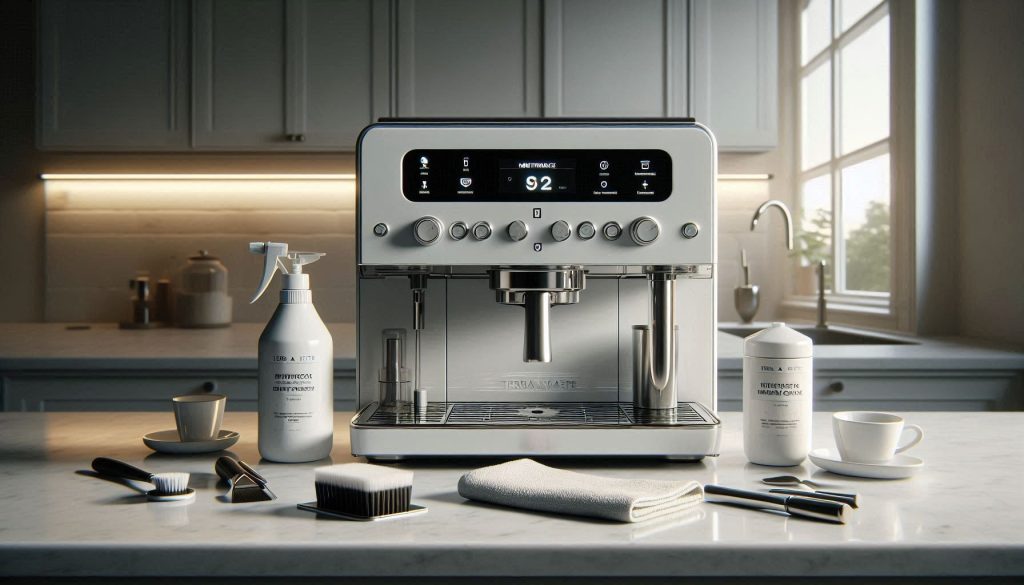
Is your Terra Kaffe TK-02 losing its steam or pulling inconsistent, lukewarm shots? For owners of this high-end espresso machine, maintaining peak performance is about more than just cleanliness—it’s about protecting your investment. Over time, mineral deposits from water (scale) inevitably build up inside the boiler, heating elements, and internal tubing. This “insulating crust” doesn’t just alter the flavor of your morning latte; it forces the machine to work harder, leading to longer heat-up times, temperature drift, and increased energy consumption. Mastering the TK-02 descaling process is the most effective way to restore thermal efficiency and ensure every extraction remains as precise as the day you unboxed it.
In this comprehensive maintenance guide, we provide a data-driven pathway to descaling your TK-02 safely and effectively. You will learn how to identify the early warning signs of scale—such as reduced flow rates and steam pressure—and discover which descaling solutions, from citric acid to commercial cleaners like Urnex Dezcal, are best suited for the TK-02’s unique internal components. By following our step-by-step procedure and adopting a proactive maintenance schedule based on your water hardness, you can prevent costly repairs, extend the service life of your machine, and guarantee a reliable, café-quality experience for years to come.
Why Descaling Matters and How to Recognize Scale-Related Problems
How scale forms — the basics
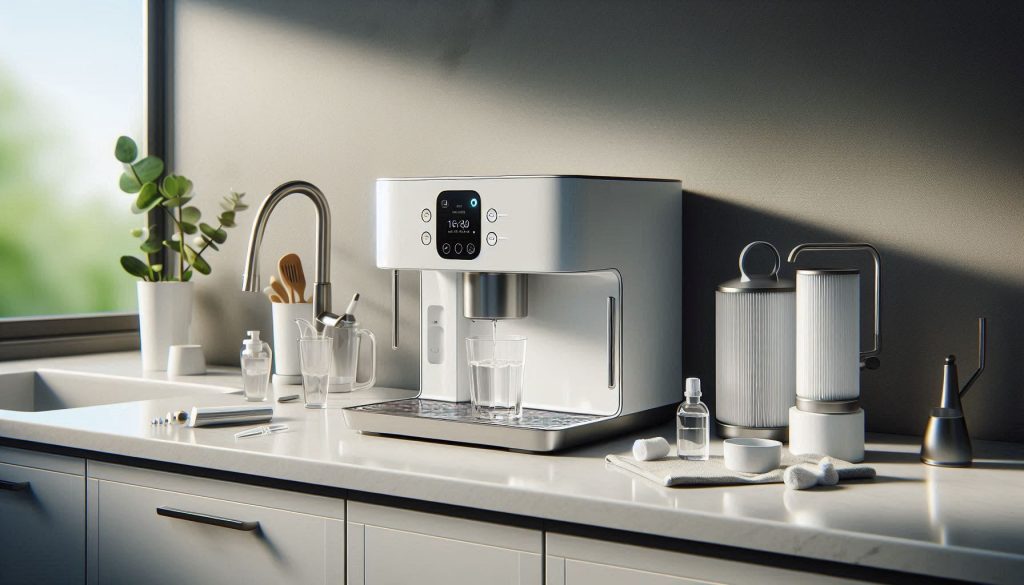
When you heat hard water, dissolved calcium and magnesium compounds precipitate and form mineral deposits (scale). On the TK-02 this happens inside the boiler, on heating elements, in narrow passages, and around temperature sensors. Scale is essentially an insulating crust: even a thin layer reduces heat transfer and disrupts the machine’s designed thermal behavior.
Quantifiable impacts on the TK-02
Scale is not just cosmetic — it changes measurable performance:
Because the TK-02 has a relatively compact boiler and low thermal mass compared with larger commercial machines (for example, a La Marzocco Linea-style boiler), even thin scale deposits will produce noticeable effects sooner.
Observable signs you can test right now
You don’t need to guess — run simple checks:
What happens if you delay
Neglecting scale leads to clogged passages, burned or inefficient heating elements, and sensor drift. Repairs can be costly — element replacements or service calls are commonly in the low-to-mid hundreds of dollars, and downtime can mean lost revenue or degraded café reputation. Even at home, the cost is wasted coffee and shorter equipment life.
Next, we’ll cover safety precautions and how to prepare your TK-02 so you can descale confidently and effectively.
Safety Precautions and Preparing Your TK-02 for Descaling
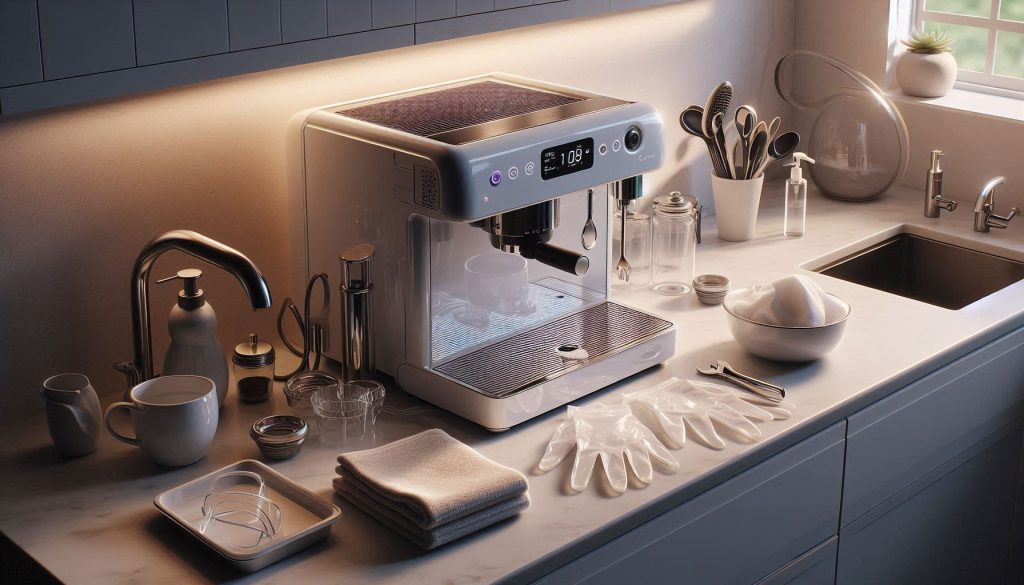
Before you begin, take a moment to set up for safety and protect the TK-02’s electronics and warranty. The few minutes of preparation will keep you from getting burned, damaging sensitive parts, or voiding coverage.
Power, electrical isolation, and cooling
Always remove power and relieve heat/pressure before opening or working on the machine.
Protecting electronics & sensors
Take simple steps to prevent moisture and accidental damage to boards, glass panels, or sensors.
Personal protective equipment (PPE)
Treat descaling solutions like industrial cleaners—acidic and potentially irritating.
Isolating water & steam lines
Prevent accidental pressurization or contamination.
Creating a controlled workspace
Organize the area so spills are contained and sensitive parts are cushioned.
Documentation & warranty considerations
Record settings and check contract terms before you proceed.
With the machine safely prepared and your workspace organized, you’re ready to choose the right descaling solution and gather supplies in the next section.
Selecting the Right Descaling Solution and Gathering Supplies
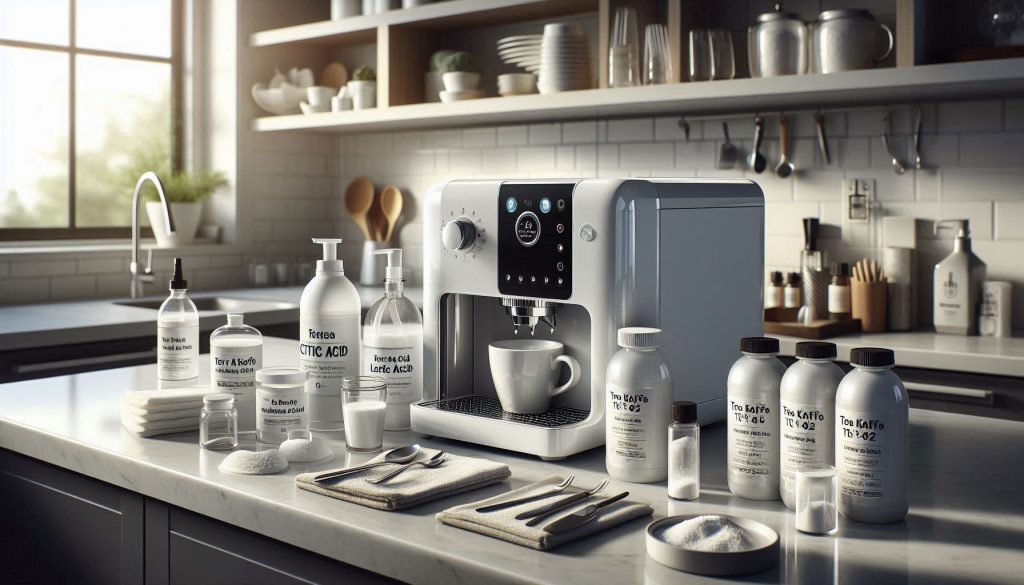
Choosing an appropriate descaling agent matters: too mild and scale stays; too strong and you risk attacking brass fittings, stainless steel surfaces, or polymer seals. Below are practical comparisons, safe mixing guidelines, and a checklist of supplies so you can proceed confidently.
Which descaler to choose (quick comparison)
Precise mixing tips
Supplies checklist
Rinse water and manufacturer guidance
Always finish with multiple liters of filtered or demineralized water to prevent mineral re‑deposition and to remove any residual descaler taste. Follow Terra Kaffe’s manual and labeling — if their documentation lists approved products, prioritize those. When in doubt (heavy scale, uncertain product compatibility, or warranty concerns), contact Terra Kaffe support with your machine serial number and water hardness reading before proceeding.
Next you’ll use these choices and tools to perform the step‑by‑step descaling procedure safely and effectively.
Step-by-Step Descaling Procedure for the Terra Kaffe TK-02
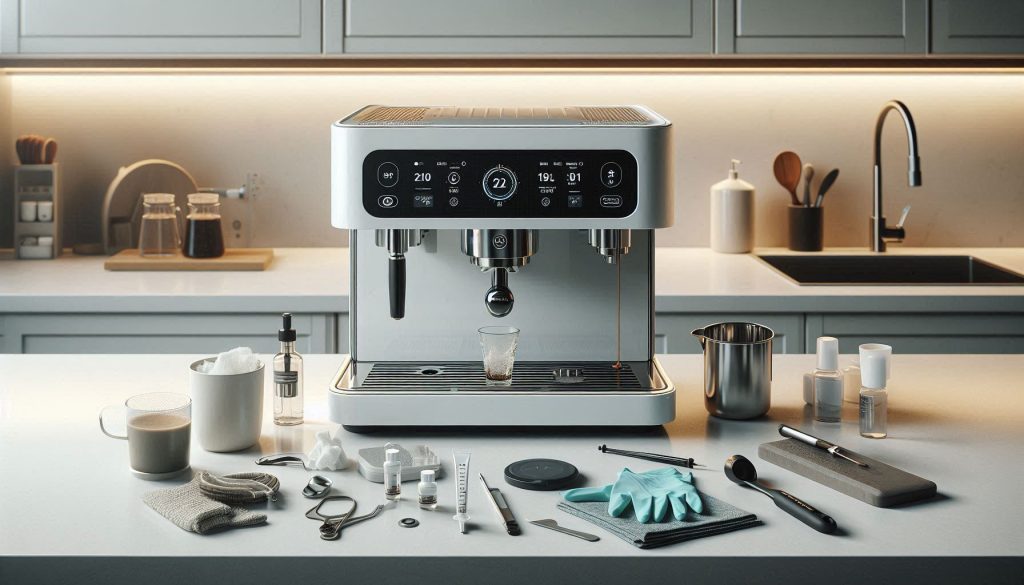
This is the action section. Follow the numbered steps below exactly and record the diagnostic numbers you take at the start so you can judge whether descaling worked.
1) Initial diagnostics — record baseline numbers
- Record ambient temperature and machine settings (PID setpoint, brew temperature offset).
- Measure and log these baseline values:
- Brew water temperature at the group head: target range for TK‑02 setups is typically 88–96°C; note the actual reading (±0.5°C if you have a digital probe).
- Steam/boiler pressure: note the idle pressure (expected ~1.0–1.3 bar on many prosumer boilers).
- Flow rate through the group head: measure how many mL you get in 30 seconds of open hot water. Example: fill a 250 mL cup and time it; compute mL/s.
- Time for a 30 mL espresso shot (if relevant): note seconds.
- Photograph steam wand, group gasket, shower screen and reservoir for pre‑ and post‑comparison.
Decision threshold: if brew temp deviates >2°C from setpoint, flow rate is <70% of your baseline or shot timing is >25% slower than normal, proceed to descaling.
2) Prepare and empty the machine
- Turn off and cool machine per safety procedures in earlier section. Wear gloves and goggles.
- Empty water reservoir, remove portafilter, and remove drip tray and any removable shower screen or group inserts.
- Drain any residual water from boiler/hose per manual (use service drain or open hot water lever into a bucket until flow stops).
Tip: for TK‑02 you can use food‑grade silicone tubing plus a 50–60 mL syringe to pull descaler into lines if access to the service port is tight.
3) Mix and load descaling solution
- Mix to the recommended concentration for the product you chose: citric 2–3% w/v (20–30 g/L) or commercial product per label. Make up 1.5–2 L for a standard single‑boiler cycle.
- Pour solution into reservoir and prime the line so the pump draws solution (run hot water until solution appears at group).
Safety: never use full‑strength sulfamic or industrial acids unless labeled for espresso machines.
4) Run the descaling cycle (boiler + brew circuit)
- Activate machine cleaning/service mode if TK‑02 has one. If not, manually alternate hot water and pump activation to force solution through group head and steam circuit.
- Cycle pattern (data‑driven):
- Flow phase: run ~250–500 mL of solution through the group head at a measured flow (target: same flow as baseline ±20%).
- Dwell/soak: stop flow and let solution sit in boiler and group for 10–15 minutes.
- Repeat flow + soak 3 full times (total solution usage ≈1.5–2 L).
- Steam circuit: carefully open steam valve to allow descaler to pass through wand for short bursts (5–10 seconds), then close; do this 6–8 times during cycles to scour steam passages. Always keep the machine attended and vent pressure between bursts.
5) Inspect removable components mid‑cycle
6) Thorough rinsing — removing residual acid
- Empty reservoir and refill with fresh filtered water.
- Run a full‑tank flush through group head and steam wand. Data target: at least 2 full reservoir volumes (typically 2–4 L), or until pH strips read neutral at the brew outlet.
- Perform a final high‑flow rinse: run continuous hot water for 60–90 seconds with a full tank to purge lines.
Decision threshold: if any metallic taste or sour/chemical odor is detectable in a 30 mL taste check, repeat rinse cycles until clean.
7) Verify performance and recalibrate sensors
- Re‑record the diagnostics from step 1. Acceptable post‑descale targets:
- Brew temp within ±2°C of original setpoint.
- Flow rate restored to ≥90% of baseline.
- Steam pressure back within the expected range and recovery time similar to baseline (pressure rebuild time within ±20%).
- If temperature or pressure readings remain off, recalibrate via TK‑02 menu offset or contact Terra Kaffe for firmware/offset instructions. Use an external thermometer/pressure gauge to validate sensor accuracy.
8) When to repeat vs escalate
Follow these steps carefully; when done, proceed to routine maintenance scheduling and troubleshooting to keep your TK‑02 operating at peak performance.
Maintenance Schedule, Troubleshooting, and Preventive Practices
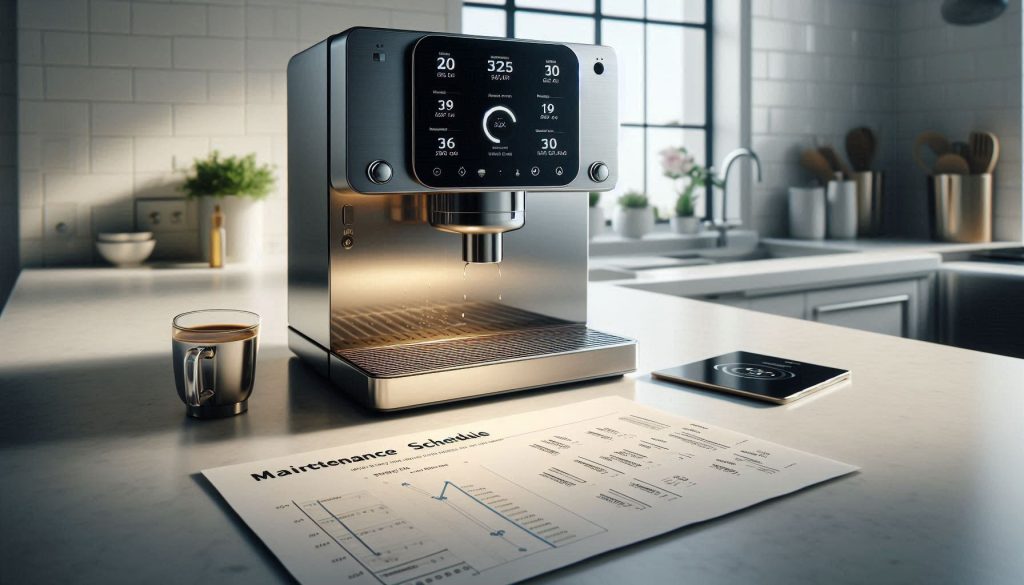
Recommended maintenance schedule
Set a plan based on your water hardness and daily shot volume. Use this matrix as a starting point and adjust if your monitoring metrics flag issues.
| Water hardness | <50 shots/day | 50–200 shots/day | >200 shots/day |
|---|---|---|---|
| Soft | Every 6–12 months | ||
| Medium | Every 3–6 months | ||
| Hard | Every 4–8 weeks |
If you operate a small café that switched from tap water to a BWT Bestmax inline filter, one shop owner reported moving from monthly descaling to every 3–4 months—real savings in downtime and parts life.
Early-warning metrics to monitor
Watch simple, trackable numbers so you descale before performance drops:
Log these values after every major maintenance or weekly in high-use settings.
Post-descale troubleshooting routines
Residual taste or odor
Persistent low flow
Sensor or PID anomalies
Preventive measures and best practices
When to call a professional
Seek certified service if you find: heavy boiler deposits visible in sight glass, electrical/element failures, persistent leaks after descaling, or two unsuccessful descaling cycles. These signs often indicate inaccessible scale or component damage that requires specialized tools.
Proceed to the Conclusion for tips on keeping your TK‑02 reliable and consistent.
Keeping Your TK-02 Reliable and Consistent
Descaling is essential preventive maintenance that preserves performance, taste consistency, and equipment lifespan. By recognizing scale early and following the safety and procedural steps outlined, you reduce downtime, avoid costly repairs, and keep extraction consistent. Link your descaling cadence to water hardness and daily volume for measurable results.
Keep records of each service regularly, note objective extraction metrics, and monitor flow and temperature to detect drift. If problems persist beyond routine descaling, contact qualified technicians. Start a log today and treat descaling as scheduled insurance for consistent coffee quality and longer TK-02 life.