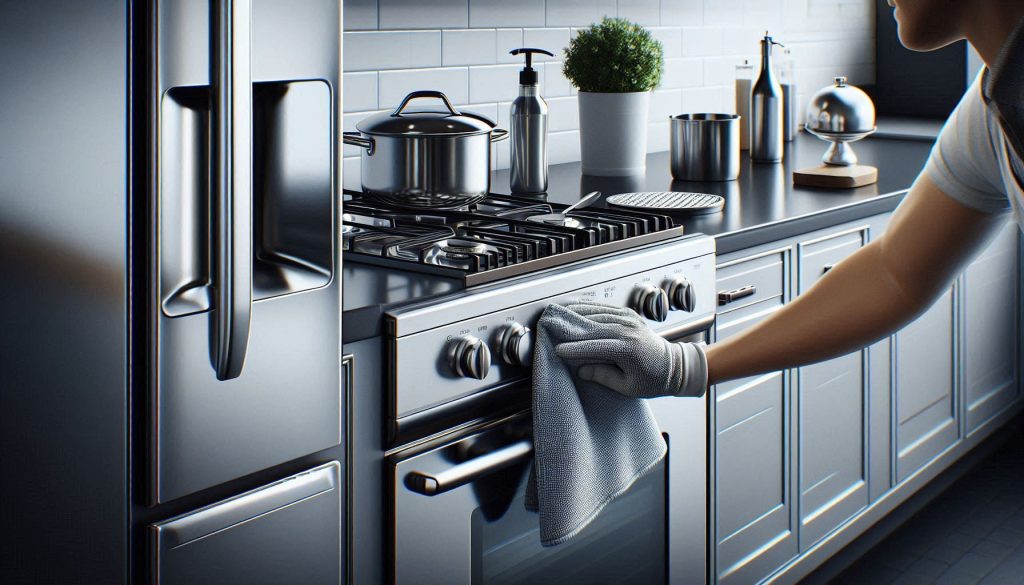
Proper cleaning methods for high end kitchen appliances without damaging finishes.

How to Clean High-End Appliances Without Ruining the Finish

Investing in luxury kitchen technology like Sub-Zero, Wolf, or Miele is about more than just performance; it’s about the pristine aesthetic they bring to your home. However, many homeowners are surprised to learn that up to 70% of visible wear on premium appliances is caused by improper cleaning techniques rather than actual use. Using the wrong chemical or an abrasive sponge can lead to permanent etching, dulling, and even voided warranties. Protecting your investment requires a shift in mindset: treating the finish as a delicate component of the machine itself.

In this comprehensive guide, we provide a data-driven plan to help you maintain that “showroom shine” without risking damage. You will learn how to identify specialized materials—from brushed stainless steel to powder-coated finishes—and select the precise pH-neutral cleaners and soft-touch tools required for the job. Whether you are looking for a daily maintenance routine to prevent fingerprint buildup or safe techniques for deep-cleaning stubborn grease, these professional methods ensure your high-end appliances retain their beauty and resale value for years to come.

Protecting Your Investment: Why Finish Matters

Up to 70% of visible wear on premium appliances comes from improper cleaning—not regular use. When you scrub the wrong way or use the wrong product, you can strip coatings, etch glass, or dull metal. You want those surfaces to stay like new, so you must treat finishes as part of the appliance, not an afterthought.

This article gives you a practical, data-driven plan to identify materials, pick safe tools and cleaners, and perform routine and deep cleaning without voiding warranties. You’ll get concrete steps to prevent corrosion, remove stains safely, and know when to call a professional. Follow these methods and protect both appearance and function for years.

Small habits—wiping spills immediately, using soft cloths, and avoiding bleach—extend finish life, save repair costs, and maintain resale value significantly for your high-end appliances today.

1

Know Your Appliance’s Materials and Finishes
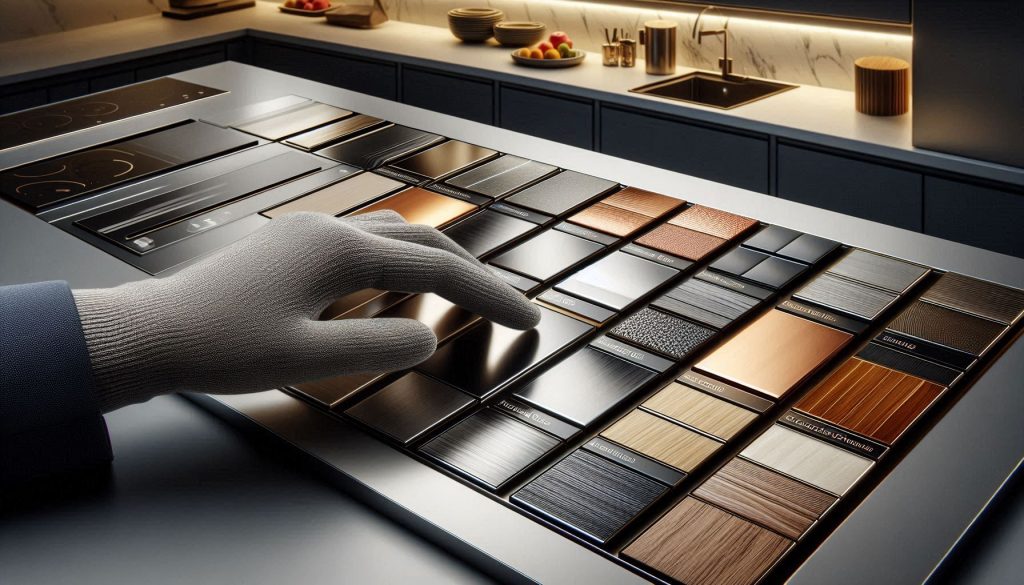
Identifying different materials and finishes used on high end kitchen appliances.
Knowing the exact appliance finish is the first step to safe and damage free cleaning.

Identifying what you’re cleaning is step one. High-end appliances use a range of surfaces—brushed or polished stainless steel, glass (often tempered), painted or powder-coated metals, enamel/porcelain, lacquered wood panels, and specialty metals such as brass or copper. Each reacts differently to abrasives, solvents, pH, and heat. Learning the cues for each will keep you from making an irreversible mistake.

How to identify common finishes

Look and feel first. Brushed stainless has a visible grain and a matte look; polished stainless is mirror-like. Tempered glass is very smooth and may have a small manufacturer stamp in a corner. Painted or powder-coated metal usually chips to reveal bare metal under the paint; lacquered wood shows wood grain under a glossy topcoat. Brass and copper are warm-toned and may have a deliberate patina. Enamel/porcelain is glassy and hard—common on range surfaces and oven interiors.

Quick, practical checks

Inspect labels and the owner’s manual for manufacturer care instructions before using any product.
Wipe stainless steel “with the grain” when you clean; going against the grain increases visible scratches.
When you see warm tones or greenish tints, assume a specialty metal with a patina—polishes and acids can remove the finish.
If a surface chips or flakes, assume a coated finish (powder coat, enamel) and avoid harsh abrasives.

Spot-test routine (do this every time)

Pick an inconspicuous area (inside door lip, behind trim).
Apply your cleaner diluted as manufacturer recommends—or start mild (a few drops of dish soap in water).
Wait 1–5 minutes, rinse, and inspect for dulling, discoloration, or softening.

Real-world note: many homeowners have etched marble or dulled stainless by reaching for vinegar or abrasive pads first—spot-testing would have prevented that.

Knowing these specifics now prepares you to choose the right tools and cleaning agents for each finish in the next section.

2

Choose the Right Tools and Cleaning Agents

Safe cleaning tools for high-end kitchen appliances.
Select the right tools to avoid scratches and maintain showroom finishes.

Choosing the correct implements and cleaners prevents mechanical and chemical damage before it starts. Below are practical, field-tested options and clear rules you can apply immediately.

Soft tools that actually work

Use nonabrasive tools to avoid scratches and swirl marks:

Microfiber cloths (300–400 GSM) — e.g., Kirkland Signature Ultra Clean or Zwipes; use one cloth for cleaning, a second for buffing.
Non-abrasive sponges — e.g., Scotch-Brite Non-Scratch Scrub Sponge for stuck-on food, flipped to the soft side for finishes.
Soft-bristle brushes — a small OXO Good Grips brush or a new soft toothbrush for grout, trim, and vent crevices.
Plastic scrapers — inexpensive plastic razor scrapers (e.g., from hardware stores) to lift gunk without metal scoring.
Squeegee for glass — Ettore or OXO handheld squeegees give streak-free results on oven doors and induction cooktops.

Real-world note: a chef neighbor saved a polished stainless-paneled refrigerator by switching from an abrasive pad to a single high-GSM microfiber — the visible scrape lines disappeared when cleaned properly.

Pick cleaners by chemistry, not marketing

Understand pH and solvent action:

Routine: prefer pH-neutral cleaners (around 7). They remove grease and grime without attacking coatings.
Heavy grease: use a mild alkaline degreaser, but check the label and technical data — avoid products that list pH >10.
Solvents: 70% isopropyl alcohol is excellent for fingerprints and residue; it evaporates quickly and won’t leave mineral streaks if used briefly.
Rinse: use distilled or deionized water for final rinses to reduce mineral spotting on glass and brightwork.

When comparing products, read the SDS or manufacturer’s care sheet for pH and recommended contact time.

What to avoid

Avoid anything likely to etch, pit, or strip coatings:

Bleach, undiluted ammonia, steel wool, abrasive powders, and oven-cleaner-strength acids.
Citrus or acid-based cleaners on specialty metals unless the manufacturer explicitly permits them.

Safety, testing, and dwell time

Always wear gloves and provide ventilation with stronger cleaners. Spot-test on an inconspicuous area, follow dilution and dwell-time instructions precisely, and never let aggressive cleaners pool on a surface. These precautions set you up to establish reliable daily and weekly maintenance routines next.

3

Daily and Weekly Maintenance Routines

Modern kitchen demonstrating daily and weekly appliance maintenance with microfiber cloths, gentle cleaning of stainless steel surfaces, range hood, and refrigerator gaskets.
Daily and weekly kitchen maintenance routines keep appliances pristine, prevent damage, and extend their life.

Daily: quick habits that prevent damage

Small, consistent actions stop stains and abrasion before they start. Every time you use an appliance:

Wipe spills and fingerprints promptly with a slightly damp microfiber cloth (300–400 GSM), then immediately dry with a second microfiber to prevent mineral spots and streaks.
For stainless steel, follow the grain when you wipe; scrubbing across the grain increases visible swirl marks.
Avoid placing wet pots, cutting boards, or condensation-heavy items against finished panels; lift and set items on trivets or soft mats.

Example: after preparing a lemon vinaigrette, blot splatters right away — acids left to sit will etch polished surfaces.

Weekly: light maintenance to stay ahead of buildup

Once a week, perform a short, targeted session for high-use areas. Spend 10–20 minutes and you’ll cut hours of future work.

Cooking surfaces and range hoods: apply a mild, pH-neutral degreaser (e.g., Simple Green All-Purpose or a diluted Dawn solution) to remove thin grease films; rinse and dry. Remove and soak metal hood filters in hot water and dish soap if needed.
Control panels and knobs: use a low-moisture, screen-safe cleaner for touch controls (Whoosh! or Belkin screen wipes) or 70% isopropyl on a barely damp cloth for non-oleophobic surfaces; never spray directly.
Refrigerator gaskets: clean with a soft brush and mild soap to preserve the seal and hygiene.
Coils and vents: vacuum accessible condenser coils and drip pans with a brush attachment or a coil brush to improve efficiency and reduce corrosion risk.
Ventilation: keep kitchen exhausts and windows open during and after cooking to reduce grease deposition on surrounding appliances.

Habits that pay off

Adopt three simple rules: wipe immediately after handling, avoid prolonged contact with moisture, and always dry thoroughly. These tiny behaviors will dramatically extend the life of your finishes and make the deeper, less frequent cleaning steps far easier when they’re needed.

Next you’ll learn targeted deep-cleaning techniques and safe stain-removal methods that build on these routines.

4

Deep Cleaning Techniques and Safe Stain Removal
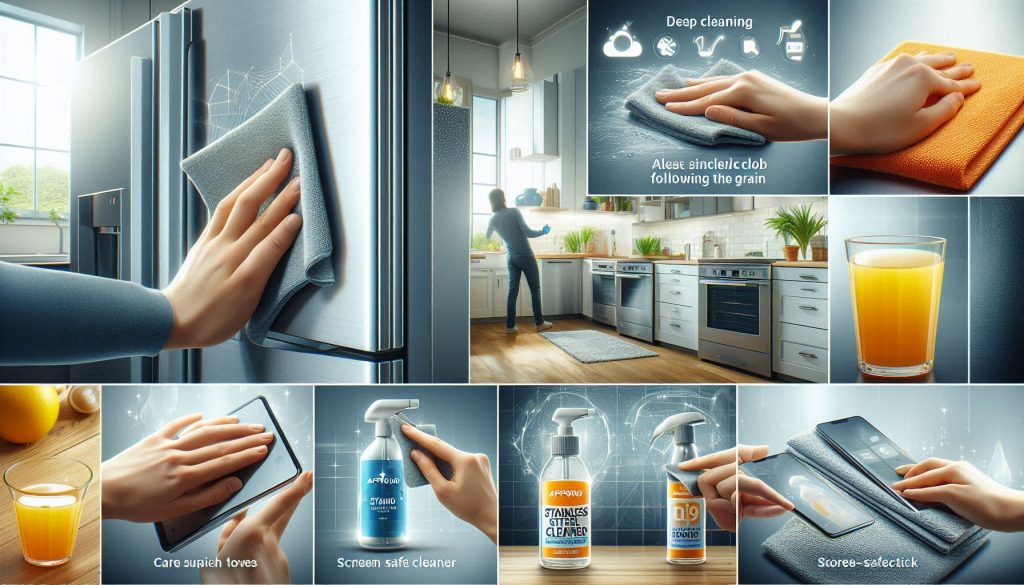
Modern kitchen showing safe deep cleaning of stainless steel and touchscreen surfaces using microfiber cloths and approved cleaners.
Targeted, low-risk cleaning techniques safely remove stubborn stains without damaging finishes.

When routine cleaning won’t do, targeted, low-risk methods remove stubborn marks without compromising finishes. Always start with a spot test in an inconspicuous area and work patiently—hard scrubbing is usually the problem, not the stain.

Stainless steel: lift stains, respect the grain

Use a manufacturer‑approved stainless cleaner (Weiman Stainless Steel Cleaner & Polish, or a mild dish soap solution).
Apply with a microfiber cloth and rub gently in the direction of the grain.
Rinse with distilled water to avoid mineral streaks; buff dry.
If polishing is recommended, use a light carnauba or dedicated stainless polish sparingly.

Example: owners who switch from kitchen roll to a 400‑GSM microfiber typically see fewer swirl marks and less polishing required.

Glass and touchscreens: avoid seepage and abrasion

Use screen-safe sprays (Whoosh! or Belkin wipes) or 70% isopropyl on a lint‑free cloth; never spray directly onto screens where liquid can flow into seams.
Wipe in a single pass; repeat only if residue remains.
For tempered glass cooktops, use a ceramic glass scraper at a low angle if residues remain, not a metal blade.

Enamel and porcelain: lift without scratching

Make a paste of baking soda and water; apply, let sit 10–15 minutes, then rub gently with a soft cloth or non‑scratch pad.
For persistent tea or coffee stains, a soft application of Bar Keepers Friend (follow label) can work—rinse thoroughly.
Avoid abrasive powders or steel wool that can permanently dull glossy enamel.

Adhesive residue and stickers

Warm the area with a hairdryer to soften adhesive.
Use a plastic scraper (Hyde or OXO plastic scraper) and dab remaining tack with 70–90% isopropyl alcohol.
Test solvents first—acetone or Goo Gone can harm some finishes.

Descaling kettles, coffee makers and steam systems

Use citric‑acid descalers (DIY: 1–2 tbsp citric acid per 1 L water) or manufacturer solutions (Keurig, Breville, De’Longhi, or Urnex Dezcal).
Run a full cycle, then flush with multiple rounds of fresh water. Follow the appliance manual to protect internal parts.
Ventilate, wear gloves, and never mix descalers with bleach.

Safety checklist: spot test, read labels, limit mechanical force, and avoid sanding or aggressive scraping—damage from abrasion is usually permanent. If a stain resists these low‑risk methods, the next section discusses preventive strategies and when to call a pro.

5

Preventing Corrosion, Rust, and Finish Degradation
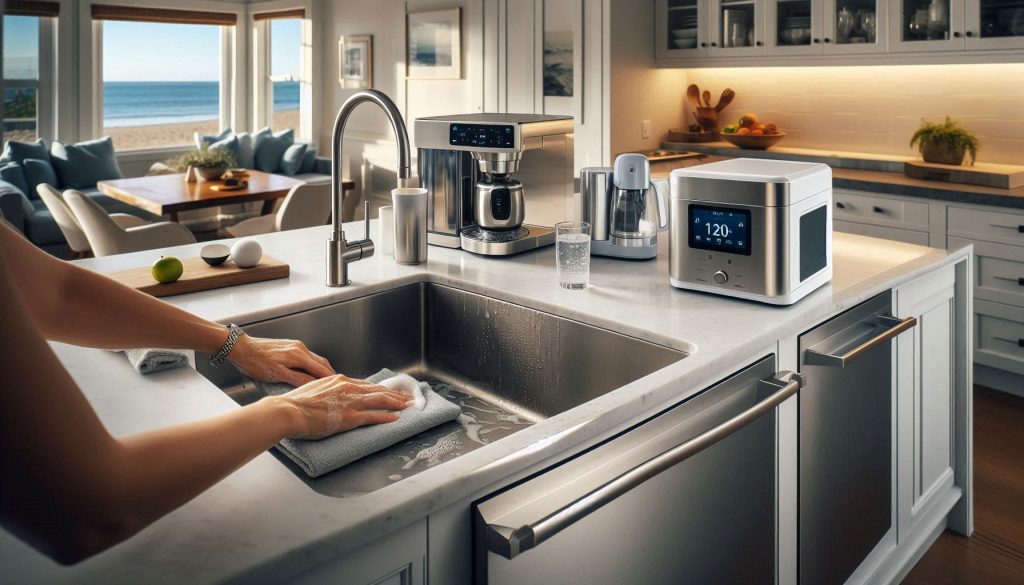
Modern kitchen and coastal home showing stainless steel and white appliances being dried and maintained to prevent corrosion and finish degradation.
High-quality visualization of preventing corrosion, rust, and finish degradation on stainless steel and white surfaces.

Corrosion and finish breakdown are usually the result of prolonged moisture, salts, chlorine, or exposure to harsh chemicals. The goal is to eliminate those accelerants and, where appropriate, apply a light, compatible barrier that reduces contact with air and fingerprints.

Key risks and immediate avoidance

Never use bleach, pool chemicals, or chloride-containing cleaners on stainless, brass, or plated finishes—these accelerate pitting and tarnishing.
Address any water pooling around sinks, dishwashers, and ice makers immediately; trapped water is a primary culprit in localized corrosion.
In coastal homes or near pools, rinse exterior surfaces with fresh water and dry after storms or heavy salt spray.

Practical daily and weekly steps

After every cleaning, dry surfaces thoroughly with a soft cloth; distilled water for final rinses helps prevent mineral spots.
Inspect seals and drain paths monthly (dishwasher door gaskets, under‑sink seals) and clear any slow drains or trapped debris that retain moisture.
Wipe down exterior appliance tops and handles weekly in humid or coastal environments.

Using protectants—what works and how to apply

Use manufacturer‑recommended products when listed. Trusted options:
  • Weiman Stainless Steel Cleaner & Polish or 3M Stainless Steel Cleaner & Polish for kitchen stainless.
  • Renaissance (microcrystalline) Wax for decorative brass and museum‑grade protection—apply extremely sparingly.
  • Boeshield T-9 or a dedicated long‑term corrosion inhibitor for outdoor stainless components (grills, hood vents).
Apply thinly and buff; more product does not mean better protection. Over‑application traps dirt and can make finishes look cloudy.

Treating minor rust without risking finish

For light surface rust, gently rub with a non‑scratch pad (Scotch‑Brite non‑scratch) and a rust remover formulated for the metal—Evapo‑Rust is a commonly used, water‑based option safe on many metals (test first).
Do a spot test in an inconspicuous area. If you find pitting, flaking, or deep corrosion, stop—severe damage requires professional repair to avoid structural compromise and potential warranty voidance.

Documentation to protect your investment

Keep a simple log of cleaning products, dates, and photos. Warranty disputes often hinge on documented care—store receipts or notes in a folder or simple app.

Next you’ll learn how to turn these preventive actions into a maintenance plan, keep warranty terms intact, and decide when a pro should step in.

6

Maintenance Planning, Warranty Care, and When to Call a Professional

Modern kitchen with stainless steel and white appliances being maintained, showing organization and proper care tools.
High-quality visualization of maintenance planning, warranty care, and professional upkeep in a modern kitchen.

Build a simple, enforceable maintenance schedule

Turn the preventive tips you’ve read into a calendar you actually follow. A practical schedule:

Daily: quick wipe of high-touch areas with the documented cleaner.
Weekly: degrease cooktop, range hood filters, and exterior handles.
Monthly: deep clean interior trays, check door/gasket seating, clear vents and drip pans.
Annually: inspect seals, venting, anti‑tip brackets, flexible gas connectors, and electrical cords; change water filters and replace worn gaskets.

Create a one‑page checklist or calendar reminder and attach photos to each task so you can track wear over time.

Record exactly what you use

Many warranties hinge on using approved products and methods. For each cleaning entry capture:

Product name, brand and SKU (e.g., Weiman Stainless Steel Cleaner & Polish, 8 oz).
Dilution ratio or concentration and application method (spray, cloth, pad).
Date, time, who performed the work, and photos of the area before/after.

Keep copies of manufacturer care instructions (PDF/manual) and store receipts. If a warranty dispute arises, documented consistency often saves claims.

Know the limits of DIY—call the right pro

You should call a professional when the fix requires safety, specialized coatings, or could void warranty:

Gas smells, hissing at fittings, or flex‑line concerns: stop use and contact a licensed gas fitter or your gas company immediately.
Electrical failures, repeated tripping, burning odors, or exposed wiring: call a licensed electrician or an authorized appliance technician.
Scratches, pitting, or corrosion that go beyond surface cleaning: seek a certified re‑plater, powder‑coater, or the appliance manufacturer’s restoration service.
Integrated appliances with sealed electronics (e.g., Miele ovens, Sub‑Zero/True refrigeration, espresso machines with sealed boilers): use factory‑authorized service to avoid damage.

If in doubt, call the manufacturer’s service line; factory‑authorized technicians preserve warranty coverage.

Safe disposal and lower‑toxicity choices

Dispose of chemical wastes per local hazardous‑waste rules. When possible choose lower‑toxicity cleaners (mild dish soap, citrus‑based brands like Method or Seventh Generation for safe surfaces) — but always cross‑check with the manufacturer’s care guide.

Next, you’ll read the concluding section that ties maintenance to long‑term value and resale readiness.

Keep the Finish, Keep the Value

Preserving high‑end appliance finishes comes down to correctly identifying materials, using appropriate tools and cleaners, and keeping a steady maintenance rhythm. When you test products in inconspicuous spots, follow manufacturer guidance, and address spills promptly, you reduce the risk of irreversible damage and performance loss. Small, regular actions avoid costly restorations and sustain resale value.

Document your care and service history for warranty protection, and call a qualified technician when corrosion, mechanical issues, or uncertain stains appear. Treat cleaning as preventive maintenance: consistent, material‑specific care keeps finishes pristine and appliances functioning at peak efficiency. Start a simple care checklist today and review it quarterly to protect finish, performance, and your investment over time regularly.

Leave a Comment

Your email address will not be published. Required fields are marked *