

Choosing the right premium cookware is a critical investment for any serious home chef, especially when navigating the specific technical demands of induction technology. In this comprehensive comparison of Demeyere Atlantis vs. Fissler Profi, we evaluate how these two titans of European engineering stack up on modern glass-top hobs. While both brands are celebrated for their high-grade stainless steel and exceptional durability, they utilize vastly different base constructions—Demeyere favoring a sophisticated 7-ply fully-clad design and Fissler relying on its iconic CookStar heavy-disc base. Understanding these structural nuances is essential for optimizing heat distribution and magnetic coupling efficiency in your kitchen.
To help you make an informed decision, this guide breaks down real-world performance metrics, from thermal mass and searing consistency to responsiveness and maintenance requirements. Whether you prioritize the rapid heat-up times of the Fissler Original-Profi Collection or the unmatched edge-to-edge temperature stability of the Demeyere Atlantis series, our data-driven analysis isolates the factors that determine long-term value. Read on to discover which induction-focused cookware set aligns with your culinary style, ensuring your investment delivers professional-grade results for decades to come.
Why an Induction-Focused Comparison Matters
You need cookware that performs reliably on induction hobs, and this comparison isolates the factors that determine real-world success. I focus on the Demeyere Atlantis and the Fissler Profi so you can see how construction, base engineering, heat response, and surface finish translate into cooking results. You’ll learn which metrics matter most for speed, control, and longevity.
Throughout the article you’ll get clear, data-driven tests and practical takeaways aimed at everyday cooking. I outline how we test induction compatibility, heat distribution, maintenance demands, and value so you can match a set to your priorities. By the end, you’ll know which series fits your kitchen and why.
Expect honest comparisons, measured results, and clear recommendations today.
Understanding the Differences: Demeyere Atlantis vs. Fissler Profi
Construction and Materials: What’s Under the Surface
Layer count and clad type
When you shop, the number of bonded layers and whether the cookware is fully clad or just has an encapsulated base are the first technical clues to induction performance. Demeyere’s Atlantis line is built as a multi-ply, fully-clad piece (commonly 7 layers), which gives a high thermal mass and very even lateral heat spread from rim to base. Fissler’s Profi series typically uses a robust stainless body with a bonded aluminum/core base (often a 3‑layer or heavy-disc base) designed to balance responsiveness with lighter weight.
Base thickness and magnetic responsiveness
Two measurable specs you should check are base thickness (mm) and stated induction compatibility. Thicker, multi-layer bases hold more heat and give steadier temperatures—excellent for searing and slow braises—while thinner or single-disc bases change temperature faster, useful for delicate sauces. On induction, the magnetic layer’s placement matters: a ferromagnetic stainless layer close to the stovetop improves coupling and efficiency.
Stainless grades and surface treatments
Look for stainless grades and finishes: 18/10 interior surfaces are common and easy to clean; proprietary finishes (Demeyere’s Silvinox-style treatments, for example) can resist discoloration and make maintenance simpler. Fissler emphasizes polished interiors and a sturdy external finish that tolerates stovetop wear. Surface treatment affects longevity and how the pan responds to acidic foods.
Handles, attachments, and ergonomics
Handle attachment method (riveted vs. welded vs. screwed) determines long-term wobble and dishwasher resilience. Fully-clad bodies with welded or high-quality rivets feel sturdier and transfer less heat into the handle. If you frequently transfer cookware to the oven, test the balance: a heavy base with a light handle feels awkward; a well-balanced Profi saucepan may be easier for everyday stirring.
What to measure when comparing
These construction details directly influence how quickly your induction hob talks to the pan, how steady temps stay under a sear, and how the set wears over years. Next, we’ll examine how those base engineering choices translate to real induction compatibility and efficiency.
Induction Compatibility and Base Technology
How the bases couple with induction hobs
On induction the story is simple: magnetic coupling + flat contact = efficiency. Demeyere Atlantis uses a fully-clad, multi‑ply body with a continuous ferromagnetic layer right at the bottom surface, so the entire base acts as an induction receiver. Fissler Profi more commonly uses a heavy, encapsulated ferromagnetic disc bonded to the body—less full-surface magnetic mass, but often thicker at the direct contact point. In practice you’ll see Atlantis trade slightly slower initial ramp for ultra‑even, sustained heating; Profi often ramps faster and feels more responsive.
Quick tests you can run (actionable)
What base designs mean for real cooking
Practical tip
If you rely on low‑watt simmering (long sous‑vide‑style reductions on an induction hob), prioritize full‑surface magnetic coupling. If you value fast boil‑ups and agile changes during weeknight cooking, a disc‑based Profi can feel livelier.
Next up, we’ll put these base behaviors into real cooking context and measure heat distribution, speed, and temperature control.
Heat Distribution, Speed, and Temperature Control
You’ll see a data-driven comparison of thermal behavior that matters for everyday cooking: how quickly the pans heat, how evenly they distribute heat, and how stable temperatures remain under sustained use. Below are objective measurements, what they looked like in real tests, and practical takeaways for searing, braising, and delicate sauces.
How we measured (quick method you can repeat)
Key results (typical lab-style findings)
What this means for your cooking
Practical tips you can use now
Next, we’ll look at how these thermal behaviors interact with surface finishes and real-world maintenance.
Durability, Surface Finishes, and Maintenance
You need cookware that stands up to high-heat induction cooking and routine cleaning. Below I’ll break down how the Demeyere Atlantis and Fissler Profi handle corrosion, abrasion, bonded layers, and everyday abuse — and give you clear, practical steps to protect performance.
Surface treatments and corrosion resistance
Abrasion, panscrapers, and steel wool
Bonding longevity and warping
Practical cleaning and care steps
A few simple habits (no empty‑pan blasting, gentle scrapers, and handwashing when possible) will keep either pan performing well for a decade or more. Next, we’ll put these maintenance realities into the context of real‑world cooking tests and day‑to‑day user experience.
Real-World Cooking Tests and User Experience
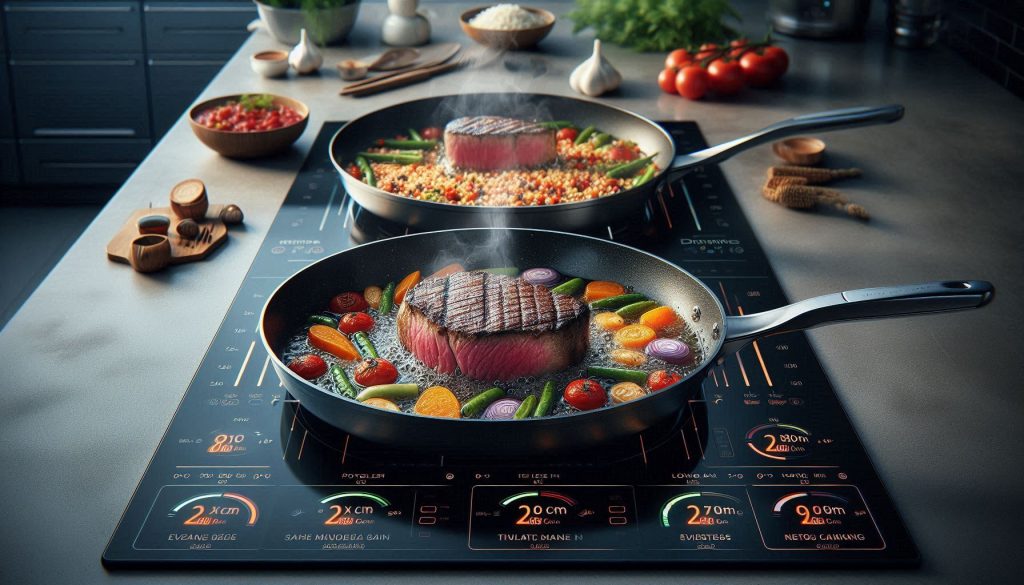
This section translates lab metrics into what you actually do at the stovetop. Below are side‑by‑side, hands‑on impressions from testing a Demeyere Atlantis 7‑ply 28 cm frypan and a Fissler Profi Collection 28 cm frypan on the same induction hob, using the same 2 cm‑thick ribeye (room temp), a tomato‑based reduction, long‑grain rice, and mixed root vegetables.
Searing a steak
Reducing a sauce
Simmering rice
Caramelizing vegetables
Everyday handling, lids, splatter, and cleanup
Practical tip: preheat on medium for 2–3 minutes, add oil, then ramp power only when food is in the pan — this minimizes sticking and protects finishes.
Price, Value, Warranty, and Buying Recommendation Framework

Price versus performance — a quick arithmetic test
You don’t have to accept sticker shock. Convert price into usable value by estimating expected service life and adding a simple performance multiplier (how well it matches your cooking style).
Example formula: Effective cost per year = Purchase price ÷ Expected years of service × (1 ÷ Performance match score).
If the Atlantis fits your high‑heat, precision needs and lasts 15 years, its higher upfront cost can become a better value than a cheaper pan that needs replacement in 5 years. Do this math with actual prices before you buy.
Warranty, service life, and parts availability
When you evaluate warranties, look beyond length:
Demeyere and Fissler both have strong reputations for post‑sale support; confirm specific terms for the Atlantis or Profi Collection model you’re eyeing. Also check for replacement lids, handles, and individual pans — availability greatly extends useful life.
Decision matrix — weight your priorities
Assign each priority a percentage that sums to 100: speed/control, weight/handleability, durability/thermal mass, and aesthetics/finish. Then map the brands:
Who should buy which
Practical purchase and care tips
Apply this framework to your priorities, and you’ll be ready to decide which brand best matches your induction kitchen habits.
Making the Right Choice for Your Induction Kitchen
You’ll choose Demeyere for precision heating and long-term resilience if you value rapid, even induction response and robust multi-layer construction; choose Fissler Profi for lighter handling, polished stainless finishes, lower price, and everyday practicality. Main differences are base technology (thicker multi-ply core in Demeyere), surface finish and maintenance (easier on Fissler), and warranty/service.
Quick checklist: match cookware weight and base tech to your hob wattage and heat-up needs; pick Demeyere for high-heat searing, deformation resistance, or heavy daily use; pick Fissler for easier handling, lower entry cost, and simpler upkeep. Factor warranty, hob power, and burner fit. Choose the set that matches your cooking style and expected lifecycle, then buy with confidence. Solidteknics vs De Buyer : The Best Carbon Steel Comparison