Choosing the right high-end copper cookware is an investment in both culinary precision and kitchen aesthetics. In the debate of Mauviel 1830 vs. Ruffoni, discerning chefs must weigh the merits of French industrial excellence against Italian artisanal craftsmanship. While both brands sit at the pinnacle of luxury copper cookware, they cater to different philosophies: Mauviel focuses on professional-grade performance and standardized technical specs, whereas Ruffoni prioritizes hand-hammered beauty and heirloom-quality design. This guide breaks down the essential differences in thermal conductivity, lining materials, and long-term durability to help you decide which brand deserves a permanent place on your stovetop.
Optimizing your kitchen with premium copper pots and pans requires an understanding of how construction impacts heat management. Whether you are looking for the responsive control of a tin-lined saucier or the rugged durability of stainless steel-lined copper, selecting between these two heritage brands involves evaluating more than just price. We explore the real-world maintenance requirements and ergonomic designs of Mauviel M’Heritage and Ruffoni Symphonia to ensure your purchase aligns with your cooking style and maintenance tolerance. Read on for a data-driven comparison of the world’s best luxury cookware and find the perfect match for your culinary ambitions.
Comparing Two Leaders in Luxury Copper Cookware
Mauviel 1830 vs. Ruffoni: A Comparative Overview
A single degree can ruin a sauce, and copper gives you that degree-level control. You want cookware that responds instantly, lasts decades, and looks as good on display as it performs. This guide compares Mauviel 1830 and Ruffoni on measurable criteria so you can choose the set that matches your cooking style, maintenance tolerance, and budget.
We evaluate thermal performance, materials and construction, weight and ergonomics, finish and aesthetics, long-term durability, and real-world maintenance. Expect data-driven tests, clear pros and cons, and practical buying recommendations for professional cooks and serious home chefs. By the end you’ll know which brand delivers superior heat control, which demands more upkeep, and which provides the best value for your priorities. Read on to decide.
1
How to Evaluate Luxury Copper Cookware
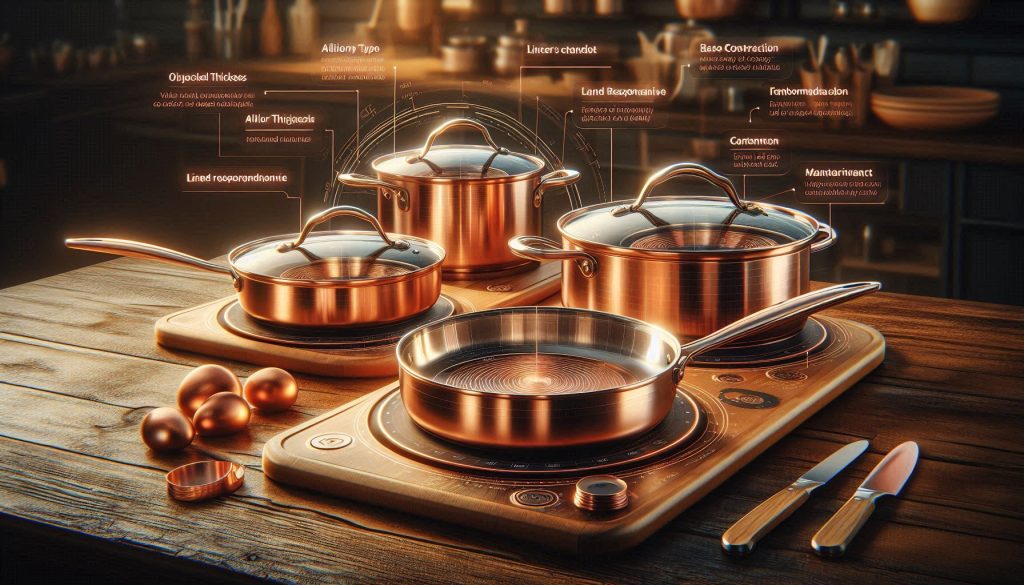
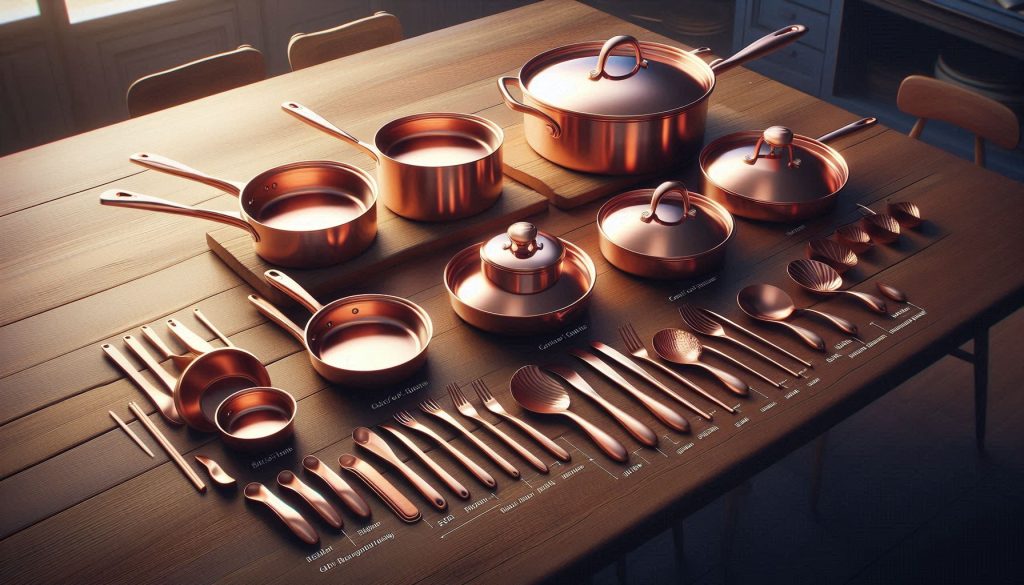
Evaluating luxury copper cookware: heat control, ergonomics, and durability visualized.
You need a repeatable, objective framework before comparing models. Below are the criteria and practical tests that turn subjective impressions into measurable decisions.
Material specifications
Copper thickness: common choices are ~1.5 mm (light, fast) to 3.0 mm (more mass, steadier heat). Thicker copper smooths temperature swings but adds weight.
Copper alloy: pure electrolytic copper offers the best conductivity; alloy additives affect hardness and patina rate.Example: Mauviel’s M’Heritage lines often list thickness (e.g., 2.5 mm); Ruffoni’s hammered lines vary and emphasize sheet thickness and hand-forged shaping.
Liner type and base construction
Liner: tin gives authentic thermal feedback and flavor neutrality but melts near 232°C; stainless liners are durable and induction-friendly but change the tactile feel.
Base/induction: look for a welded stainless-clad base or multi-layer “sandwich” base for induction compatibility and even bottom heat.
Thermal responsiveness and testing
Copper’s conductivity (~400 W/m·K) dwarfs stainless (~15 W/m·K). Test it:
Controlled heat test: time to reach 180–200°C on medium heat.
Ramp/drop test: add cold liquid and measure how quickly temperature dips and recovers.
Real cooking: simmer a delicate sauce, then sear steak and note control over color and fond.
Weight, balance, and ergonomics
Handle attachment (riveted vs. folded), length, and counterbalance determine how easy pans are to lift and maneuver when full.
Try center-of-gravity checks (or read reviewer notes on full-pan handling).
Finish, maintenance, and longevity
Aesthetics: polished vs. hammered affects patina and scratch visibility.
Maintenance: polishing frequency, tin re-lining intervals (often years, depending on use), and whether manufacturer offers re-tinning.
Warranty and service: check explicit coverage for lining failure, repairs, and available spare parts.
Practical buying priorities
If you cook delicate sauces and need degree-level control, weight-to-thickness and tin-liner responsiveness matter most.
If you want low-maintenance everyday cookware, favor stainless-lined, induction-ready constructions and longer service warranties.
Next, you’ll see how Mauviel and Ruffoni present these specs in their product lines and what that means for real-world performance.
2
Brand Profiles and Product Lines
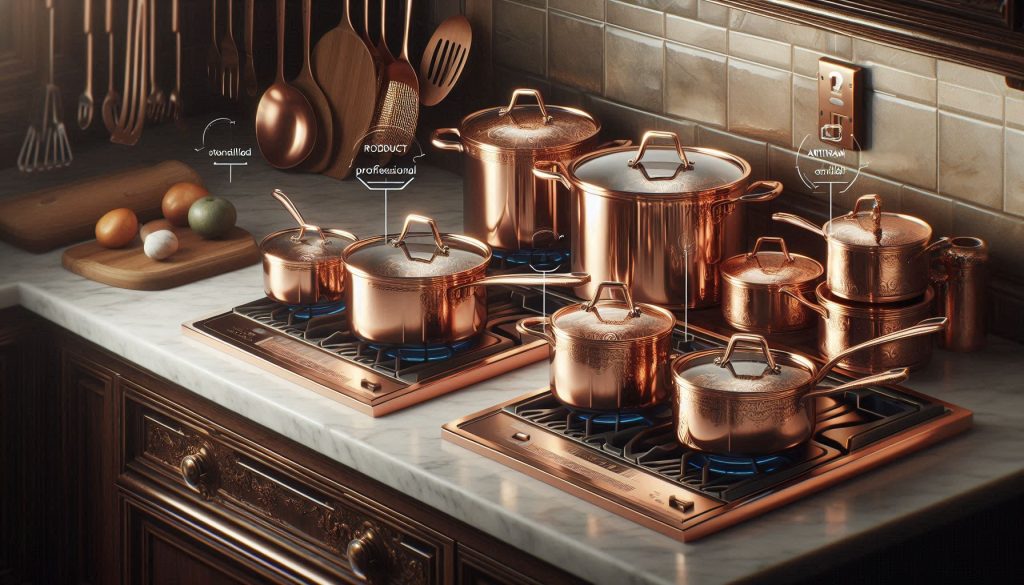
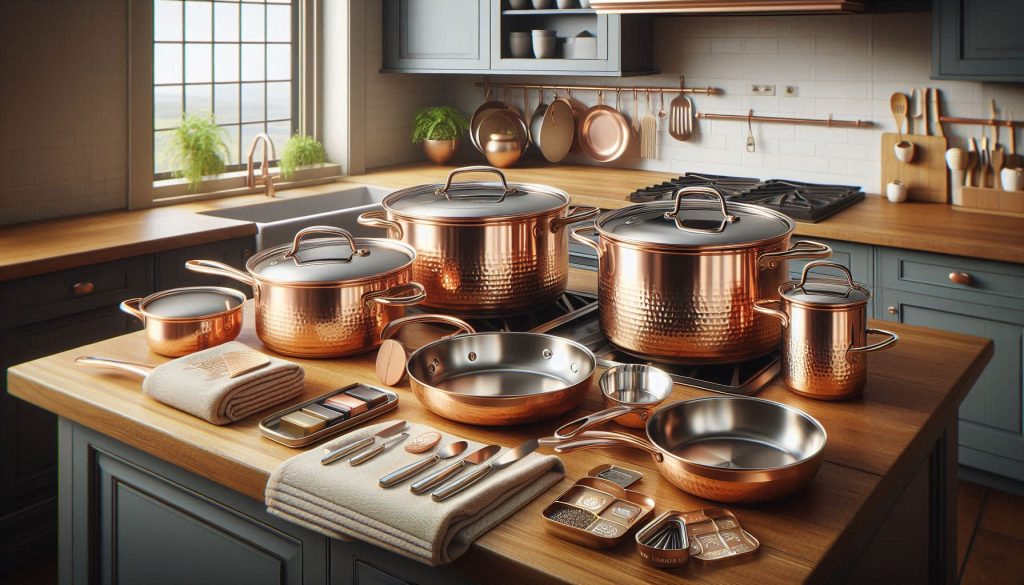
Luxury copper cookware profiles: professional precision vs. artisan elegance visualized.
Mauviel — professional breadth, predictable tiers
You’ll find Mauviel positioned as the industry workhorse: long professional pedigree, broad catalogs that scale from heavy-gauge pro pieces to consumer-friendly ranges. Their tiering is straightforward and technical, so you can match a spec to a use-case.
Pro-series: M’heritage/M’250-style ranges with thicker copper and restaurant-grade hardware.
Artisan/collector: special finishes, limited runs and stainless-trimmed variants (less common than Ruffoni).
Typical piece types:
Saucepans, sauté pans, rondeaux, fry pans, stockpots, and a pragmatic selection of lids and inserts.
Finish and customization highlights:
Polished or brushed exteriors; tin or stainless liners depending on intended use.
Configurable handle styles and rivet treatments; you can often buy matching lids and lids with steam vents.
Real-world note: chefs who want predictable, workshop-serviceable cookware tend to choose Mauviel because replacement parts, clear thickness ratings, and re-tinning programs are widely available.
Ruffoni — artisan focus, decorative appeal
Ruffoni aims at connoisseurs who prize handwork and visual impact as much as function. Their collections read like curated objects: hammered textures, ornate handles, and limited-production finishes.
Typical product tiers:
Entry-luxury: smaller stamped or lightly hammered pieces for cooks who want style with function.
Pro-series: fewer — Ruffoni emphasizes artisan runs rather than a factory lineup.
Hammered exteriors, hand-applied patinas, decorative handles (cast brass/bronze), and optional gilding or applied motifs.
Greater emphasis on one-off finishes and made-to-order colorways; less focus on standardized thickness data.
Practical tip: if your kitchen doubles as a showroom or you collect heirloom cookware, Ruffoni’s visual character and limited runs deliver collectible value — but expect variability in feel and heavier pricing for bespoke options.
Next, you’ll examine the materials and exact construction choices that make those differences matter in everyday cooking.
3
Materials and Construction Details
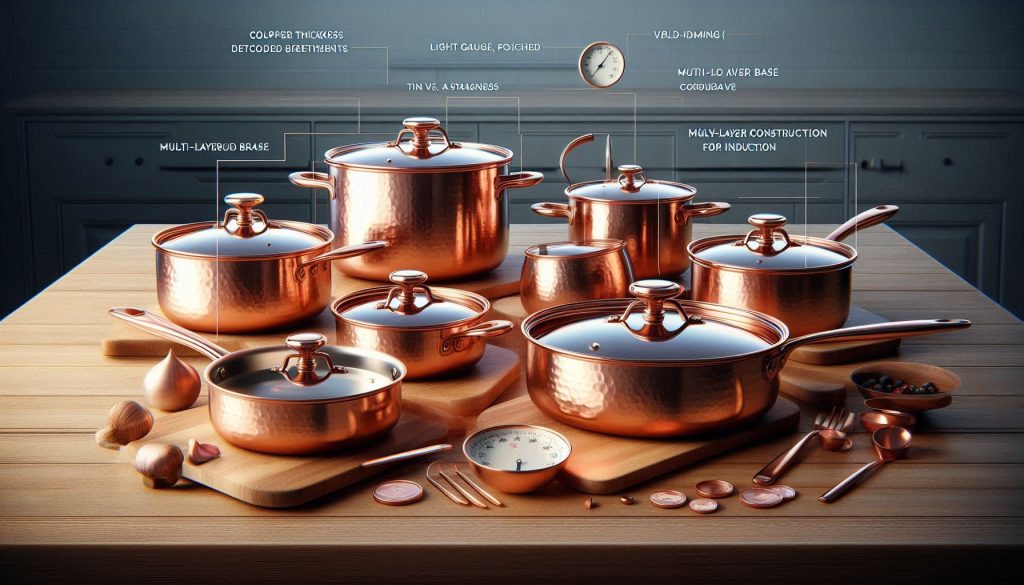
Luxury copper cookware: performance and construction visualized.
Material choices and how a piece is built determine not just feel and finish, but measurable cooking behavior and long‑term upkeep. Below are the concrete differences to watch for and how they matter in practice.
Light (≈1.0–1.8 mm): fastest to heat and cool; ideal for delicate saucing and rapid temperature changes.
Mid (≈2.0–3.0 mm): a balance of speed and thermal smoothing; what many pros call “sweet spot” (Mauviel’s M’250 sits here).
Heavy (>3.0 mm): slower to change temperature, better at evening out heat for braises and long reductions.
Tip: If you sear or braise often, favor 2–3 mm+. If you’re a sauce chef who needs instant response, choose 1–1.8 mm.
Lining materials: tin vs stainless steel
Tin lining: chemically non‑reactive and great for delicate, acidic sauces. It conducts heat similarly to copper, but requires periodic re‑tinning (typical service interval varies widely—profuse daily use shortens life).
Stainless steel lining: low‑maintenance and durable; tolerates higher heat, metal utensils, and dishwasher cleaning. It slightly blunts copper’s immediate responsiveness and can change the way fond forms.
Practical rule: choose tin if you prize flavor precision and will maintain it; choose stainless if you want low fuss and longevity.
Multi‑layer construction and induction compatibility
Solid copper: pure thermal behavior, not induction‑ready without a ferrous disk.
Copper‑clad / sandwich pans: stainless/copper/stainless stacks or a steel disk on the base enable induction while preserving much of copper’s behavior.Example: many Mauviel lines offer induction‑ready bases; Ruffoni may rely on copper-clad or added steel discs for magnetic hobs.
Handles, attachment, and lid fit
Riveted handles: robust, serviceable, and easy to re‑rivet; preferred for heavy use.
Welded handles: smoother interior, slightly easier to clean, but harder to repair.
Lid tolerance: aim for a snug fit (small gap—under a few millimeters) for moist cooking; loose‑fitting lids help with reductions.
Quick tip: when evaluating a specific model (e.g., Mauviel M’250 vs. Ruffoni Symphonia), check published thicknesses, lining type, and whether the handle is riveted—these three items predict most performance and life‑cycle needs.
Next, we’ll translate these construction differences into real cooking tests and heat‑management behavior so you can see how they perform on the stove.
4
Cooking Performance and Heat Management
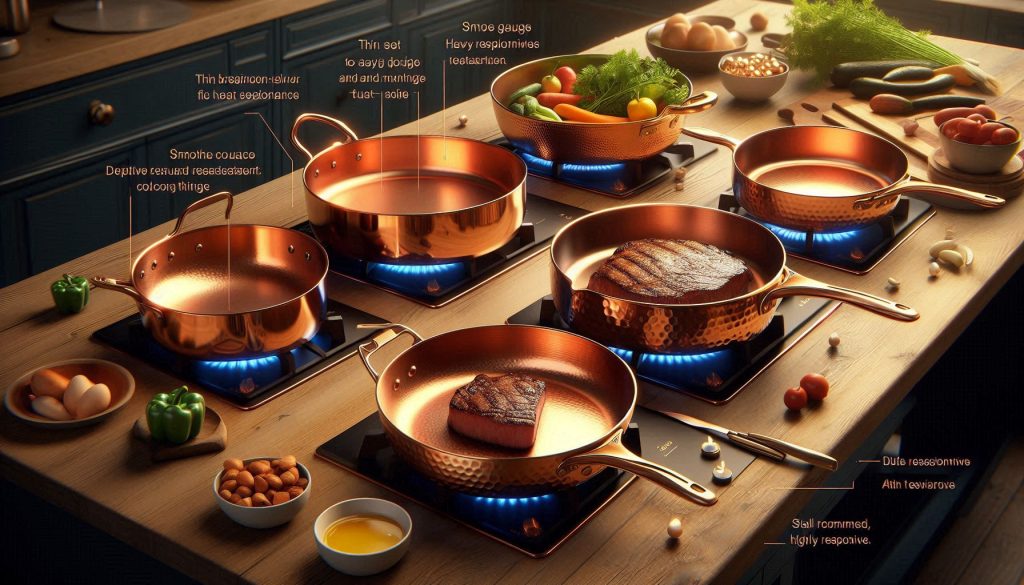
Copper cookware in action: visualizing responsiveness and heat management.
Copper’s reason for being is thermal performance. Below you get practical, measurable guidance on how copper translates into cooking outcomes and which design choices from Mauviel and Ruffoni help—or hinder—those results.
Responsiveness vs. thermal uniformity
You’ll notice two behaviors: responsiveness (how fast the metal heats/cools) and uniformity (how evenly heat spreads). Thin, hammered Ruffoni pieces heat and change temperature very rapidly—ideal when you must stop a sauce instantly. Mauviel’s mid‑weight M’250 and heavier lines trade some snap for smoother, more even heat across the surface, reducing hot spots during long reductions.
What copper’s conductivity buys you
Rapid temperature changes let you precisely temper chocolate, finish an emulsion, or arrest a sauce without overcooking.
Strong lateral conductivity prevents local scorching when you’re sweeping a pan for a reduction.
Scenario-by-scenario guidance
Searing steaks
Best: heavier copper (2.5–3.5 mm) with stainless liner or clad base—retains mass so the surface temperature recovers after contact.
Limitations: very thin copper gives great initial sear but can drop temperature when the steak hits the pan; stainless lining may need slightly higher flame to reach the same crust.
Sautéing vegetables
Best: mid (2.0–3.0 mm) copper with roomy sidewalls; responsive enough for tosses, smooth enough to avoid burned bits.
Tip: match burner size to pan base to preserve even heat.
Reducing sauces
Best: thin to mid copper with tin lining (Mauviel tin‑lined saucières) for quickest control and flavor neutrality.
Limitation: tin needs care and avoids sustained very high heat.
Simmering delicate custards
Best: very responsive thin copper (1.0–1.8 mm) for precise low‑temperature adjustments; remove from heat immediately to use residual warmth.
Tip: use a thermometer and a low flame; copper will reveal tiny temperature changes you can act on.
Frying
Best: heavier copper or copper-clad base to minimize temperature drop when food is submerged; stainless lining tolerates higher oil temps.
Limitation: tin‑lined pans are not ideal for repeated high‑heat frying.
Heat control strategies you can use
Preheat gradually; test with oil shimmer or an infrared thermometer.
Match pan size to burner; avoid tiny flames under wide pans.
Use flame modulation—dip heat briefly rather than large, sustained jumps.
For thin pans, remove from heat earlier and rely on carryover.
Real‑kitchen tests and user reports show Mauviel’s mid/heavy pieces give steadier results for searing and reductions, while Ruffoni’s thinner, hammered lines excel at instantaneous control—both useful depending on how you cook. Next, we’ll look at how design and ergonomics affect these everyday interactions.
5
Design, Ergonomics, and Aesthetic Quality
Luxury copper cookware: ergonomics, handle design, lid fit, and finish visualized.
Beyond heat and construction, the way a piece feels and looks shapes everyday satisfaction. Below you’ll find concrete comparisons and quick tests to judge Mauviel and Ruffoni on ergonomics, aesthetic finish, and real‑world usability.
Handle design: shape, material, and heat
Mauviel typically favors clean, practical handles that prioritize oven safety and a neutral heat profile; Ruffoni often emphasizes sculpted, weighty handles that read as artisanal. When you evaluate a handle, check:
Length and taper (longer for safer one‑handed tosses; shorter for control).
Material (stainless vs. bronze/brass affects heat conduction).
Grip profile (rounded vs. flatter shapes for leverage).A quick in‑store test: lift a loaded pan from the far edge—if the handle forces your wrist to bend, it will fatigue during repeated tasks like sautéing.
Balance: weight versus leverage
Copper thickness determines mass; handle placement and rivet layout set the leverage. Mauviel’s mid/heavier pieces tend to sit with a lower center of gravity—easier to stabilize when searing. Ruffoni’s thinner, hammered pans often feel nimble but require more wrist strength when full. For plating or finishing sauces with one hand, pick a pan whose center of gravity sits near the handle junction so you can tilt without strain.
Lid fit and venting
Try lids on several pots: they should seat flush without rocking and release steam predictably. Some Ruffoni lids are hand‑hammered to match the body and may seal snugly; Mauviel lids are often engineered for consistent fit across sets. Look for a small vent or check how condensation runs—poorly vented lids drip on plated food.
Finish options and how they age
Hand‑polished copper: brilliant but demands regular maintenance; scratches and fingerprints show.
Brushed/ satin: hides minor wear; retains a controlled luster.
Hammered: disguises dings and develops a darkened, even patina that many find desirable.Ruffoni leans into decorative, hammered aesthetics; Mauviel offers polished and brushed lines with consistent finish quality across sets.
Quick ergonomic checklist before you buy:
Lift a filled pan to test wrist comfort.
Fit the lid, check venting behavior.
Inspect handle rivets and finish uniformity.
Next you’ll examine how these design choices translate into longevity, maintenance, and warranty considerations.
6
Durability, Maintenance, Warranty, and Buying Recommendations
Luxury copper cookware: durability, maintenance, and value visualized.
You need to factor lifecycle costs and practicality into your purchase decision. Below is a comparative, practical look at what owning Mauviel or Ruffoni will actually cost you over time — and how to choose the right piece for your use.
Maintenance demands (frequency and cost)
Tin-lined pieces: expect re-tinning eventually — heavy home use typically requires re-tinning every 3–10 years.
Re-tinning cost: plan on roughly $50–$150 depending on size and where you live; artisan or dealer service can run higher.
Copper exteriors: if you want a showroom shine, polish weekly–monthly; polishing kits cost $10–$30 and professional refurbishment is more.
Dishwasher & stainless-lined care: neither brand recommends the dishwasher for copper exteriors; stainless-lined interiors tolerate dishwashers but handwashing extends life and finish.
Documented longevity and brand support
Longevity: with routine care, copper cookware can last decades; tin-lined items require scheduled re-tinning, stainless-lined pieces can effectively be lifetime workhorses.
Warranty & service: both brands publish limited warranties and support repairs through authorized dealers. Mauviel tends to have broader international service networks and easier access to replacement parts; Ruffoni—smaller and more artisanal—often routes service through regional partners or boutique dealers. Always check current warranty terms and authorized service centers before buying.
Price-to-value scenarios
Single specialty piece (e.g., 8–10″ skillet or saucier): choose Ruffoni if you want a decorative, heirloom showpiece; expect a premium for hammered, hand-finished items.
Starter set for committed home cooks: Mauviel’s core lines generally give more consistent value/performance per dollar and easier service access.
Full pro set for chefs: Mauviel’s professional lines scale better for heavy, repeat use and long-term serviceability.
Resale & collectible considerations
Copper holds intrinsic resale value; artisan Ruffoni pieces often attract collectors and command higher secondary-market prices if well kept. Mauviel’s widespread recognition gives steady, predictable resale.
Actionable recommendations
Want minimal maintenance? Choose stainless‑lined options (Mauviel has wider availability).
Prioritize ultimate thermal control? Choose a tin‑lined copper piece and budget for periodic re‑tinning (both brands offer excellent tin-lined models).
Want best long‑term investment and service coverage? Lean toward Mauviel for network and consistent resale; choose Ruffoni if collectible, decorative value is your goal.
Now that you understand lifecycle trade-offs, the final section will help you choose the right set for your kitchen.
Choosing the Right Luxury Copper Cookware for Your Kitchen
You’re now equipped with the technical and practical information needed to choose between these two makers. Use the evaluation criteria and the buying recommendations to match a specific brand and product line to your cooking priorities: performance, maintenance tolerance, aesthetic preference, and budget. Prioritize the factors that affect daily use—heat responsiveness, lining type, handle design, and care requirements—so the set you select aligns with how you cook and how much upkeep you will accept.
Make a measured choice: favor Mauviel for classic professional lines, or Ruffoni for artisan ornament and lighter upkeep. Try a single piece first; when your priorities align with the product, expect reliable performance for many years.