

Living in an urban apartment doesn’t mean you have to sacrifice gourmet capabilities. The rise of multi-functional smart appliances has revolutionized small-space living, allowing one device to perform the job of five. Whether you’re looking for a combi-steam oven or a compact induction interface, the right tech can make a tiny kitchen feel like a professional studio while utilizing effective Space-Saving Tools.
We’ve curated the best space-saving smart appliances that prioritize a small footprint without compromising on power. Learn how to choose “invisible” integrated tech and stackable smart tools that keep your counters clear and your cooking potential unlimited with Space-Saving Tools.
Why space‑saving smart tools matter in a small kitchen
A single compact smart appliance can replace three bulky devices and reclaim up to 40% of your countertop, a real gain in a small kitchen. You need measurable returns: reduced footprint, fewer storage zones, and lower energy draw. You should prioritize tools that give multi‑function performance and reliable automation rather than hype.
Evaluate candidates by five objective metrics: footprint (dimensions), connectivity (protocols and latency), energy use (average and peak), interoperability (open APIs and standards), and expected lifetime (MTBF or warranty). Use measurements you can check: dimensions in cm, wattage, response time, and documented cycles. Make choices based on data, not looks, so your kitchen performs better long term and saves money.
Incorporating Space-Saving Tools into your kitchen design can significantly enhance functionality and efficiency.
Exploring Innovative Space-Saving Tools
Compact smart cooking solutions that replace bulky appliances
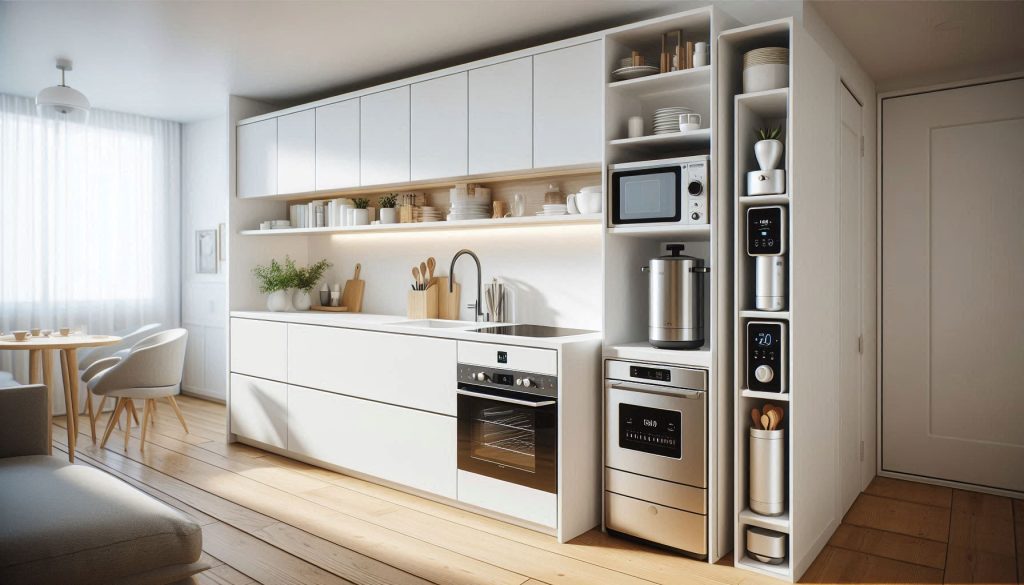
Multi‑function countertop units: do more with less
Choose devices that combine functions: Thermomix TM6 (mix/cook/steam/sous‑vide) and app‑connected multicookers like Instant Pot Smart WiFi turn a range of separate appliances—slow cooker, steamer, chopper—into one footprint. In real apartments you’ll see one Thermomix free up two cabinets and a 12″ counter strip.
Smart sous‑vide and steam combos
Anova/Joule immersion circulators pair with small, stackable steam baskets to replace slow cookers and standalone steamers. These systems are low‑profile and often store vertically. Use them for hands‑off batch cooking and gentle reheating that preserves volume.
Single and modular induction: speed vs. circuit needs
High‑wattage single‑burner induction cooktops (1,800–2,200 W) heat like a stovetop and collapse into a 10–12″ counter square. They’re fast, but:
Modular multiple‑burner induction tiles let you add burners only when needed; pick magnetic stackable designs if counter storage is tight.
What specs to prioritize
Tradeoffs and practical tips
Next, you’ll see how smart cleaning and dishcare tools reclaim the counter and floor space your compact cookers create.
Smart cleaning and dishcare tools that clear counter and floor space
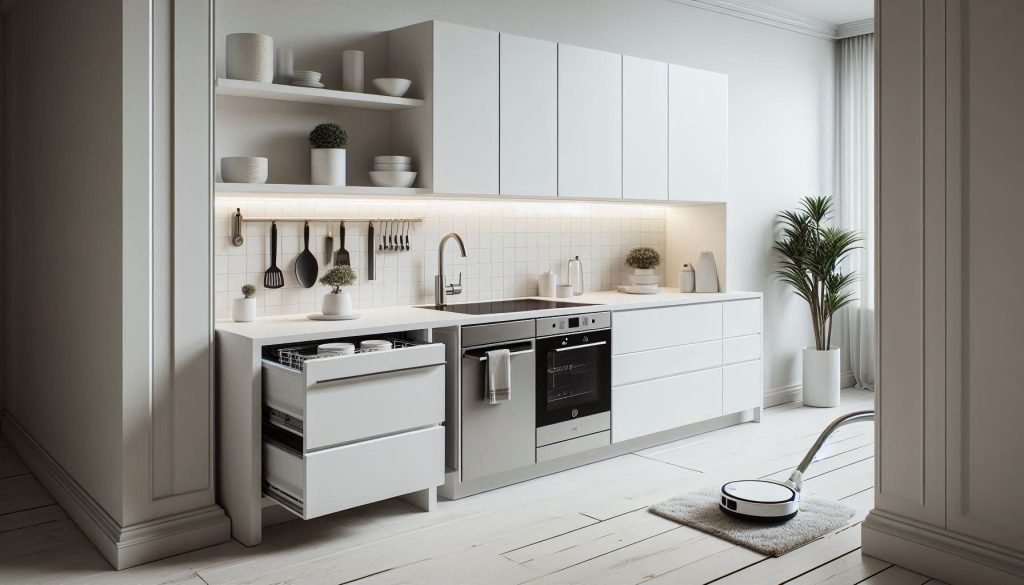
Countertop and drawer‑style dishwashers: what to measure
When you consider a compact dishwasher, measure more than footprint. Record:
Practical examples: countertop units (portable brands and models) typically handle 4–6 place settings and 6–12 L/cycle; drawer‑style units like Fisher & Paykel DishDrawer fit into narrow cabinetry and save vertical storage. Choose a countertop if you rent or lack plumbing access; choose built‑in drawers when you want permanent, quieter integration.
Robot vacuums and mapping mops optimized for kitchens
Pick robots that handle crumbs and sticky spills:
Models to consider: iRobot Roomba j7+ for obstacle avoidance and self‑emptying, Roborock S7 for vibration mopping — both reduce need for daily manual sweeping or a mop bucket.
Smart waste and compost solutions
Space‑saving options include sensor lids, compactors, and electric composters. Compare:
Scheduling, pairing, and immediate how‑to tips
Next, you’ll apply similar measurements and automation thinking to compact refrigeration and preservation tools.
Smart refrigeration and preservation tools for tighter footprints
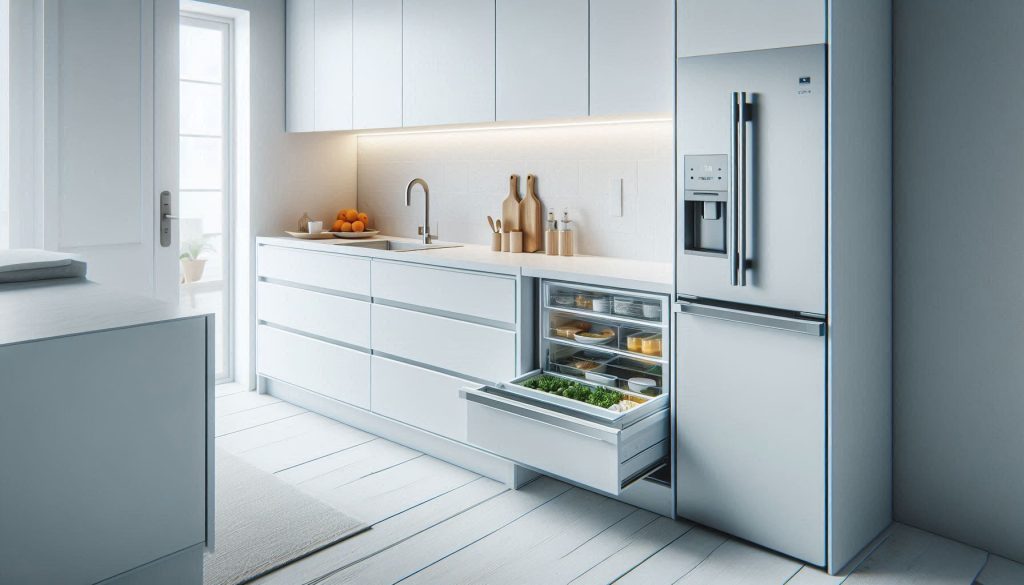
Space‑efficient fridge types to consider
Drawer refrigerators and under‑counter fridge drawers let you reclaim vertical space and maintain work‑triangle efficiency. Compact smart mini‑fridges (30–150 L / 1–5 cu ft) fit under counters or beside islands, and countertop cold drawers give immediate access to lunchbox items and frequently used condiments.
Selection metrics — what to measure before you buy
Targeted preservation devices that save space
Models to inspect: Fisher & Paykel fridge drawers for built‑in fit; compact smart units from major brands with Wi‑Fi diagnostics (compare app features before purchase).
Integrating sensors & inventory tracking
Use barcode/RFID tags or simple weight sensors and an app to track perishables; automated alerts prevent redundant buys and free up space. Even a low‑cost scale under a drawer can indicate when staples run low.
Installation notes & layout tips
Motorized and modular smart storage systems to maximize vertical space
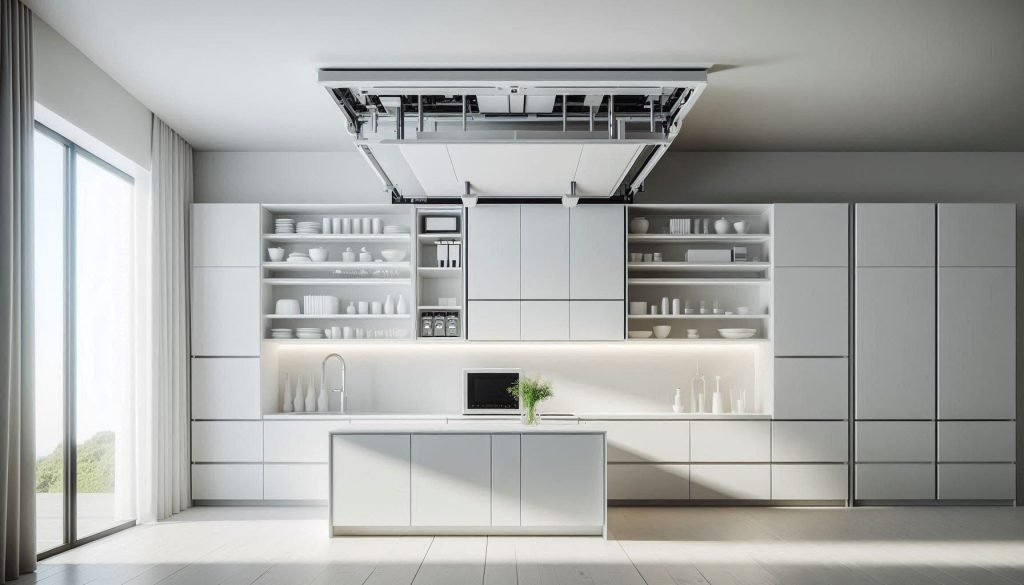
Why these systems matter
You reclaim unreachable vertical volume and reduce the need for bulky base cabinets by bringing high shelves to hand. In practice, a single motorized upper‑shelf lift can replace a 600 mm base drawer bank, freeing floor area for a slim island or open toe‑space.
Key product types and examples
Selection metrics you must check
Quick how‑to & best practices
Calculating reclaimed space & payback
Integrated intelligent fixtures and appliances that eliminate redundant tools
Why integration wins in tight kitchens
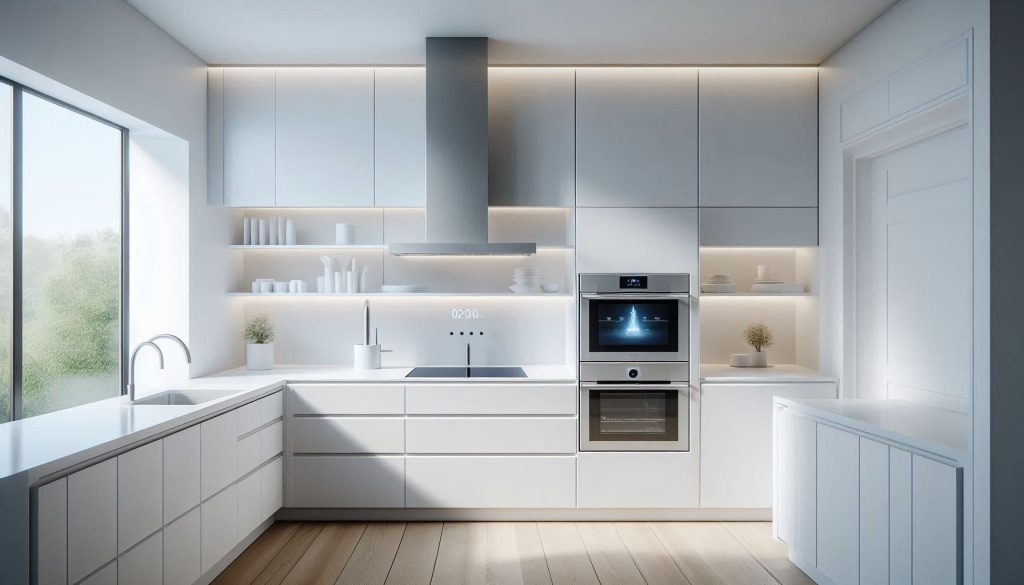
When you fit multi‑function fixtures into your architecture, you stop storing single‑use gadgets. One condo owner I know replaced a countertop microwave, a toaster oven and a standalone steamer with a built‑in combi‑steam oven and reclaimed roughly 0.4 m² of usable counter — the same logic scales to faucets, sinks and hoods.
Key integrated fixtures and real models to consider
Selection criteria (measure these)
Installation, maintenance & interoperability
Practical tip: prioritize one integrated swap (faucet + recessed scale, or combi oven) and test lifecycle costs before wider retrofits — next, you’ll want to coordinate lighting, power management and retractable utilities to fully free work surfaces.
Smart lighting, power management, and retractable utilities to free work surfaces
Under‑cabinet & task lighting: do more than illuminate
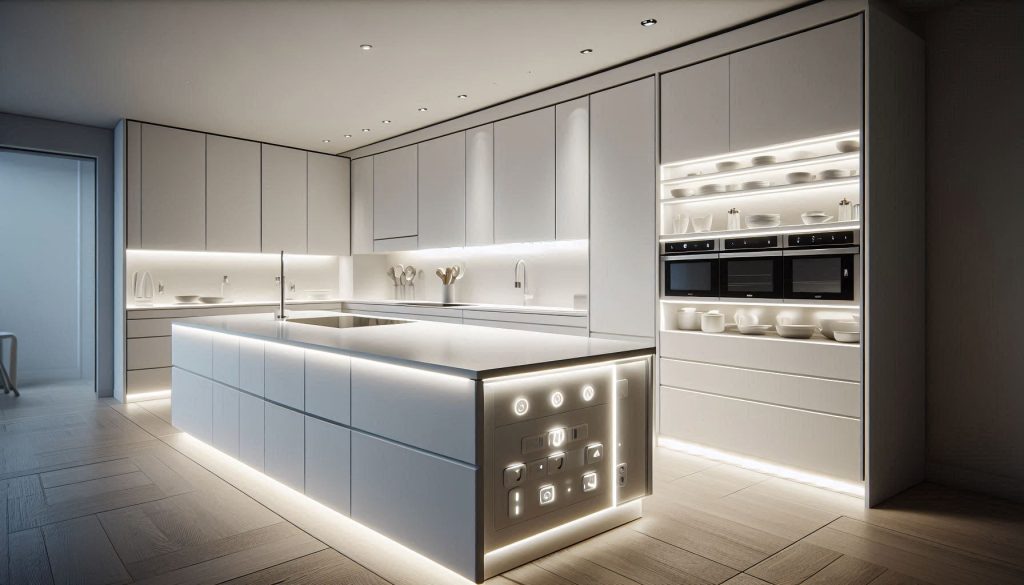
Choose LED under‑cabinet fixtures that deliver 300–500 lux on the countertop (roughly 300–500 lumens per linear foot), CRI ≥ 90 for accurate food prep colors, and efficiency ≥ 100 lm/W for low heat. Aim for even runs mounted near the front lip to avoid shadows. Motion sensors with response times of 100–300 ms are ideal so lights turn on instantly when you approach with a bowl or knife (Philips Hue Motion Sensor performs reliably in kitchens).
Hide power when you don’t need it
Retractable pop‑up outlets and motorized power modules free edges that fill up with chargers:
Smart switches, outlets, and automation rules
Use smart outlets and scene logic to avoid leaving bulky chargers and small appliances plugged in:
Wiring & layout tips for less clutter and safe power
Plan fixtures with IP44 or higher in splash zones (IP65 if near direct water) and coordinate with your electrician for recessed pop‑ups and dedicated circuits — next, you’ll tie these devices into central control hubs and automation strategies.
Control hubs, data‑driven automation strategies, and selection checklist
Pick the right hub or ecosystem
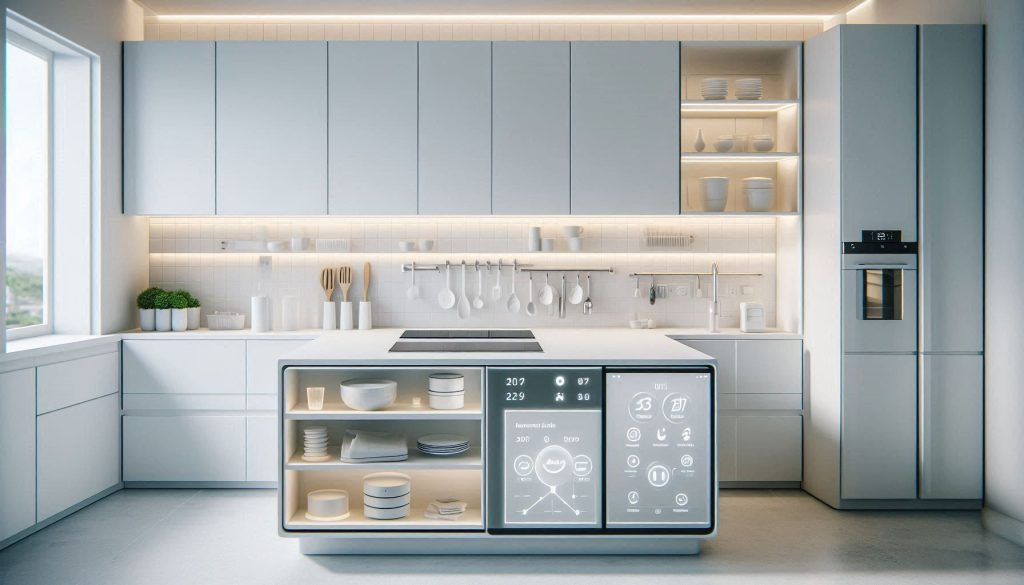
Decide whether you want a local‑first hub (Home Assistant, Hubitat) or cloud‑centric ecosystems (Amazon Alexa, Google Home, Apple HomeKit). Local hubs keep mission‑critical flows (power, door locks, refrigeration) running during outages and preserve privacy; cloud services offer convenient voice control and wide third‑party integrations. Prioritize Matter support for future‑proofing — Philips Hue Bridge, Eve, and many newer devices are already bridging gaps.
Practical automation patterns that reduce redundancy
Use simple, measurable routines to make devices replace one another and disappear:
Selection checklist — verify these before buying
Automation design & measurement
Simple ROI framework
Payback months = Device cost ÷ (annual avoided appliance purchases + annual energy savings + monetized value of reclaimed space). Plug in conservative estimates to decide whether a smart upgrade truly frees up room and money.
Now, move to the article’s Conclusion to put these systems into practice.
Putting smart, space‑saving tools to work in your kitchen
Combine compact smart cooking units, targeted refrigeration, motorized vertical storage, integrated fixtures and intelligent lighting and power to shrink footprint while raising capability. Prioritize measurable criteria—dimensions, energy consumption, noise levels, interoperability and maintenance costs—so each device earns its place. Plan automation around real workflows: map tasks, measure time savings, and phase in routines that free surfaces, hands and time.
When you choose tools with data you reduce clutter and regret. Start small, test integrations, and iterate based on real use. With the right selections and data‑driven approach, you can convert cramped kitchen into high‑functioning space without expanding square footage.