
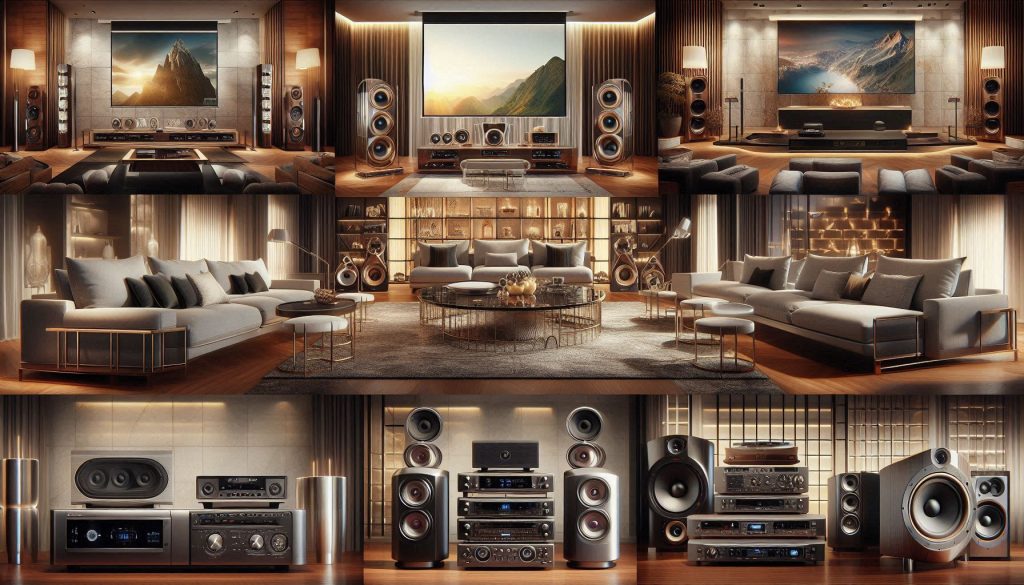
How to choose a luxury home theater that matches your space and tastes
You want a home theater that delivers exceptional audio and video, integrates seamlessly with your living space, and represents a lasting investment. This guide profiles ten curated systems across categories — from an opulent flagship reference system to a discreet custom-install solution — and explains the selection criteria: sonic fidelity, speaker and display quality, build materials, room calibration and customization, ease of installation, smart features, and long-term service and warranty.
Decide what matters most to you: audiophile sound, immersive Atmos, compact elegance, or full-scale cinema. Use the short profiles that follow to match room size, design priorities, and budget so your final choice feels effortless and enduring, plus longevity.
Opulent flagship system for reference performance
What it is and why you’d choose it
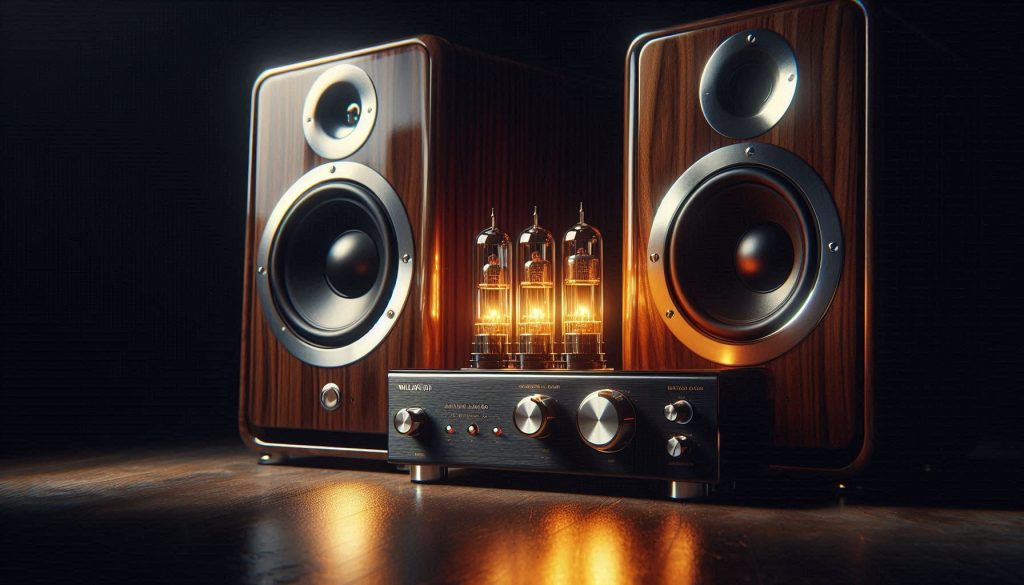
You pick a flagship when absolute accuracy, headroom, and dynamic contrast are non-negotiable—think orchestral detail, blockbuster transients, and distortion so low you stop hearing the system. Typical builds pair floor‑standing flagship loudspeakers (e.g., Wilson Audio, Focal Utopia, Bowers & Wilkins 800 Series) with high‑power mono amplification (McIntosh, Krell, Pass Labs), processor/preamp (Trinnov, Datasat, Meridian) and multiple premium subwoofers (JL Audio Gotham, SVS Ultra/PC series).
Room and acoustic demands
These systems thrive in a dedicated room roughly 12×18 ft (or larger) up to home‑cinema scales — 300–800 sq ft. Plan for professional acoustic treatment: bass traps, broadband absorbers, and diffusion across reflection points for $5k–$30k depending on finishes.
Realistic costs & setup
Expect component costs in ranges like:
Total turnkey budgets typically start around $75k and can exceed $300k for turnkey theaters.
Key technologies & upgrade path
Look for native high‑resolution decoding (multi‑channel PCM/DSD, object-based audio), advanced room correction (Trinnov/Dirac Live/Anthem ARC), and modular designs permitting added channels, active crossovers, or bi‑amping later—so the system evolves with your tastes.
In practice, a flagship reveals textures and timing you didn’t know you were missing; if you crave that reference honesty but need a smaller footprint, the next section profiles compact luxury systems that punch above their size.
Compact luxury system with surprisingly large sound
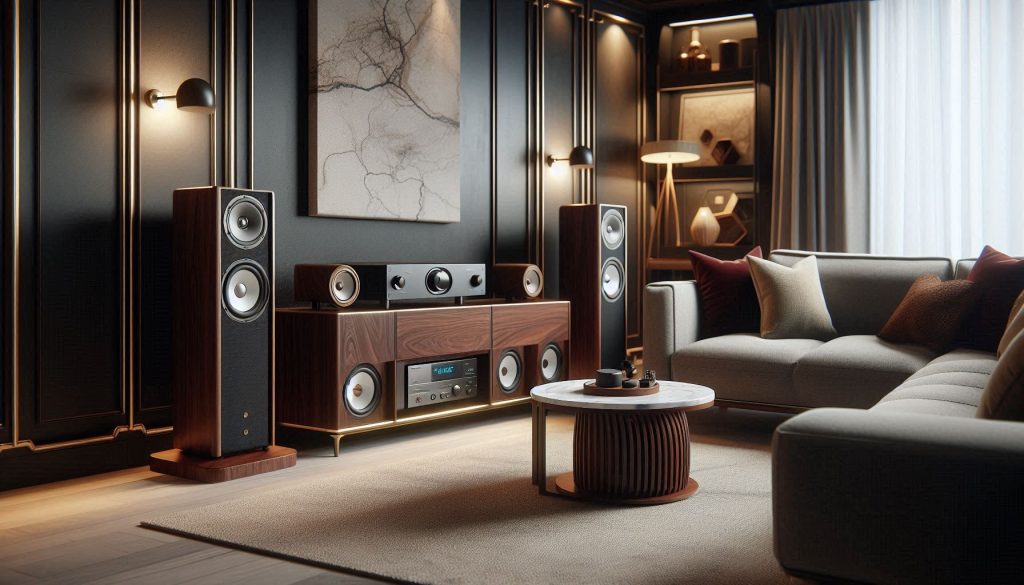
If you need luxury aesthetics and top-tier sound in a smaller footprint, a well‑engineered compact system can give you surprising scale. You get refined finishes, precise imaging, and room‑shaking bass without floor‑standers or a rack of electronics.
Why compact works
You benefit from lower room‑interaction, easier placement in apartments or secondary rooms, and turnkey elegance. Modern small monitors and powered subs deliver clean dynamics that belie their size.
Component picks that punch above their class
Consider compact standmounts and integrated amps/DACs that combine power and room correction—examples:
How to get maximum impact
Trade-offs
You will sacrifice extreme low‑bass extension and ultra‑high SPL, but gain elegance and integration. Many compact luxury systems are Atmos‑ready — a perfect bridge to the upcoming immersive‑sound section.
Immersive Atmos system for three-dimensional sound
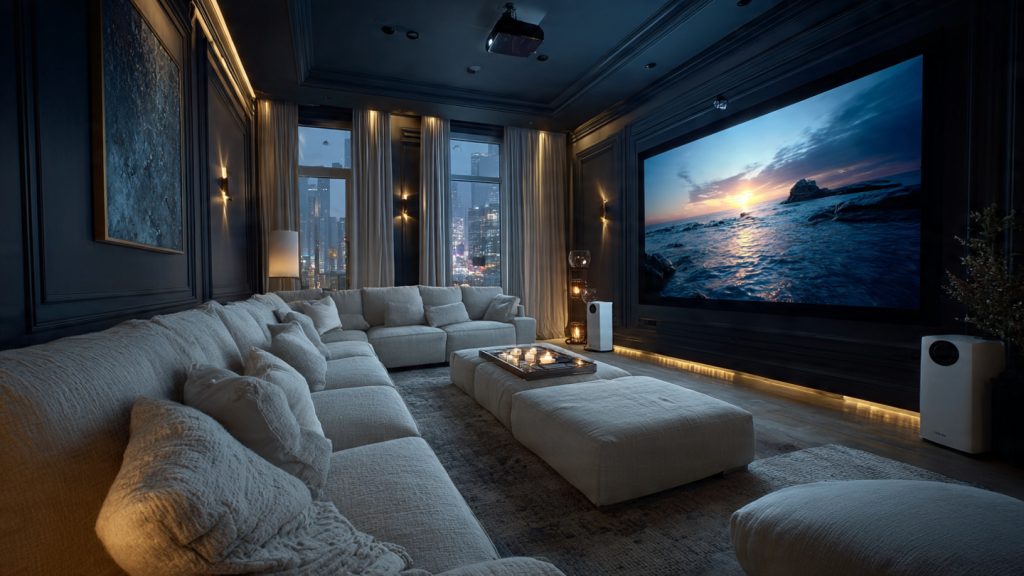
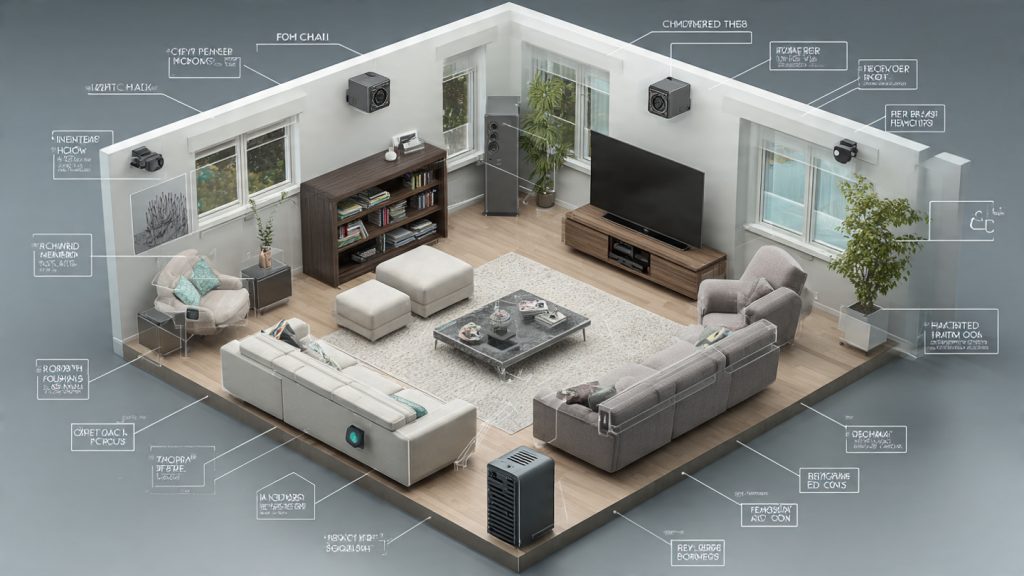
This section focuses on object‑based formats like Dolby Atmos that give you a true vertical soundstage. If your compact system hinted at elevation, Atmos is the next step to surround immersion—think raindrops above you and helicopters threading precise trajectories.
Recommended layouts and real‑world expectations
Common, practical layouts:
In real use, Atmos adds believable height and object movement; films mixed aggressively (Dune, top action titles) reveal the difference most dramatically.
On‑ceiling vs up‑firing modules
On‑ceiling speakers (e.g., Bowers & Wilkins CCM7.5, KEF Ci3160RL) deliver precise elevation and imaging. Up‑firing modules (Klipsch RP-500SA, KEF R8a) are easier to retrofit—work best with lower ceilings (≤3 m). Choose based on ceiling height, aesthetics, and install complexity.
Processor, amplification and wiring
You’ll need a pre/pro or AVR with multi‑channel processing (Marantz AV8805A, Trinnov Altitude) and either multi‑channel amplification or a combination of built‑in amps and power amps (Anthem MCA, Classe, Arcam). Expect more speaker runs, amplifier channels, and modestly higher rack/thermal requirements.
Practical tips and costs
Audiophile-tier surround system for music and movies
This section profiles systems that put music-first fidelity into a surround context—preserving tonal neutrality and stereo imaging while adding discrete channels for cinematic immersion. You’ll learn how speaker choice, amplification topology, DAC/preamp quality, and calibration keep both symphony and soundtrack honest.
Speaker voicing, materials & crossovers
Choose speakers voiced for neutrality and linear phase behavior: wideband drivers or coaxials (Tannoy, KEF Uni‑Q) and high-stiffness cones (aluminum, beryllium, advanced composites) retain timbre. Look for meticulously engineered crossovers and time‑aligned driver geometry (Magico, Focal, Wilson Audio) to avoid smear when music expands into surround channels.
Separates vs. integrated & powered designs
Calibration and room treatment
Use multichannel measurement and correction (Dirac Live, REW + UMIK‑1), but preserve midrange neutrality—apply minimal phase correction around critical vocal bands. Install bass traps and first‑reflection absorption; small placement shifts often outperform more EQ.
Practical takeaway: prioritize neutral speakers and clean amplification, then tune the room. If you crave the same resolution at much higher levels, the next section explores high‑output systems for large rooms.
High-output system for large rooms and home cinemas
When you move into a large dedicated theater or an open-plan great room, you need gear that scales without sounding strained.
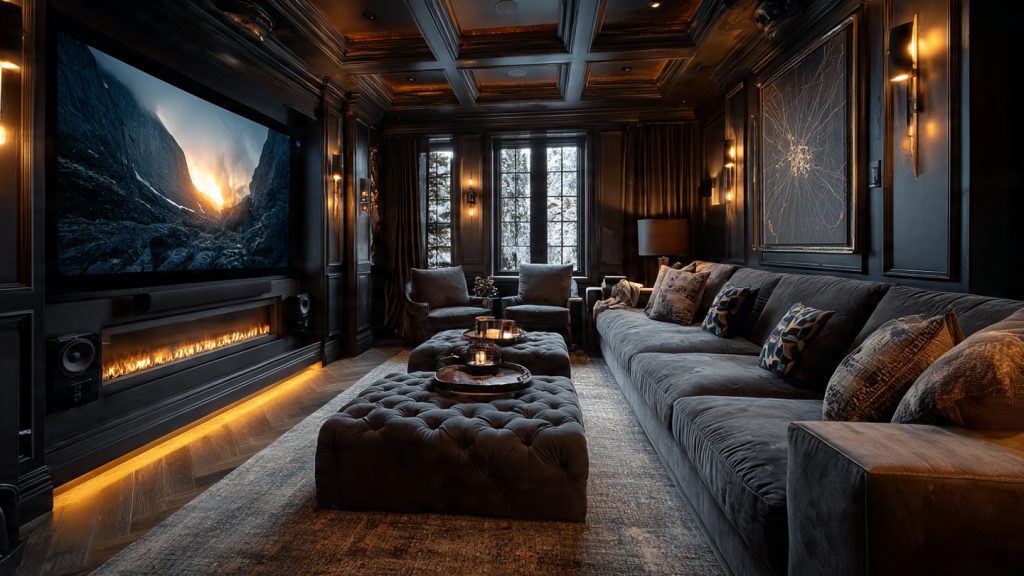
Think tall tower arrays or small line‑array modules (JBL Synthesis, MartinLogan, Magico towers paired with JBL SCL modules), multiple powerful subwoofers (JL Audio Gotham or SVS PC/16-series), and multichannel amplification that stays cool under long peaks. In practice you want authority more than brute force.
Seating layout & SPL targets
Place seating to avoid dead spots and keep imaging consistent across a wide row. Aim for reference levels:
Stagger seats and maintain symmetric speaker geometry; wider arrays help preserve imaging at off‑axis seats.
Bass management & subwoofer strategies
Clustered subs give tight response and local control; distributed subs smooth room modes and provide even bass across many seats. I once attended a screening with four distributed Goliath‑class subs—bass was uniform from front to back. Use sub‑array mixing and per‑sub delay to tame nulls.
Processor & amplification features
Key features to handle many channels:
Practical installation tips
Isolate speakers and subwoofers from structure, budget for floating floor or pads, control HVAC to <25 dBA, and hire pro calibration with room measurement and time‑domain correction to deliver consistent, reference‑level performance for all listeners.
Discreet custom-install solution for elegance and invisibility
Start with a room-conscious plan
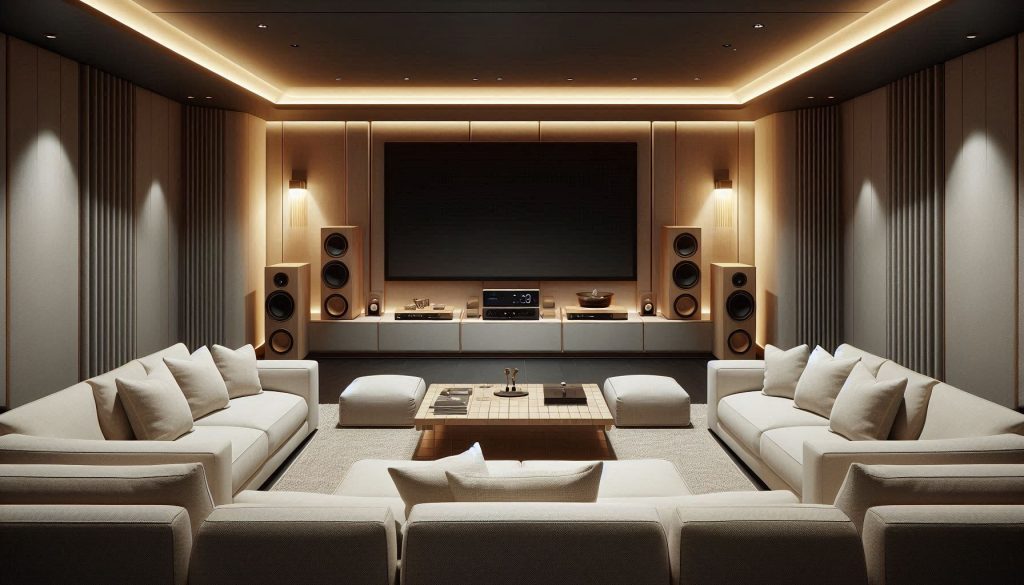
If you want luxury that disappears into your décor, begin by defining how invisible you want the gear to be. Work with an AV integrator early—floor plans, sightlines, and renderings avoid nasty surprises. Decide front‑stage concealment (in‑wall LCR behind fabric) versus fully invisible speakers.
Hidden‑speaker tech that convinces
Several technologies deliver surprising dynamics and imaging:
For Atmos, use pivoting in‑ceiling modules or small upward‑firing modules plus dedicated subwoofers (JL Audio, SVS, JL Gotham) for bass you can’t hide.
Control, concealment, and serviceability
Choose a control ecosystem—Crestron, Control4, Savant, or Josh.ai—that integrates motorized screens (Stewart, Screen Innovations) and lighting scenes. Plan racks with Middle Atlantic cabinetry, labeled wiring, spare amp channels, and remote access for firmware and diagnostic support. I attended a retrofit where an access panel and documented wiring saved a weekend of service calls.
Trade‑offs to weigh
Luxury streaming-centric system for convenience and clarity
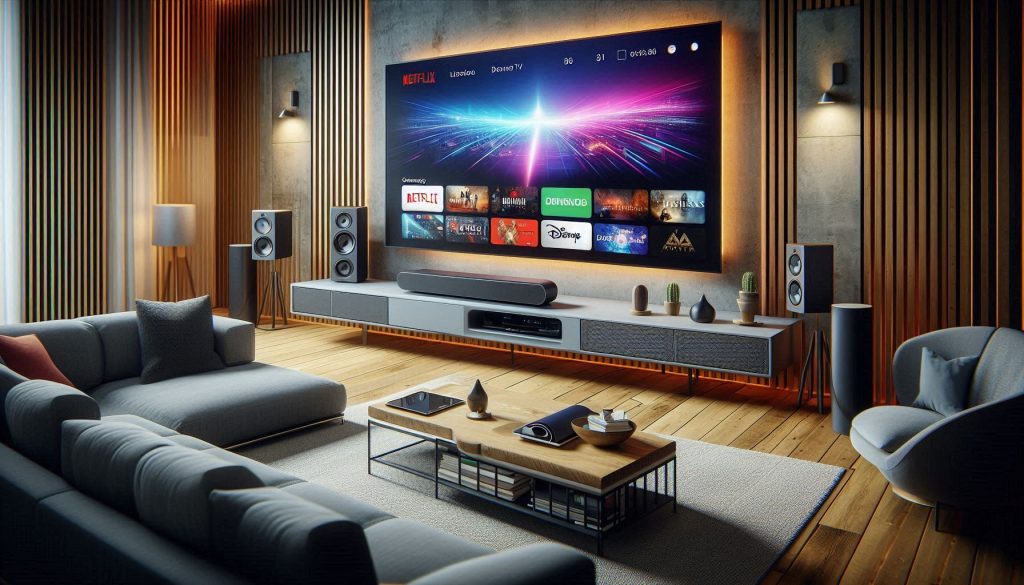
This profile focuses on systems built around native streaming, simple operation, and top-tier AV quality so you get cinematic sound and picture with minimal fuss.
Key components and examples
Choose an integrated streamer or AVR with native apps and multiroom platforms:
Network and bandwidth best practices
Convenience & reliability tips
Future-proofing
Next, we’ll look at how to get premium features at a more accessible price in the Luxury value system.
Luxury value system: premium features at a more accessible price
What “value” looks like
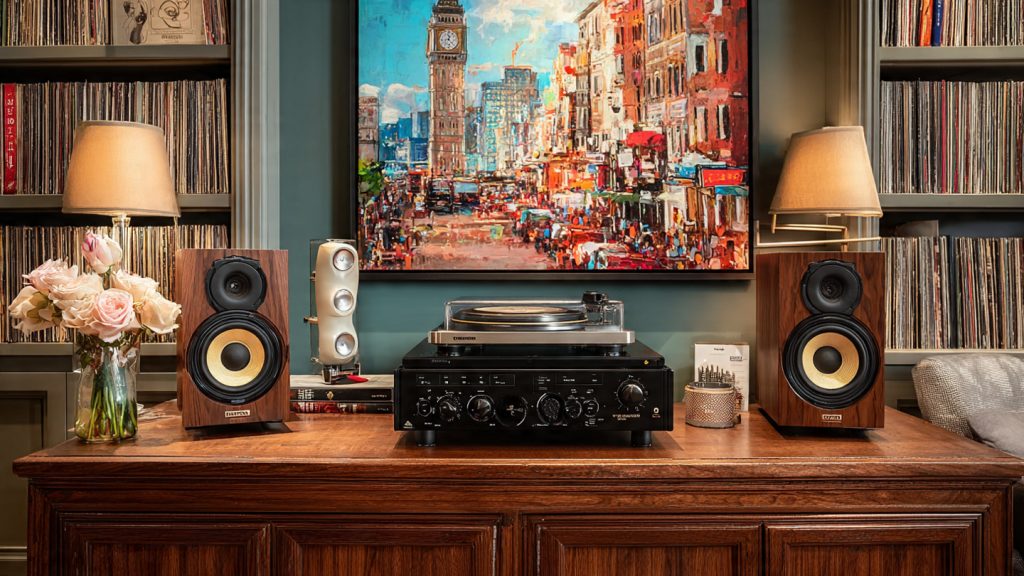
You get core performance—tight imaging, clean power, reliable processing—without designer finishes or modular extras. Think Denon/Marantz mid‑range AVRs paired with KEF R-series or SVS Prime speakers: musical, solidly built, and much cheaper than flagship racks.
Where to allocate your budget
Smart component choices
Choose well-reviewed mid-tier amps/AVRs that include modern codecs (Atmos, DTS:X, AV1 passthrough) and good preouts. Pair with compact but high‑sensitivity towers for easier room coupling—SVS, ELAC, KEF, or DALI often balance cost and refinement.
Warranties & long-term costs
Look for 3–5 year parts/driver warranties, transferable if possible. Factor service, calibration, and spare cables into ownership cost; inexpensive repairs can erode initial savings.
Quick upgrade roadmap
Start with a calibrated sub and room correction, then upgrade the center channel for clearer dialogue. These steps typically yield the biggest perceptual jump per dollar.
Next up: focused two‑channel systems for dedicated music lovers.
Curated two-channel luxury system for dedicated music lovers
Why go two‑channel
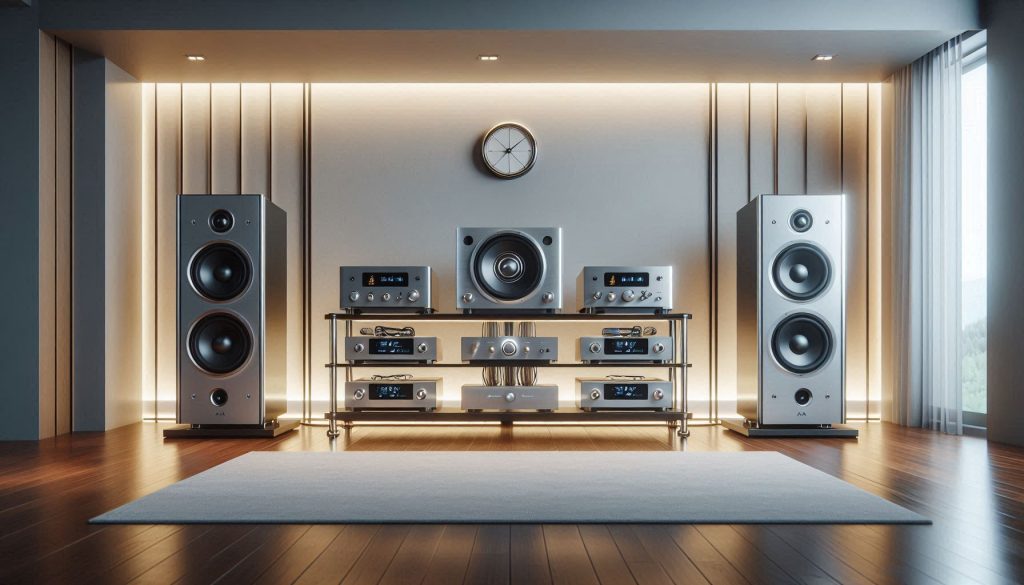
If music is your primary passion, a focused stereo rig delivers unparalleled immediacy and imaging. You still get credible movie sound if you prioritize speaker quality, amplification, and a good sub—think music-first, cinema-capable.
Recommended pairings (examples)
Configure for dual purpose
Acoustic tips for stereo imaging
Discreet effects?
Consider small, hidden surrounds or in‑ceiling Atmos modules driven by an AV processor for selective cinematic immersion—keep them passive unless you want full multichannel power.
Next section scales this idea up to an all‑out cinematic system that prioritizes theater realism.
Ultimate cinematic system for a true theater experience
Build the core: projector, screen, and sound
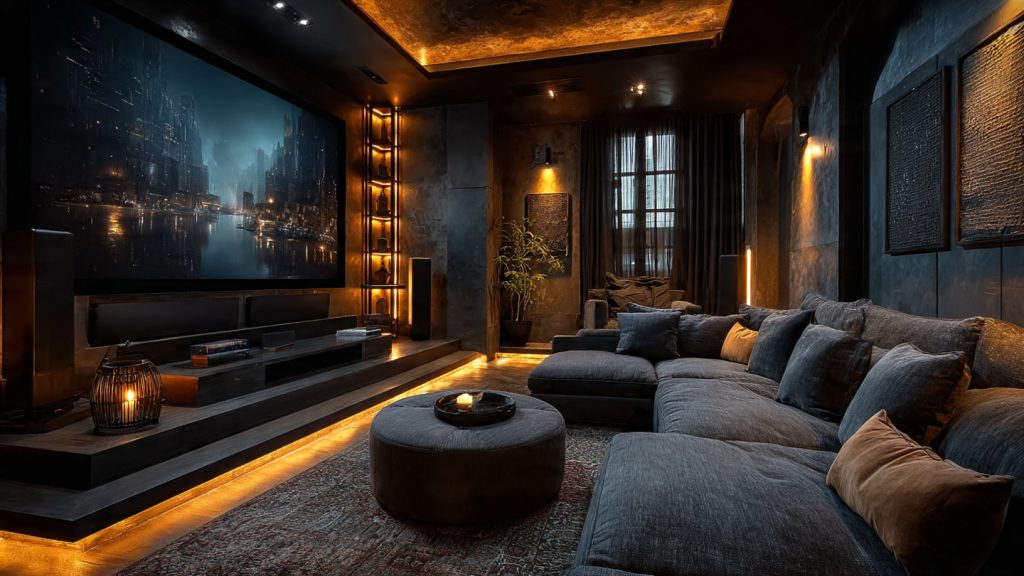
Choose a dedicated 4K laser projector (Sony VPL‑GTZ380 or JVC DLA‑NZ9) with robust HDR tone‑mapping and at least 2,000–3,000 lumens for large screens. Pair with an acoustically transparent fixed frame screen from Stewart Filmscreen or Screen Innovations so your center channel sits behind the image for perfect lip‑sync.
Power, amplification, and bass
Design for headroom: use multichannel processors (Trinnov Altitude) feeding dedicated power amps or modular Crown/Milab racks. For large home theaters, multiple powered subs (or one AV‑grade 1,000–2,000W subwoofer) tuned and time‑aligned deliver sustained, cinema‑level LFE without clipping.
Room, seating, and sightlines
Rake seating on risers so every row sees the screen at an optimal eye‑line (center speaker at ~1/3 up from screen bottom). Keep first row at 1–1.5× screen height; use auditorium spacing for comfort when hosting larger audiences.
Rack, cooling, and automation
Rack with spaced U‑rack venting, quiet EC fans, and two dedicated 20A circuits. Add temperature sensors and smart power management to avoid thermal shutdown. Integrate Lutron/Control4 lighting presets, blackout shades, and a single “Cinema” automation scene to lower lights, drop screen, start sources, and recall calibrated picture/audio modes.
Quick checklist
With those elements in place, you’ll be ready to decide which luxury system best fits your lifestyle in the Conclusion.
Choosing the right luxury system for your home
You can match the profiles above to your priorities: choose the opulent flagship for reference accuracy, an Atmos build for immersive height, a compact or discreet option for space and elegance, or a dedicated two‑channel or audiophile surround for music-first listening. Consider room size, seating, and lifestyle to narrow choices.
Always audition systems in your own space when possible, and budget for professional installation, acoustic treatment, and future upgrades. Prioritize clarity, dynamics, and usability over specs alone. With these considerations and the profiles as a guide, you’ll confidently choose a luxury home theater that fits your performance expectations and life.
Nice roundup, but I have a nerdy question: The article mentions ‘Immersive Atmos system for three-dimensional sound’ — are we still assuming 5.1.4 is the baseline? Or do the better systems use 7.1.6 setups now? Curious how many vertical channels are realistic for most homes.
Also consider height virtualization tech in AVRs if ceiling installs aren’t possible; it won’t fully replace real height speakers but it’s a good compromise.
Thanks all — that helps! Might go for 5.1.4 then, easier to convince the landlord 😅
Great question, Lily. 5.1.4 is still a common and effective baseline for Atmos in typical living rooms. 7.1.6 and higher add refinement and better object placement but require bigger rooms and more installation work. For most homes, 5.1.4 or 5.1.6 (if you can fit side surrounds) is a sweet spot.
For apartments, upward-firing Atmos modules paired with a good AVR give a surprisingly convincing 3D field without ceiling work.
I run 7.1.4 in a dedicated room and it absolutely fills the space more naturally, but you need head-height speakers and careful time alignment to avoid weird upward imaging.
Love the streaming-centric system pick. Convenience is huge for me — family streams everything, and if it sounds good without a complex setup, I’m sold.
Minor nit: could have used a section comparing platform support (Roon, Tidal Connect, AirPlay 2, Chromecast) across the streaming-centric models. Some streaming systems advertise ‘universal’ but leave out a few services.
Thanks — I’ll include update history and manufacturer support notes in the update.
I swapped to a streaming-centric system and missed Roon support at first — ended up adding a small Roon endpoint. Quick and cheap fix.
Also check for regular firmware updates. I had a unit that slowly improved over 2 years thanks to updates — huge difference.
Great point, Sophia. Platform compatibility varies and it’s an important buying factor. I’ll add a comparison table for streaming services and ecosystem support in the next edit.
As someone obsessed with two-channel sound, glad the article gave props to curated two-channel systems. But PSA: not all ‘audiophile-tier’ surround setups are great for music — sometimes they smear midrange imaging.
If music is priority, I’d recommend checking speaker dispersion specs and demoing with tracks you know well.
Absolutely — two-channel speaker dispersion and tonal balance matter a lot for imaging. For mixed-use listeners, look for speakers with neutral midrange and wide but coherent dispersion.
Exactly. Demo with vocals and acoustic guitars; those reveal midrange flaws quickly.
Big rooms = big fun. The ‘high-output system for large rooms and home cinemas’ looks like the one to beat if you entertain with loud movie nights.
Funny story: I once went overboard and my wife banned me from buying anything louder than our neighbors’ AC lol. Anyone have tips for keeping power but being neighbor-friendly?
Great tips — I’ll try re-positioning subs and add some traps. Maybe I can keep loud explosions and avoid complaints 😅
Haha — neighbor diplomacy is a real skill. Tips: use bass traps and EQ to reduce spillage (low bass travels), aim for controlled dynamics rather than max SPL, and talk to neighbors about scheduling loud movie nights.
Plate those sub frequencies — subs travel. Two subs placed strategically and properly EQ’d will give punch without blasting the whole block.
This list is solid — I bookmarked the flagship and the ultimate cinematic system for future drooling sessions 😂
A few thoughts (sorry, long post):
1) For people like me who vacillate between music and movies, the audiophile-tier surround and the curated two-channel systems both seem tempting. Which would you pick for 60/40 music-to-movies split?
2) The article mentions ‘choosing the right luxury system for your home’ but I still get overwhelmed by room acoustics. Any simple checklist for noobs?
3) FYI: the compact system blurb forgot to mention if the sub is sealed or ported — big diff imo.
Thanks again — great write-up, lots of good options.
Also, Jason — about the compact system: I checked the notes and the featured model uses a ported sub. I’ll add that callout in the specs, thanks again!
If you’re indecisive, look for systems that offer adjustable DSP modes (music vs cinema). That way you can tune for both without swapping gear.
Thanks for the detailed feedback, Jason — great questions. For a 60/40 music/movies split, a two-channel audiophile system with a high-quality integrated amp or separate pre/pro tends to shine for music, but modern audiophile speakers paired with a good streaming-capable pre/processor can do both well.
Quick checklist for room acoustics:
– Measure room dimensions (or at least note length/width/height)
– Identify primary listening spot and speaker positions
– Add absorption at first reflection points and bass traps in corners if possible
– Use a subwoofer with adjustable crossover and phase
Regarding sealed vs ported subs: sealed subs are tighter and more accurate for music; ported subs have more output in the low end for movies. I’ll update the article to clarify — thanks for flagging that.
Agree on sealed vs ported. I run a small sealed sub for jazz and an additional ported sub for movie nights. Complicated but 🤷♀️ worth it.
I liked the aesthetics notes in the ‘Choosing the right luxury system for your home’ section — form factor matters as much as sound for me. But the article glossed over speaker finishes and how they age in sunlight. Anyone had lacquered speakers fade over time? Also, anxious about ‘invisible’ speakers not aging well in terms of sound — dust, grill discoloration, etc.
Great point, Oliver. High-gloss lacquered finishes can yellow over years if exposed to UV — consider UV-resistant finishes or positioning them away from direct sunlight. Hidden/in-wall speakers can collect dust in the grill cutout; sealed grilles and regular maintenance help. Also ask integrators about replaceable grille fabrics.
If aesthetics are a priority, request sample panels from manufacturers and ask about long-term finish warranties before committing.
For invisibles: choose models with replaceable/paintable grilles. Dust is manageable with a quarterly vacuum brush and occasional tech check.
My lacquered speakers near a west window got a little softer in finish after five years. I moved them and swapped to UV-stable model — problem solved.
Good roundup! A couple of things I’d like clarified:
– How strict are the ‘room size’ recommendations? My home office is about 12×14 ft.
– For discreet installs, can integrators match the speaker-grille paint to textured walls (not just flat paint)?
Appreciate any practical tips — thinking about a discreet install for better aesthetics.
12×14 ft is workable for many of the compact and streaming-centric systems, especially if you pair them with a small sub or use in-wall/ceiling speakers. For discreet installs, yes — pro integrators can paint or texture-match grilles, and there are micro-perforated screens and custom wrap solutions that blend much better than standard grilles.
I’ve had grilles color-matched to a faux-finish wall before — it’s not cheap but the result was seamless. Ask for a mock-up or sample.
Really useful article — the ‘Luxury value system’ is a standout for me. I’m on a budget but want something that looks and sounds premium. Any specific recommended brands from the list that are easiest to upgrade later? Don’t want to buy something with locked ecosystems.
Look for systems with standard speaker connections (binding posts) and support for common protocols (AirPlay, Chromecast, eARC). Brands that offer discrete components rather than all-in-one closed systems are usually easier to upgrade. From the list, the value picks with modular components are best for future upgrades.
Thanks — modular sounds like the way to go. Appreciate the practical advice!
I bought a ‘value’ system two years ago and swapped the center and sub later — easy and affordable. Go modular if you want upgradeability.
Really appreciated the piece on discreet custom-install solutions. I want minimal visible gear — speakers that hide but still sound like, well, not nothing.
Anyone done a custom install with behind-wall subs? Did you lose low-end punch? Any gotchas with HVAC ducts and speaker placement?
Also consider using a dedicated sub amp with room correction and an external DSP — that really helps custom installs match the performance of freestanding subwoofers.
We installed a couple of in-wall woofers in a long living room. Took a while to dial in, but corner loading and EQ fixed early issues. Worth it for the clean look.
Behind-wall subs (in-wall or in-wall boxed subwoofers) can deliver good low end if properly braced and sealed. Key gotchas: ensure airtight mounting, avoid placing them adjacent to HVAC ducts, and have the installer account for cabinet volume. Professional measurement and tuning after install are crucial.
The opulent flagship and the ultimate cinematic system — both gorgeous but so different in approach. Which one gives better dialogue clarity at normal listening levels? I hate cranking the volume to hear speech.
I added a vocal-focused EQ preset for 2-3 dB lift in the 1-4 kHz range and it made a big difference without sounding shouty.
Dialogue clarity often comes down to the center channel and room acoustics more than the flagship vs cinematic slab. A high-quality center speaker with a forward midrange and a bit of toe-in helps; also EQ and dialog enhancement features on many processors help at lower levels.
Nice list but man, some of these prices are crazy. I get ‘luxury’ but the ‘ultimate cinematic system’ price would feed a family for a year 😂
Also: is there any middle ground between ‘luxury at all costs’ and ‘budget’ that still gives that theater wow factor? The ‘luxury value system’ seems promising but skeptical about how ‘luxury’ it can be at lower price points.
Also remember resale: many luxury components hold value well — so ‘ultimate’ upgrades can be more palatable if you plan to trade up later.
If the budget’s tight, hunt last year’s flagship models — they often go on sale and still outperform many current mid-tier options.
Totally fair take, Oliver. The ‘value’ picks aim to hit a sweet spot: premium materials and tuned performance without the boutique markup. You can get a lot of the cinematic wow by prioritizing a good center speaker, a capable sub, and calibrated room correction even if you skip ultra-high-end amps or exotic drivers.
I came from a mid-range setup and the biggest jump was a better sub and room calibration. Expensive speakers help, sure, but placement and correction do 70% of the heavy lifting.
Good tips — maybe I won’t cry at the sticker prices yet 😂
Loved the roundup — thanks! The immersive Atmos and the audiophile-tier surround caught my eye. I live in a condo, so the ‘Compact luxury system with surprisingly large sound’ section is exactly what I needed.
Quick Q: anyone here tried a compact Atmos setup in a smaller living room? Does it still feel immersive or does it lose that top-layer height effect?
Glad it helped, Emily! Compact Atmos systems can still feel immersive if you position the speakers well and use Dolby Atmos-enabled upward-firing modules or ceiling speakers. Room treatment and sub placement matter a lot for the overall effect.
I set up a compact Atmos in a ~200 sq ft living room. It surprised me — the height effect was noticeable with upward-firing speakers, but make sure the couch isn’t too far back. Also, rugs and diffusers really improved clarity.
Agree with Carlos. I also added a small calibrated sub and it made movies so much better. Worth doing a free room correction if the AVR has it.