
Finding the perfect audio upgrade doesn’t have to break the bank, especially when enhancing a smaller space. Our guide to the top small soundbars for bedroom TVs under $200 focuses on delivering premium dialogue clarity and rich acoustics without the bulk of a traditional home theater system. Whether you are binge-watching late-night dramas or playing casual games, a compact soundbar bridges the gap between thin, tinny built-in TV speakers and immersive high-fidelity sound. We prioritize models that offer essential features like HDMI ARC connectivity, dedicated dialogue modes, and space-saving designs that fit perfectly on a dresser or wall mount.
Navigating the budget electronics market requires a data-driven approach to avoid “marketing fluff” and focus on real-world performance. In this comprehensive review, we evaluate the best-performing units from trusted brands like Polk, Bose, and Vizio, comparing technical metrics such as frequency response, total harmonic distortion (THD), and RMS power. By understanding the tradeoffs between cabinet size and bass extension, you can confidently select a soundbar that matches your specific room acoustics and listening habits. Read on to discover which sub-$200 models provide the best value, ensuring your bedroom setup achieves the perfect balance of price, size, and sonic detail.
What a Small Soundbar Can Do for Your Bedroom TV
Upgrading your bedroom TV audio with a compact soundbar is one of the most cost-effective ways to improve viewing comfort. You’ll get clearer dialogue, better stereo spread, and more satisfying bass without a complex setup or large footprint. This guide sets realistic expectations for what soundbars under $200 can deliver and explains the measurable tradeoffs between size, power, and low-frequency extension.
You’ll find a data-driven evaluation of sound quality metrics, an essential features checklist, six recommended small soundbars with use-case suggestions, and practical advice on placement and tuning. The goal is to help you choose a model that matches your room, habits, and budget quickly and confidently. Start here today.
Why a Compact Soundbar Is the Best Choice for Your Bedroom
Small-room acoustics matter — and they work in your favor
Bedrooms are typically small (think 8×10 to 12×14 feet) with lots of furniture and nearby reflective surfaces. That means bass is naturally reinforced by room boundaries, and you don’t need huge low-end output to feel impact. You also sit relatively close to the screen, so midrange clarity (voice and detail) matters more than theater-level SPL. In practice, a compact soundbar with good midrange can sound subjectively fuller in a bedroom than the same unit in a living room.
Why TV speakers fall short for late-night viewing
Most flat-panel speakers lack dedicated center-channel voicing or midrange headroom, so dialogue gets buried under sound effects. You’ll notice this when binge-watching at night: subtitles help, but they’re a workaround. Compact soundbars address that by concentrating drivers and DSP on vocal frequencies. Models like the Polk Signa S2 or JBL Bar Studio aim for voice-forward tuning and useful features (night mode, dialogue enhancement) tailored to close listening.
Size, power, and driver layout — what changes what
Practical priorities for bedroom use
These tradeoffs let you match the right compact soundbar to how you actually use your bedroom TV — late-night shows, casual gaming, or background music — without oversized hardware or unnecessary complexity.
How to Evaluate Sound Quality: Metrics and Measurements That Matter
Here’s a concise, data-driven primer so you can separate marketing specs from real-world performance. Focus on the metrics that actually affect dialogue, music, and movie listening in a bedroom, and learn a few quick tests you can run at home.
Frequency response: where clarity and bass live
Signal-to-noise ratio (SNR) and THD
RMS vs. peak power (and sensitivity)
Channels, DSP modes, and practical relevance
Which measurements you can trust
Quick listening tests you can run
Armed with these metrics and quick checks, you’ll be better prepared to assess specific models and features in the next section — the Essential Features Checklist for Bedroom Soundbars.
Essential Features Checklist for Bedroom Soundbars
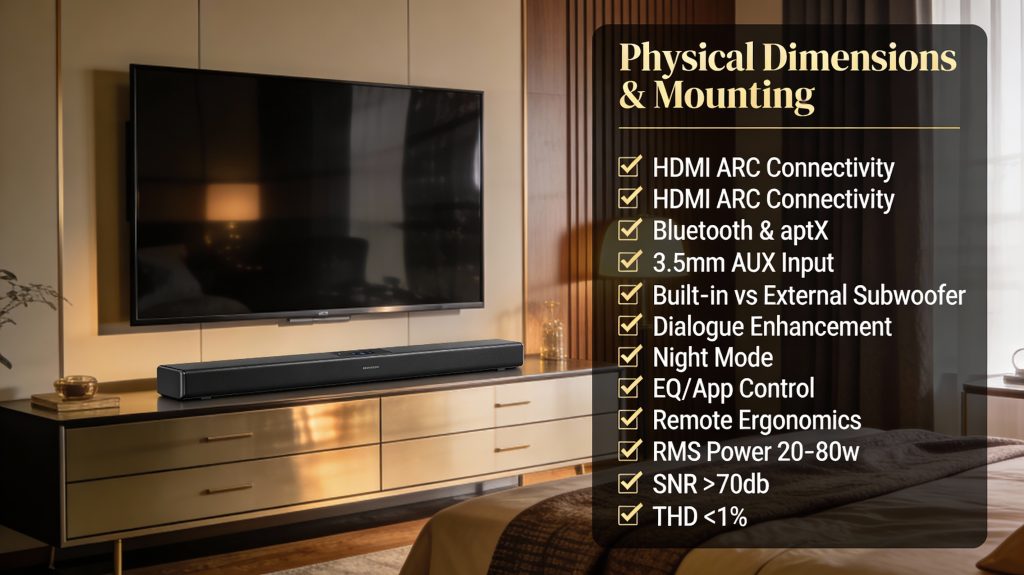
This actionable checklist helps you prioritize features when shopping under $200. Use it to filter quickly and avoid marketing noise—decide which tradeoffs you’ll accept (slimmer profile vs. deep bass, wired connections vs. wireless convenience) and then scan for these minimum specs.
Physical dimensions & mounting
Measure your setup before you shop. If the bar sits in front of the TV on a dresser, keep height under ~3 inches so it won’t block the IR sensor or screen. For wall-mounting, depth under 4–5 inches keeps the look tidy and avoids protrusion.
Connectivity: what you should demand
Prioritize reliable, low-latency links for TV content.
Built-in subwoofer vs. external subwoofer
Decide if deep bass matters: a slim soundbar will trade low-frequency extension for form factor.
Dialogue enhancement and night modes
These are practical bedroom tools, not cures. Ensure the bar has:
EQ, app control, and remote ergonomics
Small touches matter for daily use.
Power, efficiency, and minimum measurable specs
Filter by useful numbers, not marketing peaks.
Use these checkpoints to quickly reject mismatched units. Next, you’ll see specific small soundbars under $200 that match different priorities (slim profile, biggest bass, best dialogue clarity).
Top Small Soundbars Under $200 — Recommended Picks and Who They’re For
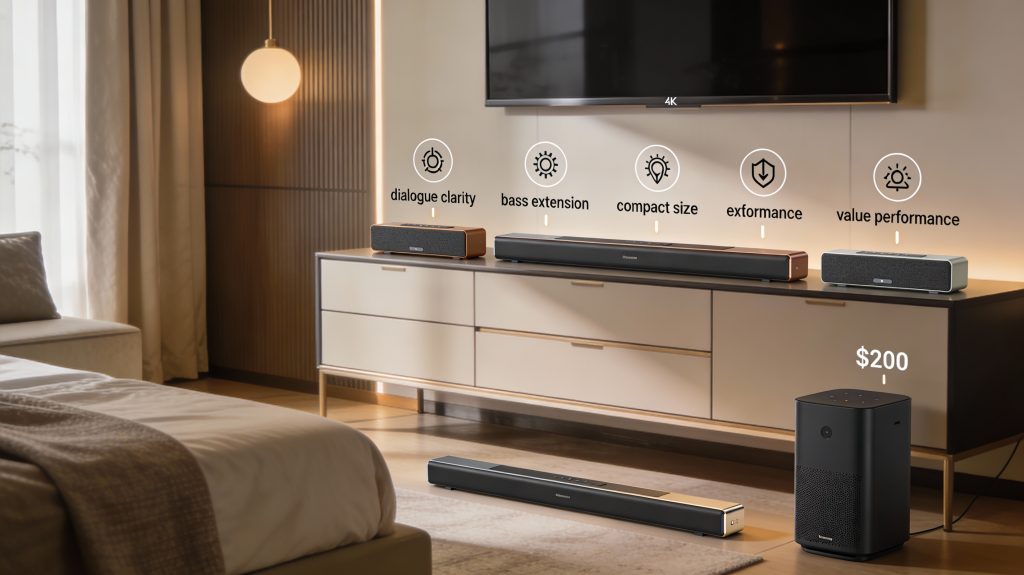
Below are compact, reliably performing soundbars that stay under $200. Each pick highlights measurable strengths (clarity, usable bass, low distortion, connectivity), practical limitations, and the bedroom situations they suit.
Best overall compact pick — Polk Signa S2
Why you’d pick it: a true 2.1 with a wireless sub, clear midrange and low measured distortion at conversation volumes, plus HDMI ARC for simple TV control.
Best for dialogue clarity — Bose TV Speaker
Why you’d pick it: midrange-forward tuning and a dedicated dialogue mode make speech very intelligible with very low perceived distortion.
Best for portable / ultra-compact setups — Sony HT-SF150
Why you’d pick it: one of the slimmest TV soundbars that still improves clarity and stage over TV speakers.
Best with wireless subwoofer option — Vizio V21 (or comparable TCL/Polk 2.1s)
Why you’d pick it: included wireless sub gives real punch for movies and music without complex wiring, at a very budget-friendly price.
Best value / budget choice — TCL Alto 6+ (or similar entry 2.1 models)
Why you’d pick it: the best performance-per-dollar: solid clarity, included wireless sub, and Dolby Digital decoding at a very low price.
These picks balance objective performance with real-life bedroom use—next, you’ll learn how simple placement and tuning choices unlock the best results from whichever compact bar you choose.
Comparing Value: What Performance Tradeoffs to Expect Under $200
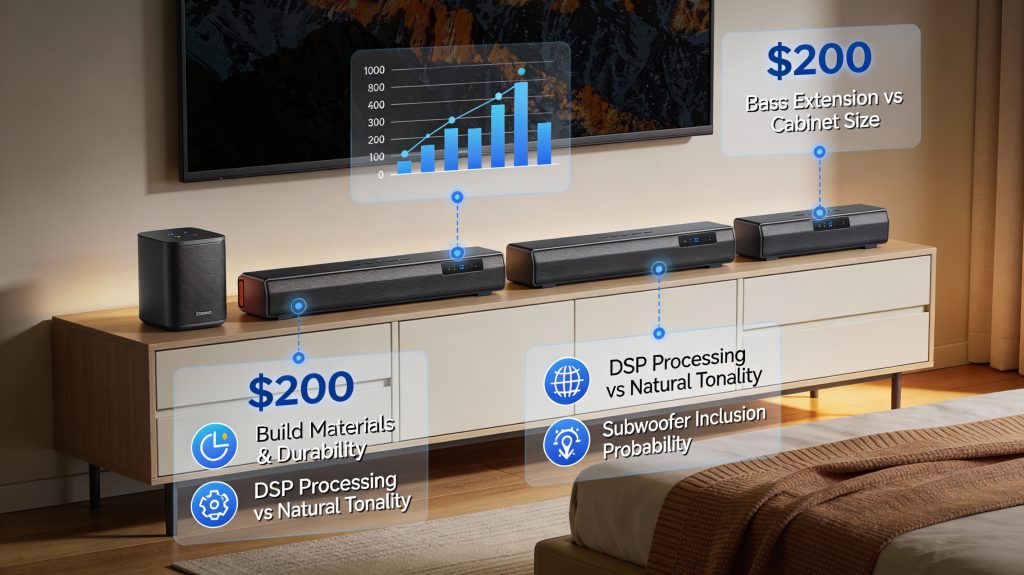
When you shop for compact soundbars under $200, you’re buying a set of deliberate compromises. Below are the common tradeoffs, quantified where useful, with real-product examples so you can decide which limits you can live with — and when you should consider stretching your budget.
Bass extension vs. cabinet size
Smaller cabinets struggle to move air. Expect these typical behaviors:
Build materials vs. longevity
Cheap soundbars commonly use thin ABS plastics and low-mass driver frames to save cost. Consequences:
DSP processing vs. natural tonality
Manufacturers use DSP to make small drivers “sound bigger.” Tradeoffs include:
How likely is a subwoofer, and when to accept it?
Use these tradeoffs to match sound priorities to real-world listening: if low-end impact matters, budget for an included or separate sub; if speech clarity is king, accept lighter bass and favor neutral DSP and stronger mids. The next section shows how placement and simple tuning can squeeze better performance from whichever compromise you choose.
Installation, Placement, and Simple Tuning for Best Results
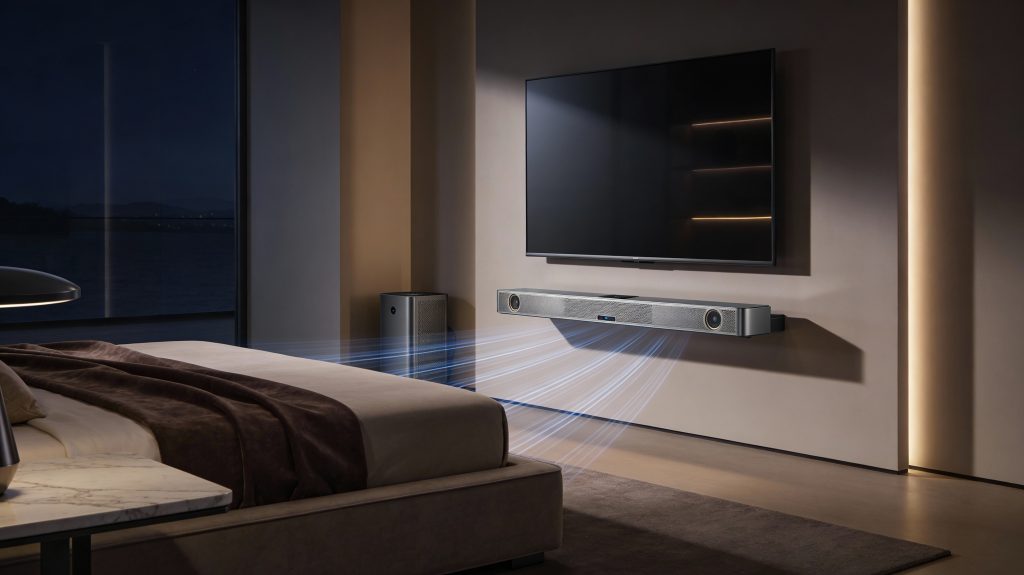
Mounting vs. shelf placement
Decide first whether you’ll wall-mount or put the bar on a dresser/nightstand. Wall-mounting often improves imaging and keeps the bar aligned with the TV; many budget bars (TCL Alto 6+, Vizio V21) include keyhole mounts. Shelf placement is simpler and less permanent, but keep the bar at least 1–2 inches from the back wall to avoid reflections and rattles. If you mount above a headboard, angle the bar downward (about 8–12°).
Distance, height, and toe‑in
Aim the bar’s tweeter area close to your seated ear height — within about ±6 inches is ideal. In most bedrooms that’s around 30–40 inches off the floor when sitting on the bed. Sit-back distance matters less for small rooms; 4–8 feet is typical, and the bar should face your primary listening position directly.
Quick EQ fixes (reduce boominess or harshness)
Small bars have limited EQ; use simple changes first.
Try one change at a time and listen for 30–60 seconds of familiar content.
Connectivity and basic setup
Prefer HDMI ARC/eARC for best lip‑sync and full audio formats; optical (Toslink) is next best. For Bluetooth, expect added latency—use it for music, not fast dialogue-heavy video.
Troubleshooting common issues
With placement and basic tuning complete, you’ll be ready to finalize your choice and enjoy better bedroom sound — next, the article wraps up with a few final buying tips.
Make a Confident Choice for Better Bedroom Sound
Use clarity-first criteria: prioritize speech intelligibility, measured midrange response, and bass that suits your room size. Match connectivity (Bluetooth, optical, HDMI ARC) to your sources and confirm features with the checklist and spec comparisons and budget fit.
Listen before you buy: perform brief A/B listening tests and check room placement effects. Use the recommended picks as a starting shortlist, then validate with your ears and measurements to ensure the best practical result.