

You deserve absolute control over your home’s data, yet many connected devices quietly “leak” personal information without your knowledge. This guide provides a focused, evidence-based smart home privacy audit designed to reveal data vulnerabilities and map information flows within your network. By taking a proactive approach to your digital security, you can significantly reduce the risk of unauthorized access or eavesdropping. Whether you are concerned about smart speaker privacy or the security of your outdoor cameras, this six-step audit will help you prioritize high-impact fixes without the need for advanced technical expertise or hours of wasted time.
To conduct a thorough privacy assessment, you’ll need a few basic tools: a laptop connected to your home network, administrative access to your router, and a couple of hours to review your settings. By utilizing free network scanning tools and analyzing your router’s traffic logs, you can identify which devices are communicating with unknown external servers. From inventorying every “listening” device to implementing network segmentation through guest Wi-Fi, this audit ensures your household remains a private sanctuary. Learn how to reclaim your digital boundaries and ensure that your convenient smart technology isn’t trading away your family’s safety.
Why Audit Your Smart Home Privacy Now
You deserve control over your home’s data. This guide gives you a focused, evidence-based six-step audit to reveal what devices leak, map data flows, and prioritize fixes so you reduce risk quickly and confidently without technical overwhelm or wasted time.
What You Will Need
Step 1 — Inventory Every Connected Thing
Do you really know what’s listening in your home? Most people don’t — start by counting.
Create a comprehensive device list: phones, TVs, bulbs, hubs, cameras, plugs, wearables, voice assistants and hidden smart features (smart TVs, fridges). Use your router’s client table, a network scanner app (e.g., Fing, Angry IP), and physical walkthroughs to find wired and wireless endpoints.
Record each device’s details:
Evidence shows audits that begin with complete inventories find high-risk devices faster because unknown endpoints often host default credentials or unpatched firmware. For example, a quick inventory often reveals an old IP camera or smart plug still using factory login — an easy, high-priority fix.
Export the list to a spreadsheet so you can tag devices by trust level (trusted, semi-trusted, untrusted) and assign owners or rooms.
Step 2 — Map Network Topology and Segmentation
Is everything on the same flat network? That’s a privacy and security shortcut to disaster.
Map your home’s network topology and segmentation. Use your router’s admin interface, a network mapper (nmap), or a scanner app to discover SSIDs, guest networks, IoT VLANs, wired ports, mesh nodes, and IP ranges. Verify which subnets can reach each other.
Inspect reachability and note risky co-location: for example, find if your laptop (trusted) and an old IP camera (high‑risk) share the same subnet — that’s a lateral‑movement path.
Record the following for each network segment:
Quantify segmentation gaps: calculate (devices on segregated network ÷ total devices) × 100. If only 30% are segregated, prioritize reconfiguring router VLANs or guest SSIDs. Place cameras and smart plugs on a segmented VLAN/guest SSID with strict outbound rules to reduce lateral exposure and cross‑device correlation.
Step 3 — Observe Outbound Connections and Data Flows
Who are your devices talking to? Spoiler: probably many unexpected third parties.
Monitor outbound DNS and IP connections for several hours while you exercise each device (turn on, change settings, stream, update). Use your router logs, DNS‑over‑HTTPS logs, or packet capture (Wireshark/tcpdump) to record remote endpoints and domains.
Use these concrete actions:
Calculate these metrics for each device:
Example: a smart TV calling 8 domains — 3 ad networks, 2 analytics, 1 firmware, 2 CDNs — suggests nonessential ad/analytics callbacks. Flag endpoints that are unrelated to core functionality for remediation (block, firewall rule, or vendor inquiry).
Step 4 — Audit Account Access and Authentication
Weak passwords and shared accounts are the low-hanging fruit attackers love — are you feeding them?
Audit every account tied to your smart devices: vendor cloud logins, shared family accounts, OAuth app grants, and device‑specific API tokens. Start by verifying each account has a unique, strong password and enable multi‑factor authentication (MFA) wherever available. Studies show MFA blocks most automated account compromises — enable it for every vendor account you control.
Perform these actions now:
Example: if a babysitter’s shared Amazon account still has smart‑lock access, revoke it and create a one‑time code or temporary user instead.
Step 5 — Harden Device and Router Configurations
Simple settings changes cut off many common leakage paths — don’t skip them.
Update firmware for every device and your router; record model and firmware version in your inventory. Disable unnecessary services and remove defaults to shrink the attack surface.
Example: after updating router firmware, disable remote admin, switch Wi‑Fi to WPA3‑SAE, change the PSK to a 20+ character passphrase, and block telnet/FTP at the gateway.
Step 6 — Create a Continuous Monitoring and Remediation Plan
An audit is only useful if you act and measure — will you track metrics or just hope?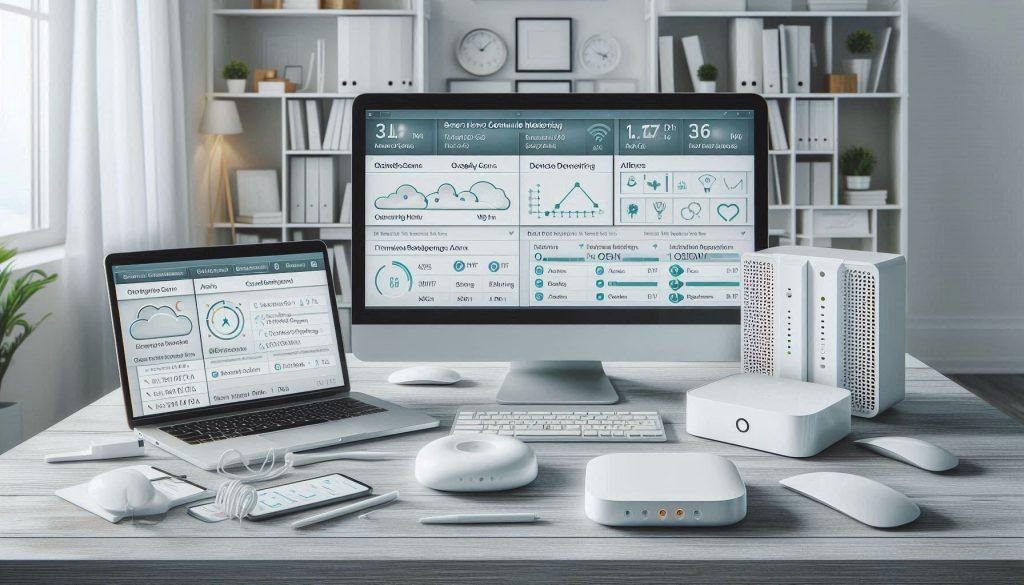
Prioritize remediation actions based on your risk profile (device criticality, number of external endpoints, unencrypted traffic). Assign timelines and owners for firmware updates, segmentation changes, and account hardening. Assign camera firmware to “Alice — 2 weeks” and router updates to “Bob — 48 hours” as examples.
Implement continuous monitoring: schedule weekly network scans, enable DNS logging with filtering (Pi‑hole or your router DNS), and set alerts for new devices or unexpected cloud endpoints. Run a daily or weekly script to flag devices contacting an unusual number of external hosts.
Keep an incident checklist you can follow immediately:
Schedule quarterly mini‑audits and an annual full audit. Track these KPIs: devices inventoried, devices segmented, open external endpoints, and devices with MFA. A repeatable process turns one-time fixes into lasting privacy improvements.
Finish Strong: Your Privacy Baseline
You now have a repeatable, evidence-based audit framework; use its metrics and remediation plan to measure improvements, reduce data leakage, and set a privacy baseline. Try the audit, iterate regularly, and share your findings to help others improve and compare.