
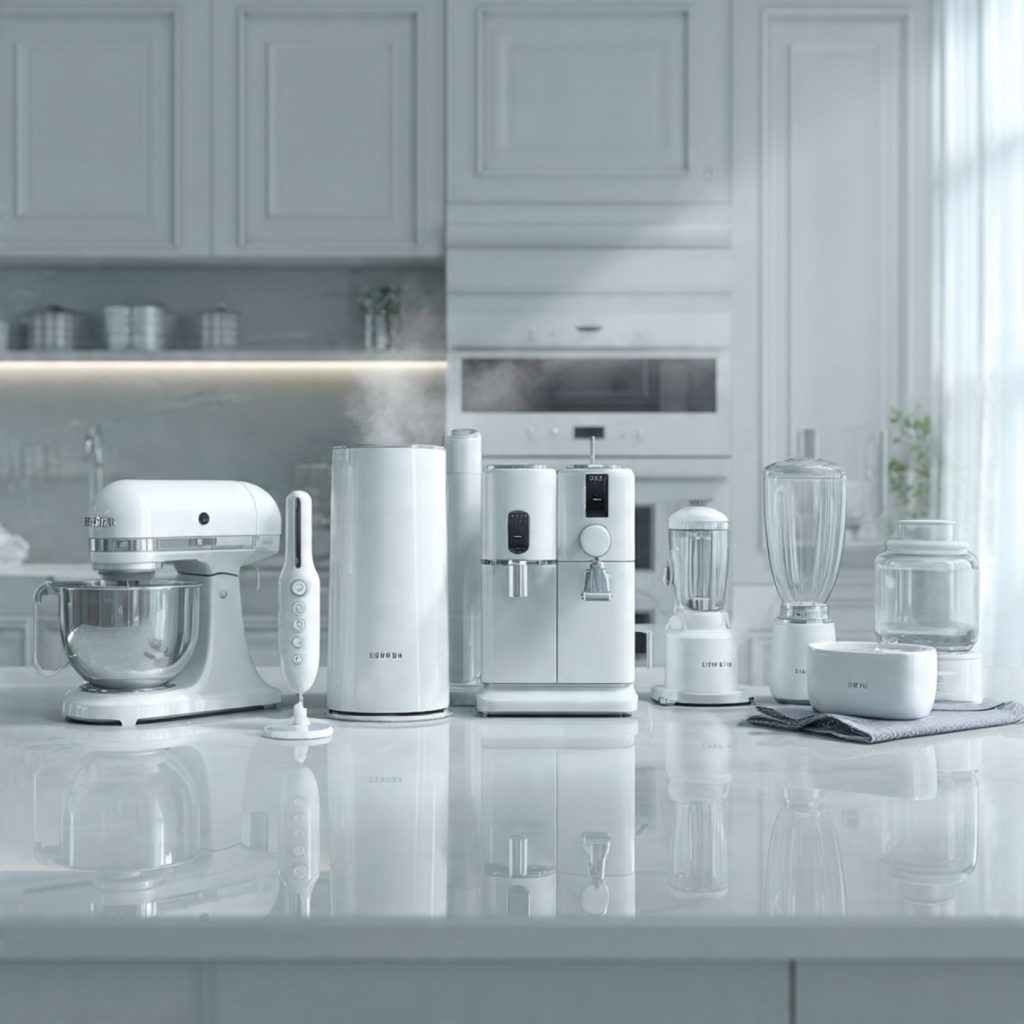
Protect Your Investment: Why Deep Cleaning Luxury Gadgets Matters
You deserve appliances that look pristine and perform reliably; deep cleaning carefully protects finishes, electronics, and warranties while preventing odors and bacteria. This guide helps you safely clean, sanitize, and maintain your luxury kitchen gadgets.
What You’ll Need
You’ll need: soft microfiber cloths, non‑abrasive brushes, pH‑neutral detergent, 70% isopropyl alcohol, food‑safe sanitizer, distilled water, silicone grease, screwdrivers, gloves, manufacturer manuals, and a ventilated workspace.
Step 1 — Inspect and Prioritize Your Gadgets
Which pieces deserve your first, most careful attention — and why a quick scan saves costly repairs.Catalog every luxury item you own: list brand, model, accessories, and visible wear. Record examples (e.g., Breville espresso machine, Vitamix blender, Smeg toaster) and keep photos for reference.
Check manufacturer care instructions and warranty terms before you touch anything. Note any language that restricts home disassembly or prescribes professional servicing.
Identify and prioritize devices with higher risk:
Inspect closely for stubborn stains, corrosion, loose hardware, or frayed cords. Document items that look beyond routine cleaning so you can schedule professional repair. This quick assessment helps you plan the right cleaning method, avoid warranty voidance, and identify items needing professional service.
Step 2 — Power Down and Disassemble Safely
Don’t assume it’s obvious — the way you take something apart determines whether it ever goes back together correctly.Unplug your gadget or remove batteries and wait until all hot parts cool (e.g., let an espresso machine or blender motor sit 30–60 minutes).
Lay out a clean, padded workspace with a microfiber towel or foam mat to protect polished finishes.
Use labeled containers, a compartmented parts tray, or taped index cards to separate screws, washers, and clips.
Follow the manufacturer’s disassembly instructions when removing blades, filters, cords, or detachable housings.
Photograph each stage—take a wide shot, then close-ups of screw locations and connector orientations—to make reassembly foolproof.
Avoid opening sealed electronic modules unless the manual explicitly permits it; contact the manufacturer or an authorized service center if a module is sealed.
Track different screw sizes and fragile clips by placing them on labeled tape strips or in a magnetic tray ordered by step number.
Handle fragile gaskets, glass, and polished surfaces with silicone tools or wooden implements to prevent scratches.
Remember: proper, methodical disassembly prevents damage to precision components and keeps delicate finishes intact.
Step 3 — Choose Safe Cleaning Solutions
Harsh cleaners can ruin a $500 finish — here’s how to get sparkle without the risk.Select cleaners matched to each material: stainless steel, anodized aluminum, glass, silicone, and leather require different care. Follow these quick examples when deciding what to use.
Use pH‑neutral dish soap diluted in warm distilled water for most surfaces; mix small batches and change solution if it becomes greasy.
Reserve 70% isopropyl alcohol for high‑touch points and hard exterior plastics; apply lightly with a cloth and never saturate or spray into vents or seams.
Avoid bleach on metal or wood and skip acidic cleaners on marble or porous stone.
Test any product on an inconspicuous area first.
For removable food‑contact parts, use food‑safe sanitizers and rinse thoroughly to remove residues.
Step 4 — Deep Clean: Techniques by Component
Scrub like a pro — targeted moves for blades, seals, motors, and screens that actually extend lifespan.Dislodge debris from crevices and seams using a soft brush; use a toothbrush for seals and small vents to reach tight spots.
Soak removable metal parts in warm, soapy water for 10–15 minutes, then dry and polish with a soft cloth to prevent water spots.
Clean blender blades and food‑processor bowls by running a high‑speed rinse with warm soapy water, then brush around the blade hub—hold the jar away from the base. For example, run the blender briefly with warm soapy water, pour out, and scrub the blade collar with a brush.
Wipe electronic casings and touchscreens with a barely damp microfiber cloth; follow with a 70% isopropyl alcohol wipe only if the manufacturer approves and never spray directly into seams.
Use steam sparingly on removable, heat‑resistant parts (metal racks, some silicone pieces) to sanitize without chemicals.
Clean rubber gaskets and silicone with gentle detergent, inspect for cracks or compression, and replace compromised pieces.
Avoid submerging motors or connected electronics under any circumstances.
Step 5 — Sanitize, Dry, and Recondition
Sanitizing isn’t just about killing germs — it’s about protecting mechanisms and finishes too.Sanitize food-contact parts using a certified food-safe sanitizer and follow the product’s dwell time. For example, spray a cutting-board insert or removable bowl, let it sit the recommended time, then proceed to rinse.
Rinse with distilled water to avoid mineral spotting—pour or spray gently and tip parts to drain.
Air-dry on a clean rack; then finish drying with a lint-free microfiber cloth to remove trapped moisture and prevent corrosion. For example, place a blender jar upside down on a drying rack for 20–30 minutes, then wipe the rim and blade collar.
Apply small amounts of silicone or food-grade lubricant to moving seals, hinges, and O-rings only where the manufacturer recommends—use a cotton swab for precise application.
Replace worn gaskets, filters, disposable blades, or other single‑use parts immediately to maintain safety and performance.
Use short bursts of compressed air to clear vents and tight crevices, holding the nozzle at a distance and angling components to avoid forcing moisture into electronics.
After cleaning, sanitize food-contact parts with a food-safe sanitizer per product instructions. Rinse and use distilled water to avoid mineral spotting. Thorough drying is critical: air-dry on a clean rack, then finish with a lint-free cloth to prevent corrosion. Apply small amounts of silicone or food-grade lubricant to moving seals and hinges where recommended by the manufacturer. Replace worn gaskets, filters, or disposable parts. Use compressed air to clear vents and crevices, taking care not to force moisture into electronics. Proper reconditioning preserves performance and prevents microbial regrowth.
Step 6 — Reassemble, Test, and Establish Maintenance Rhythm
Reassembly is your final safety check — and a little routine upkeep triples gadget longevity.Follow your reference photos and manufacturer torque specs to reassemble parts in reverse order. Ensure seals and clips seat correctly and screws are snug but not overtightened. Tighten screws using a torque driver when specified — for example, seat an espresso-group gasket until flush, not compressed.
Power up devices in a controlled test (without food) to confirm function. Listen for unusual sounds or vibrations and stop immediately if anything feels off.
Document the date and actions taken, save reference photos, and note any replaced parts or lubricants. Create a maintenance schedule:
Reduce heavy cleanings and keep your luxury tools performing at peak levels.
Maintain Value, Safety, and Performance
By following this careful, documented deep‑clean routine you protect aesthetics, function, and food safety; try it on your gadgets, share your results, and start preserving value today for years ahead.