
Have you ever wondered how much electricity your coffee maker or entertainment center wastes while you’re asleep? Most of us leave devices plugged in 24/7, falling victim to “vampire power”—the silent energy drain from appliances in standby mode. In 2026, this phantom load can account for up to 10% of your monthly utility bill. The solution isn’t just remembering to flip a switch; it’s smart plug automation. By integrating these intelligent devices into your home, you gain total control over your consumption, using automated schedules and triggers to ensure your electronics only draw power when you actually need them.
Automating your smart plugs is a high-impact, low-friction way to reduce household electricity use. Beyond just cutting waste, modern energy-monitoring smart plugs provide real-time data that helps you identify the biggest “energy hogs” in your office or kitchen. By enforcing efficient schedules—such as cutting power to your home theater at midnight or charging your laptop only during off-peak hours—you can see a measurable reduction in your carbon footprint and a 5–15% yearly saving on your electricity bill. This guide explores how to build practical smart home energy routines that deliver consistent, validated savings without changing your lifestyle.
Why Automate Your Smart Plugs to Cut Electricity Use
You will learn why automated control of smart plugs is a high‑impact, low‑friction way to reduce household and small‑office electricity consumption. Phantom loads, inefficient schedules, and simple human error can add 10–30% to your bill; conservative automation often saves 5–15% yearly by turning off idle devices and enforcing efficient schedules. Automation also gives consistency and measurable results.
This article walks you through choosing reliable smart plugs and a control ecosystem, planning rules and baselines, step‑by‑step installation and security, and building a real‑time savings simulation with sample scenarios. Finally, you’ll see how to monitor, validate, and optimize with dashboards and smarter policies so your savings keep improving.
Read on to build practical automations and test savings before you change behavior costs.
The Energy Case: How Smart Plug Automation Lowers Consumption
Where avoidable waste comes from
You waste electricity in three measurable ways that smart plugs can address:
Standby (vampire) power
Many devices draw a small but constant load when “off.” Typical ranges:
A 3 W TV standby running 24 hours uses 3 × 24 ÷ 1000 = 0.072 kWh/day = 2.16 kWh/month. At $0.15/kWh, that’s ~$0.32/month — small per device but cumulative across a home.
Unnecessary runtime (duty cycles)
Many appliances are not “on” continuously; they run in cycles. Use the formula:kWh = (W × duty cycle × hours) ÷ 1000
Example: a fridge rated 100 W with a conservative 25% duty cycle:100 × 0.25 × 24 ÷ 1000 = 0.6 kWh/day → 18 kWh/month. A 1‑hour nightly reduction (fridge door habits aside) isn’t feasible, but other devices benefit hugely from enforced off times.
Suboptimal timing vs tariffs or solar
Shifting loads to low‑cost periods or peak solar production multiplies savings. If your dishwasher uses 1.2 kWh/run:
Simple, conservative calculations you can run now
Practical product highlights
Use these conservative, data-driven steps to prioritize which devices to automate: high‑W devices with flexible runtime first, then many low‑W devices with long idle hours.
Selecting Smart Plugs and a Control Ecosystem for Reliable Automation
A three‑priority decision framework
Choose devices and a control stack by ranking three priorities: accurate power measurement, reliable connectivity, and automation flexibility. Start by asking: do you need watt‑level metering for savings calculations, or just reliable on/off control? Will a single Wi‑Fi plug be fine, or do you need a mesh radio and a local hub for latency, privacy, and scaled reliability?
Key technical attributes to compare
Control platforms & integrations
Match devices to appliance types
Imagine scheduling your basement dehumidifier on a compressor‑rated relay while dozens of lamps run on cheap Wi‑Fi plugs — that mix of capabilities is exactly why this decision framework matters.
Planning Your Automations: Rules, Schedules, and Measurement Baselines
Inventory devices and typical power profiles
Start by cataloguing every load you plan to control: device name, location, typical on/off pattern, and estimated steady and standby watts. Use one-line meter-friendly descriptions: “Living room lamp — LED 9 W when on, 0.5 W standby.” For accurate figures, use a metering smart plug (Shelly Plug S, Eve Energy) or a clamp meter on high‑draw appliances. Note inrush behavior for compressors and motors — a window AC may briefly spike to 2–3× running watts.
Establish a 24–72 hour measurement baseline
Capture real behavior before automating. Record:
Longer baselines catch cycles (fridge, dehumidifier). Short 1–5 s samples are ideal for motors; 30–60 s is OK for lighting and chargers.
Define clear objectives
Be explicit: cost reduction, peak shaving, load shifting to solar or cheap TOU periods, user comfort, or safety. A single device can have multiple objectives — for example, delay a clothes dryer to midday to use solar, or cut standby power overnight for cost savings.
Select appropriate automation patterns
Choose the simplest pattern that meets objectives:
Use sensors and local hub logic (Home Assistant, Hubitat) for reliability.
Prioritize by expected savings and user impact
Estimate savings with a simple formula: Savings_kWh = (baseline_W − automated_W) × hours_saved ÷ 1000. Convert to dollars using your tariff. Rank automations by $/month per user‑friction point — avoid high‑friction automations for small gains.
Document assumptions and metrics
Record baseline dates, sampling rate, tariff, and assumptions about behavior (e.g., “lamp assumed on 6 h/day”). This makes your simulation and later monitoring comparable and repeatable.
Next, you’ll translate this plan into hardware and network actions in the step‑by‑step setup section.
Step‑by‑Step Setup: Install, Configure, and Secure Your Smart Plugs
Safe physical installation and load checks
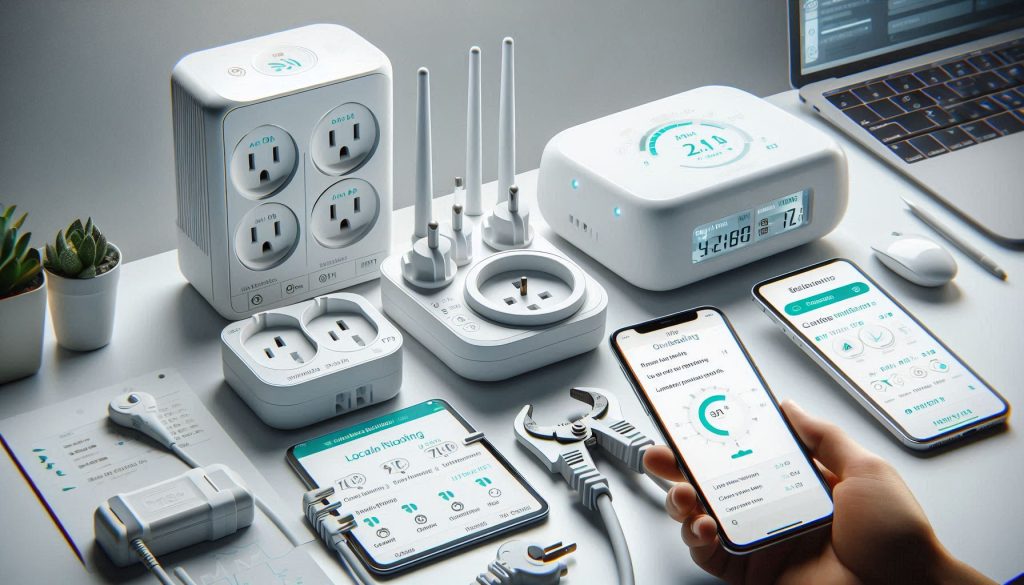
Start physically: unplug the target device, inspect cords, and confirm the plug’s rating exceeds the appliance’s nameplate (amps and watts). Use a metering smart plug (Shelly Plug S, Eve Energy, Sonoff S31) or a clamp meter to record a short baseline — 1–5 s samples for motors, 30 s for lights. Example: a bedside LED lamp should read ~9 W; a window AC may show 800 W running and 2–3× spikes on startup.
Pairing plugs and verifying firmware
Follow the vendor app for onboarding; common gotchas:
Naming, grouping, and creating initial test automations
Name devices clearly (room + device: “Kitchen – Coffee Maker”) and group by circuit or behavior (“Morning Lights”, “High‑draw HVAC”). Create two simple test automations:
Verify real‑power readings and validation
Cross‑check plug readings against your clamp meter or a second metering plug. Log a 24‑hour comparison and confirm averages match within acceptable variance (±10–15% for simple plugs; more for motors due to spikes). Capture timestamps and sample rates to match your earlier baseline.
Secure the setup and stage changes
Segment IoT devices on a separate VLAN/guest Wi‑Fi, disable UPnP, change default passwords, and enable two‑factor on vendor accounts. Limit cloud exposure—prefer local hubs (Home Assistant, Hubitat) or vendors with strong privacy.
Troubleshooting quick hits
Building a Real‑Time Savings Simulation: Data, Formulas, and Example Scenarios
You’ll get a reproducible method to preview the energy and cost impact of any automation before you deploy it.
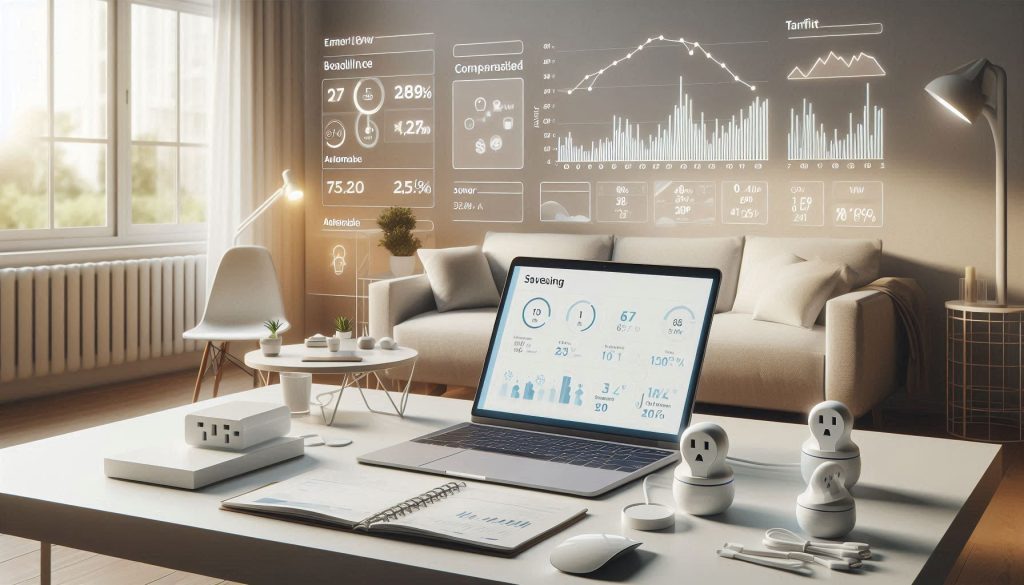
The simulation runs on simple inputs you already can collect from metering smart plugs (Shelly Plug S, Eve Energy, Sonoff S31) or your hub’s telemetry.
Required inputs
Core formulas (per interval)
Example conversions you can paste into a spreadsheet:
Modeling uncertainty
Scenario walk‑throughs
Conservative scenario (small, realistic gains)
Optimized scenario (with occupancy detection)
Visualizing results
Run the simulation with your device data for a week, iterate scenarios, and you’ll know whether an automation is worth deploying before you flip a single plug.
Monitor, Validate, and Optimize: From Dashboards to Smarter Policies
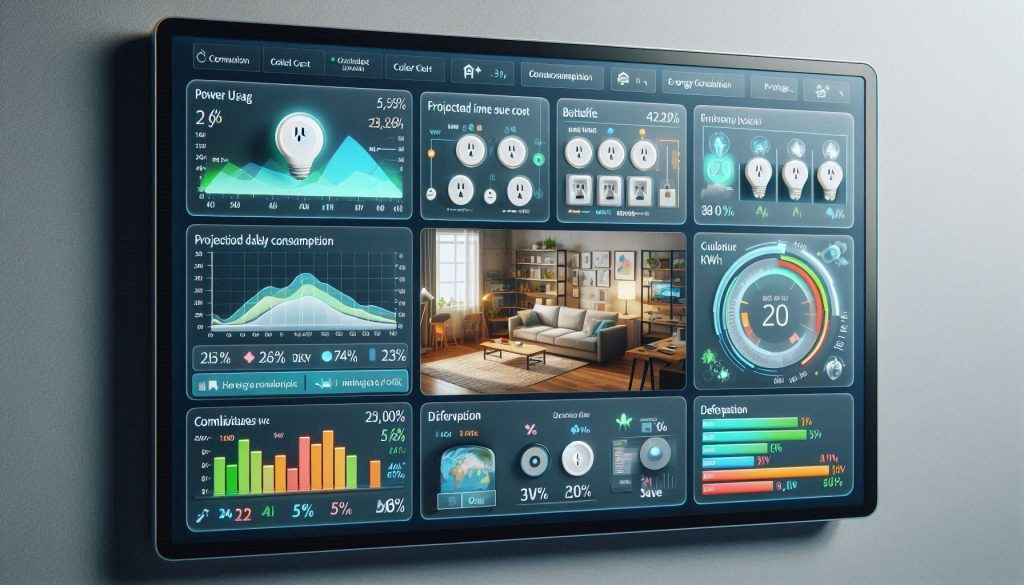
You’ve deployed automations—now convert those early wins into sustained reductions by instrumenting, testing, and refining them.
Build dashboards that tell the truth
Create a compact dashboard showing:
Tools: Home Assistant + InfluxDB + Grafana for live views, or Tasmota/EWeLink + MQTT → Node‑RED → Grafana. Add product examples: Grafana for visualization, Shelly plugs for accurate metering, Eve Energy for HomeKit users.
Set automated alerts for anomalies
Configure alerts to catch regressions early:
Example: one home discovered a lamp controller stuck on (40 W) — cost ≈0.96 kWh/day → ~$0.14/day at $0.15/kWh — alerting saved money and discomfort.
Run A/B tests and measure incremental value
Treat schedules as experiments:
Keep tests short (1–2 weeks) but repeat across seasons.
Integrate external signals for dynamic control
Feed in:
Use these signals to write simple rules: “If solar >500 W and battery SOC <80% then enable washer.”
Advanced tuning and prioritization
KPIs and review cadence
Track: kWh saved, $ saved, % reduction vs baseline, peak kW reduction, runtime hours, occupant complaints. Review weekly dashboards, run monthly validation (meters vs. simulation), perform quarterly A/B experiments, and an annual audit to retune for seasonality.
With monitoring and optimization operational, you’ll have objective evidence to guide smarter deployments and consistent savings—ready for the final deployment checklist.
Deploy Confidently and Measure What Matters
You now have a practical roadmap: choose reliable hardware, plan and test automations, and simulate expected savings with real usage data. Start conservatively, validate baselines, and prioritize safety and occupant comfort during deployment iteratively over time.
Measure results continuously, compare observed savings to your simulation, and iterate policies where gains are smaller than expected. Share clear metrics, keep models conservative, and scale successful automations to achieve reliable, measurable reductions in electricity use and comfort