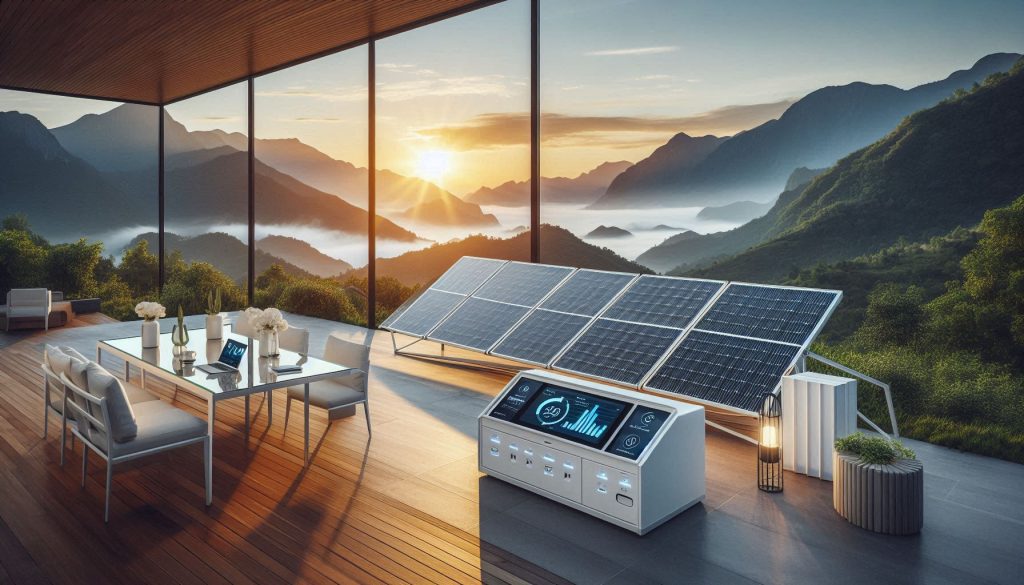
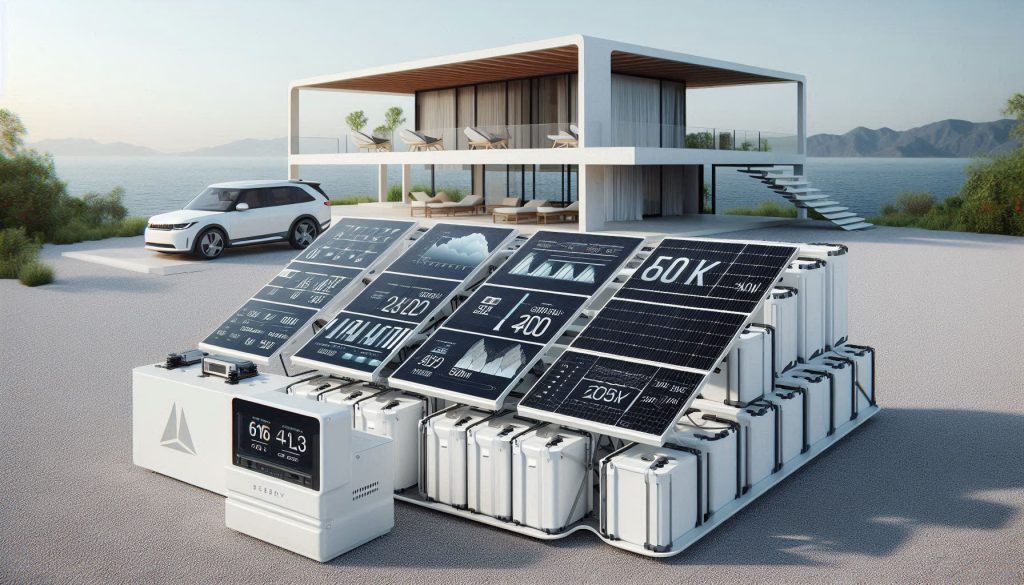
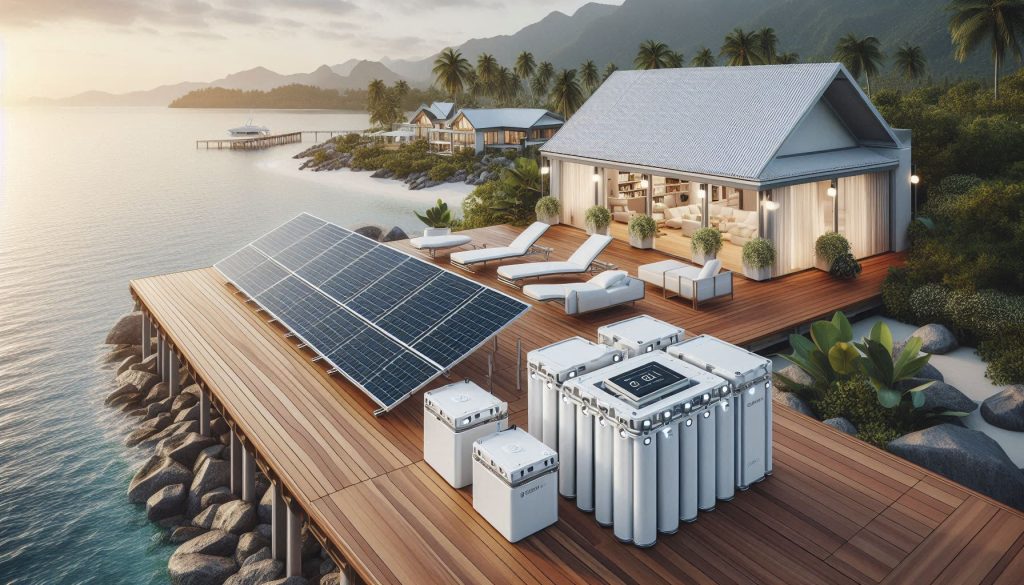
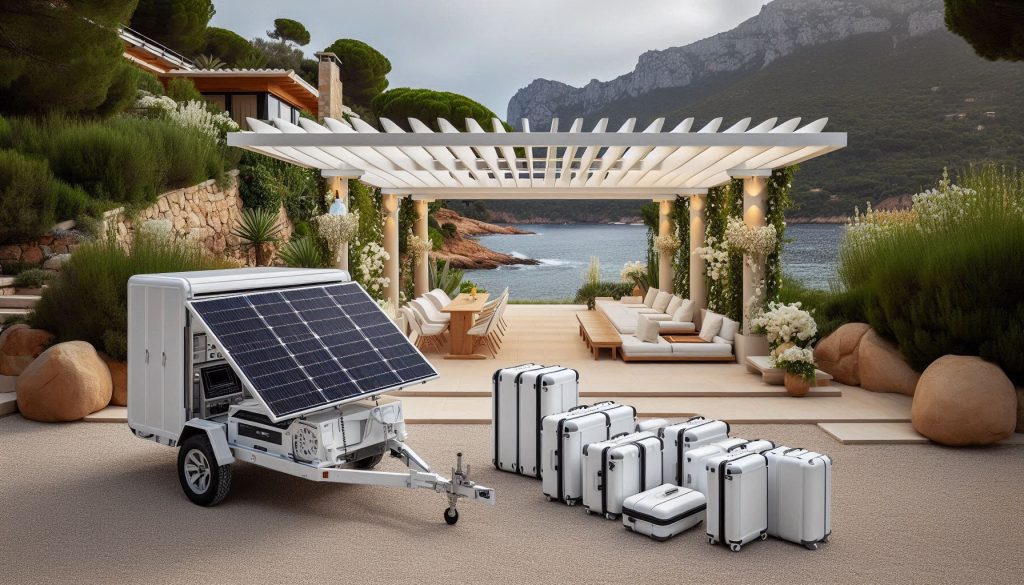
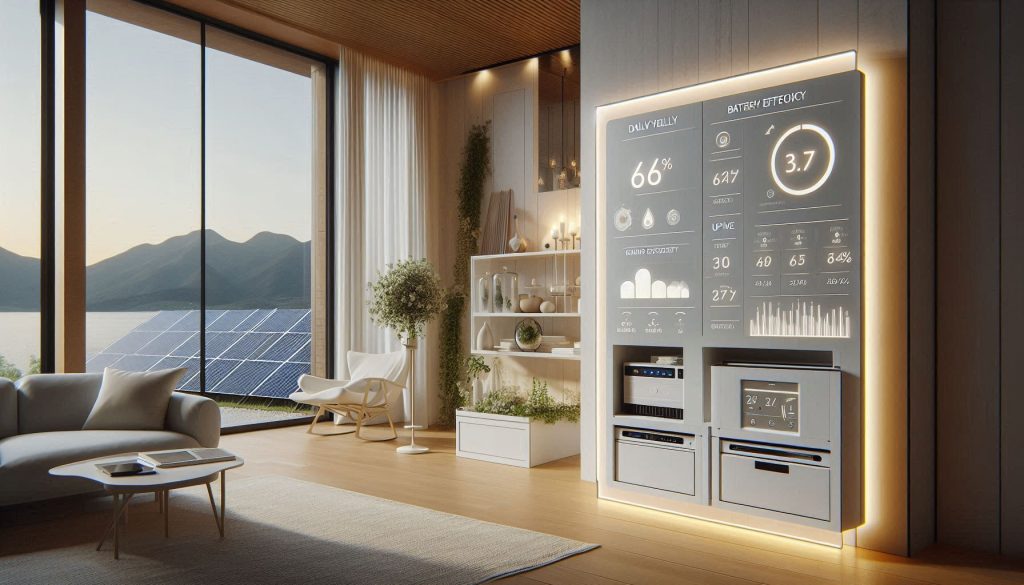
For those who spend their time on yachts or in remote villas, “Off-Grid Opulence” is the new standard. Portable Solar Power panels have evolved from clunky gear into sleek, foldable arrays that can charge a high-capacity power station in hours without the noise of a gas generator.
This guide focuses on high-wattage solar solutions that pair with designer power stations. We explore how to maintain a full charge for your laptops, drones, and communication gear while enjoying the silence of the open sea or a private mountain retreat.
Why Portable Solar Matters for Luxury Off-Grid Living
Understanding the Benefits of Portable Solar Power in Luxury Living
Discover the benefits of Portable Solar Power for sustainable living.
You want the freedom to live luxuriously away from the grid without sacrificing comfort, reliability, or aesthetics. Portable solar makes that possible by combining high-performance power delivery with modular flexibility. It supports full household loads, modern appliances, and smart systems when sized and managed correctly.
Key trade-offs you must balance are weight, capacity, and uptime. Lighter systems improve mobility but reduce energy reserve; larger batteries increase resilience but add complexity. Modular, swappable components let you scale capacity, maintain uptime, and optimize transport.
This article orients you to energy behaviors, technical choices, and lifestyle considerations so you can select portable solar that matches your standards and expectations. Expect measurable gains in daily comfort.
1
Defining Your Energy Profile: How Much Power Does Luxury Off-Grid Living Require?
You cannot design an effective portable solar system without a quantified energy profile. A clear audit tells you how many solar panels, battery modules, and inverter capacity you actually need—not what looks good on paper.
Defining Your Energy Profile For Luxury Off-Grid Living.
Step-by-step load audit (practical how-to)
Inventory appliances: list every major device (HVAC/heat pump, induction cooktop, water heater, refrigeration, pool/spa pump, EV charger, washer/dryer, entertainment, lighting, medical equipment).
Convert specs into daily kWh: for each device, use Watts × hours per day ÷ 1000 = kWh/day. Example: a 1,800 W induction range used 0.5 hour/day → 1.8 kW × 0.5 h = 0.9 kWh/day.
Identify peaks: record the maximum simultaneous draw (peak kW). Motors and inrush currents (pumps, compressors) can spike 2–6× continuous power—plan inverter surge accordingly.
Measure rather than guess: use a whole-house energy monitor (Sense, Emporia Vue) or plug monitors for two weeks to capture behavior variability.
Add margins: include a behavior/uncertainty buffer of 20–40% and separate redundancy for critical systems (medical devices, refrigeration).
Classify loads: critical, flexible, luxury
Critical: life-safety and preservation (medical devices, refrigeration of medicines/food, security systems).
Flexible: comfort systems that can be scheduled or shed (EV charging, pool pumps, dishwasher).
Luxury/amenity: discretionary loads you may throttle during low-sun periods (sauna, hot-tub jets, landscape lighting).
Classifying lets you program prioritization rules in your energy management system so that critical loads stay online while luxury loads are curtailed during deficits.
Large luxury home or lodge: 80–250 kWh/day; peak 10–40 kW (add pool circulation, multiple HVAC zones).
Fully equipped remote estate with EVs and spa: 250–600+ kWh/day; peak 40–100+ kW (depending on EV chargers and simultaneous loads).
Real-world note: a three-bedroom off-grid retreat with full HVAC and a small pool often runs ~45 kWh/day with 6–8 kW peaks; a remote lodge with commercial spa and two EV chargers can easily hit 200+ kWh/day with 20–30 kW peaks.
Climate, seasonality, and autonomy planning
Sunlight patterns change—winter insolation and prolonged storms reduce generation. Size for worst-case autonomy days (typically 3–7 days) for your tolerance level, and factor geographic solar irradiance when converting kWh requirements into panel area and charge time.
Next, you’ll convert this audited profile into system architecture—choosing panel wattage, battery capacity, and inverter sizing to meet these real-world targets.
2
System Architecture: Sizing Panels, Batteries, and Inverters for Portability and Performance
With your audited energy profile, you now design a system that reliably delivers that energy while staying portable.
System Architecture For Portable Solar Performance And Reliability.
The approach is data-driven: size PV for daily generation, batteries for days of autonomy, and inverters for peak and surge—then add modularity and margins for real life.
Sizing photovoltaic capacity
Use a simple baseline formula:
Panel kW × Peak Sun Hours × System Efficiency = Daily kWh
Solve for panel kW:
Required kW = Desired daily kWh ÷ (Peak Sun Hours × System Efficiency)
Example: you need 60 kWh/day, average 5 peak sun hours, system efficiency 0.8 (accounting for temperature, wiring, MPPT losses):
Required kW = 60 ÷ (5 × 0.8) = 15 kW of PV.
Practical tips:
Portable panels typically range 100–400 W each; efficiencies commonly 16–22% (SunPower flexible panels sit toward the high end).
Add 20–30% extra panel capacity for cloudy days, orientation losses, and future growth.
Modular options: parallel arrays of 200–400 W foldables (Jackery SolarSaga, EcoFlow 220W, Goal Zero Nomad), portable solar trailers with 1–10 kW roof arrays, or a mix—start with foldables for mobility, trailer systems for heavy-duty, semi-permanent needs.
Battery chemistry and capacity
Key sizing formula:
Battery kWh = Required autonomy days × Daily kWh ÷ Usable DoD
LiFePO4 (LFP): lower energy density, best cycle life (3,000–10,000 cycles), safe thermal behavior, usable DoD 80–90%, round-trip efficiency ~90–96%. Ideal for repeated deep cycling in luxury off-grid setups.
NMC: higher energy density, lighter for the same kWh, fewer cycles (1,000–3,000), round-trip efficiency ~85–92%. Good where weight/volume are constrained.
Lead-acid (AGM/Gel): cheap, heavy, limited DoD (~50%), poor cycle life—only acceptable for very short-term, low-cost setups.
Safety and practical considerations:
Always specify a battery management system (BMS), temperature controls, and ventilation for non-LFP chemistries.
Choose modular battery packs (Bluetti B300 series, EcoFlow Smart Battery, or Victron-compatible LFP modules) so you can scale by adding units.
Surge rating should be 2–6× for motor/compressor starts; specify based on largest motor in your audit.
Use pure sine wave inverters for sensitive electronics, audio/AV systems, and modern appliances.
Recommended architectures:
Portable inverter-chargers (EcoFlow DELTA Pro, Bluetti AC300 with B300 modules) for mobility and integrated charging.
Hybrid bi-directional inverters (Victron Multiplus, Schneider Conext) if you plan generator or EV vehicle-to-home (V2H) integration—these handle AC coupling, grid/generator passthrough, and bidirectional charging.
Best-practice margins:
Oversize PV 20–30%, inverter continuous rating 10–25% above peak, and design with redundant modules so a single failure doesn’t blow your luxury lifestyle.
Next: integrate these choices into deployment and aesthetics so your portable system feels like part of the property—not a technical afterthought.
3
Premium Components and Integration: Choosing High-End Portable Panels, Batteries, and Management Systems
High-End Portable Solar Components Designed For Reliability And Luxury Integration.
You’ll pay more up front for components that reduce downtime, extend service life, and preserve the luxury experience. Below are pragmatic criteria and examples to help you pick premium portable hardware that integrates cleanly and reliably.
Portable PV: rigid vs. flexible vs. foldable
Choose by use-case, not hype.
Rigid high-efficiency mono (e.g., SunPower/Maxeon-style cells) — highest efficiency and longest life; best when you can transport frames and need maximum kW per square meter.
Flexible panels — conform to curved surfaces and pack light; good for over-canvas installs but watch abrasion resistance and reduced long-term warranty.
Foldable/soft-case panels (EcoFlow 220W, Jackery SolarSaga, Goal Zero Nomad) — great for rapid deployment and stowage; look for IP65–IP68 ratings, reinforced seams, and high-efficiency monocrystalline cells.
Practical tip: prefer panels with strong IP ratings, reinforced grommets or quick-mount rails, and manufacturer-rated mechanical load (wind/snow). If you expect partial shade, choose panels with multiple bypass diodes or integrated micro-inverters for better real-world yield.
Advanced battery choices
For luxury off-grid you’ll mostly pick LiFePO4 (LFP):
LFP: safest thermal profile, 3,000–10,000 cycle life, usable DoD 80–90%, high round-trip efficiency. Brands to evaluate: Battle Born, SimpliPhi, BYD B-Box for modular installations.
Energy-dense alternatives (NMC) make sense when weight/volume is a hard constraint—accept fewer cycles and more active thermal management.
Invest in higher upfront cost to gain predictable usable capacity, minimal balancing, and long warranty-backed cycle throughput. Request cycle-to-80%-SoC data from vendors rather than just “years”.
Power electronics and system intelligence
You need smart control, not just hardware.
MPPT controllers: pick units with multi-MPPT inputs and proven partial-shade algorithms (Victron SmartSolar, Morningstar) to maximize portable array yield.
Hybrid/bi-directional inverters: choose models with seamless transfer (sub-20 ms) for generator/gird tie or vehicle integration—Victron Multiplus, Schneider Conext are field-proven examples.
Energy Management Systems (EMS): require load-prioritization, predictive SOC-based charging (weather-aware PV forecasting), and remote diagnostics. Look for platforms offering Mobile apps + cloud dashboards (Victron VRM, Schneider EcoStruxure, OutBack).
Vendor & integration criteria checklist
When comparing suppliers, insist on:
Warranty: cycle-based guarantees and capacity retention figures.
Interoperability: CAN, Modbus (RTU/TCP), RS485, MQTT or open APIs for third-party EMS.
Aftermarket support: global service network, spare modules availability, firmware updates.
Example: a setup combining SunPower-flexible panels, Victron MPPT/inverter, and SimpliPhi/BYD LFP modules gives you high-efficiency PV, intelligent charge control, and long-lived batteries — a predictable, serviceable stack you can scale.
Next you’ll apply these component choices to real-world deployment, mobility, and aesthetics so your system is both invisible and dependable on the property.
4
Deployment, Mobility, and Aesthetics: Making Portable Solar Liveable and Seamless
Portable Solar Designed To Move, Integrate, And Elevate Luxury Off-Grid Living.
Transportable system formats — pick the form that fits your lifestyle
You want a system that moves like your life does. Common high-end portable formats:
Trailer-mounted rigs — turnkey, fast-rolling kits (think enclosed trailer with fold-out panels, integrated battery locker, and shore/generator ports). Ideal when you move between properties.
Roof-deployable arrays — low-profile rails and quick-release clamps for temporary installs on luxury cabins or guest pavilions.
Pop-up pergola / pergola-integrated panels — provides shade and power simultaneously; looks like an intentional landscape element.
Foldable soft-case arrays and suitcase panels (packable into Pelican-style cases) — fastest to stow and ship for concierge deployments.
Example: a coastal villa owner used an enclosed trailer rig to move a 6 kW portable array between two sites in under an hour; the trailer’s integrated inverter and lockable battery cabinet made it feel like an amenity rather than a toolbox.
Quick-deploy mounting and exposure optimization
Speed without sacrifice is everything.
Use pre-drilled, indexed mounting frames or fold-out hinges that lock at common tilt angles (0°, 15°, 30°).
Pre-wire combiner boxes with labeled MC4 leads and color-coded harnesses to eliminate field wiring mistakes.
Orientation rule of thumb: true south (northern hemisphere) or true north (southern). Adjust tilt seasonally: latitude ±10–15° for all-year comfort or use adjustable stops for faster changes.
Shade mitigation: position panels outside canopy drip lines; use arrays with multiple MPPT inputs or microinverters to isolate shaded strings.
Practical tip: build a “30-minute kit” checklist and practice a timed deploy once — you’ll discover bottlenecks before guests arrive.
Anchoring, wind management, and uneven terrain
Aesthetics won’t matter if panels blow away.
For soft ground: screw anchors or helical anchors rated to expected wind loads; use galvanized stainless steel tie-downs.
For hard ground/roof: use ballast-rated weights or mechanical roof anchors per manufacturer specs.
Design for a 1.5–2× safety factor over local 50-year gust speeds; consult local codes for permanent-like loads.
Use articulating mounts to level panels on slopes without stressing frames.
Design, concealment, and finishes
Make the system read as architecture, not equipment.
Conceal wiring in colored conduit or raceways matched to finishes; use flush-mount junction boxes and routed channels where visible.
Battery lockers: lockable, ventilated, powder-coated cabinets with louvered vents and integrated HVAC for battery warranty compliance.
Materials: choose marine-grade stainless fasteners, anodized aluminum racks, and powder-coating colors that match cladding or landscape stone.
Security: tamper-proof fasteners, lockable enclosures, and GPS trackers for trailers; integrate cameras/alarms into the EMS for remote alerting.
Packaging, handling, and logistics
Plan for people and freight.
Use flight-rated Pelican cases or ATA road cases with foam inserts for fragile panels and controllers. Aim for sub-25 kg lift per case or include forklift pockets.
Mark lifting points, maintain even weight distribution on trailers, and provide quick-access service panels.
Label spare-part kits and include torque specs and spare fasteners for field repairs.
These practices ensure your portable solar performs like a polished amenity: quick to set, safe in weather, and visually integrated into a luxury setting.
5
Performance, Maintenance, and Financials: Measuring Output, Ensuring Uptime, and Evaluating ROI
Measuring Output, Reliability, And Return On Investment In Luxury Portable Solar Systems.
KPIs to track (and how to calculate them)
You need objective metrics to verify performance. Monitor these at least weekly via your EMS or cloud logs:
System yield (kWh/kW/day): total daily kWh ÷ installed kW. Expect ~3.5–6 kWh/kW/day depending on latitude and season.
Round-trip efficiency: energy out of the battery ÷ energy into the battery. Good Li‑ion systems are 85–95%.
Capacity fade: track usable kWh vs. nameplate over months; LiFePO4 often shows ~0.5–1% loss/year, NMC ~1.5–3%/year.
Availability (uptime): % time system can meet the load without backup. Target ≥98% for luxury applications.
MTBF for critical components: record operating hours between failures for inverters, charge controllers, and fans—use these to size spare inventories.
Example: if a 6 kW portable array yields 24 kWh/day, its yield = 24 ÷ 6 = 4 kWh/kW/day.
Routine maintenance and troubleshooting
A short maintenance cadence keeps downtime minimal. Practical schedule:
Daily/weekly: glance at EMS alerts and state-of-charge; verify no alarms.
Monthly: clean panels (soft brush, deionized water), inspect visible cable terminations, and check torque on MC4s.
Quarterly: review BMS logs (cell voltages, balancing events) and update inverter/EMS firmware (use Victron Cerbo GX or EcoFlow app backups).
Annual: full system audit — insulation resistance test on DC cabling, replace filters in battery lockers, verify ventilation/AC for cabinets.
Quick troubleshooting steps:
If output drops suddenly: check array orientation, shading, and MPPT input voltages.
If inverter faults: capture error codes, reboot, then swap to redundant inverter if available (e.g., Victron Multiplus paired units).
If battery imbalance: reduce charge rate, monitor BMS, and schedule cell-level diagnostics.
Annual savings = system kWh/year × avoided cost/kWh (compare to diesel gen cost $0.3–$1.0/kWh including fuel & transport).
Simple payback = CAPEX ÷ annual savings. Include avoided generator logistics (crew, trucking) as line items — luxury deployments often save substantially on concierge transport.
Insurance, resale, and upgrade planning
Insure for transit and on-site risks; document serial numbers and have photos. Modular systems (EcoFlow, Bluetti or modular Victron packs) preserve resale value—plan upgrade paths (add panels, battery modules, or second inverter) ahead of time so you can scale without rewiring.
With KPIs, a tight maintenance loop, and a pragmatic spares strategy, you’ll keep your portable luxury system reliable and financially transparent — next, put these pieces together in a clear roadmap.
Putting It Together: A Roadmap to Confident Off-Grid Luxury
Use this checklist to move from design to delivery: quantify your daytime and backup loads, model worst‑case autonomy, choose modular high‑efficiency panels and scalable battery banks, select premium inverters and smart energy management, and insist on interoperable components for future upgrades. Prioritize maintainability, monitoring, and safe transport solutions, and design for seamless aesthetics that hide hardware without hiding performance.
Apply a data‑driven sizing process and invest in quality integration; you’ll get reliable, comfortable, and elegant off‑grid living. Start with a small pilot deployment and iterate toward full autonomy with measurable confidence.