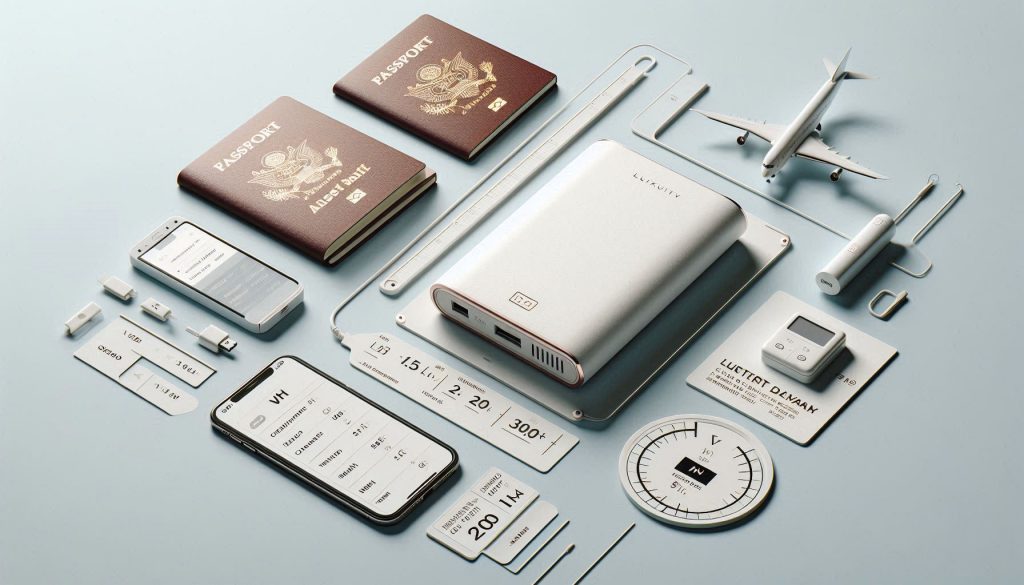
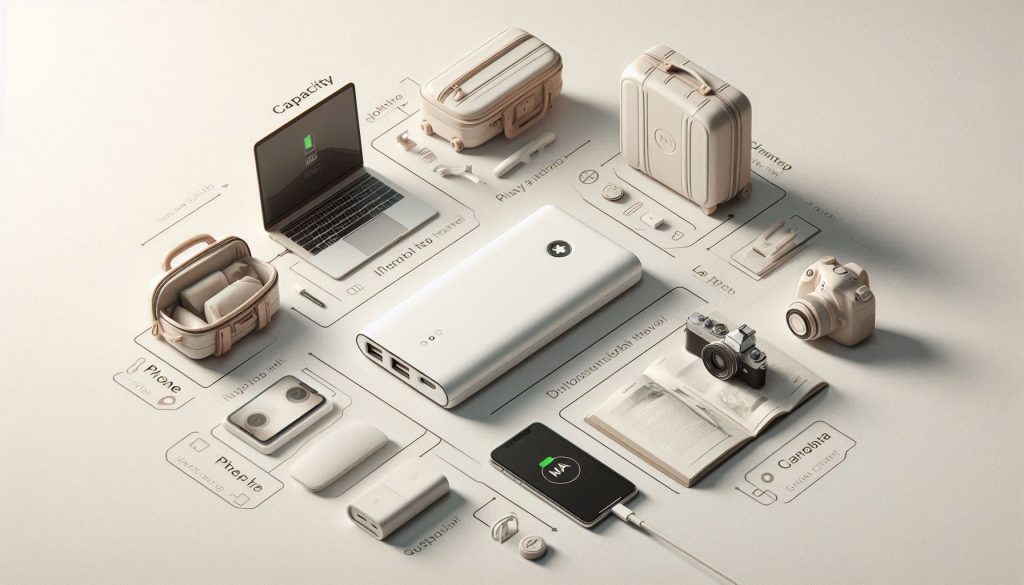
Portable Power Banks used to be a heavy, black plastic brick hidden at the bottom of a bag. For the luxury traveler, a portable battery should now complement their leather briefcase or designer luggage. The “Executive EDC” (Everyday Carry) movement has turned the humble battery into a high-performance fashion accessory.
This post highlights chargers that utilize premium materials like aramid fiber and aircraft-grade aluminum. We review the power banks that offer enough output for a laptop while fitting into a suit pocket, ensuring you never sacrifice style for a full battery.
You rely on devices to navigate, capture memories, and stay connected when you travel. Choosing a designer portable power bank means you get reliable performance, smarter ergonomics, and finishes that fit your gear. Think of it as a tool and a style statement: capacity, output, size, and materials all affect daily use and satisfaction.
This introduction lays out the decision factors you’ll meet: balancing style with capacity, obeying airline lithium rules, and choosing ports and charging speeds that match devices. You’ll learn how to weigh trade-offs between weight, durability, and cost so you pick a power bank that performs reliably and complements your travel lifestyle and your daily tech.
1
Why Designer Portable Power Banks Matter for Travelers
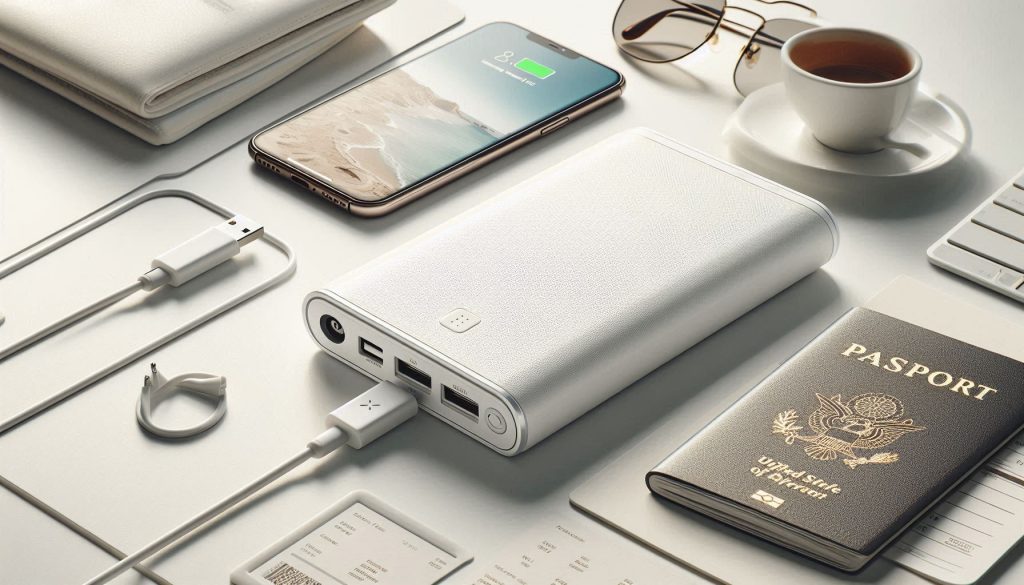
Premium white designer power banks blend style, ergonomics, and high performance for stress-free travel charging.
Design that improves usability
When you travel, small ergonomic choices add up. Grip texture prevents slips when you fumble for your wallet; recessed buttons avoid accidental activation in a packed bag; and smart port placement keeps cables from bending at awkward angles. For example, the Anker PowerCore 10000 PD Redux pairs a textured shell with side-facing ports so a phone can sit naturally while charging — less wear on cables and less frustration in tight airplane seats.
Materials and weight trade-offs
Premium materials change how a power bank performs day-to-day. Aluminum or hard polycarbonate shells resist impacts but can be heavier; fabric or TPU coatings add grip and scratch resistance while reducing perceived weight. Leather or leather-trimmed models (Nomad-style) look upscale but demand a little more care. Match material to your trip: rugged zinc-alloy for adventure travel, lightweight plastic or fabric for urban carry.
Aesthetics as practical decisions
Color, finish, and pattern aren’t just style. High-contrast colors reduce the chance you leave a device on a café table; matte or textured finishes hide scuffs; gloss surfaces show dirt and are easier to misplace. Built-in cable models (Zendure SuperMini, Native Union Stow) merge form with function — they reduce tangles and the “where’s my USB-C?” scramble at security lines.
Common traveler pain points and design solutions
Dead phone mid-transit: choose capacity tied to your phone’s battery (10,000 mAh ≈ 2 full charges for a 3,000–3,500 mAh phone).
Slow recharges and long layovers: prioritize PD (Power Delivery) or Qualcomm Quick Charge outputs so both your bank and phone charge faster.
Tangled cables and lost adapters: favor integrated cables or dedicated cable channels that stow neatly.
Accidental activation and pocket scratches: look for recessed/on-off switches and scratch-resistant finishes.
These objective trade-offs — capacity vs. weight, ruggedness vs. polish, integrated cabling vs. universal ports — determine how well a designer power bank serves your travel profile. Next, you’ll learn which specific features to prioritize based on those trade-offs.
2
Key Features to Prioritize When Choosing a Designer Power Bank
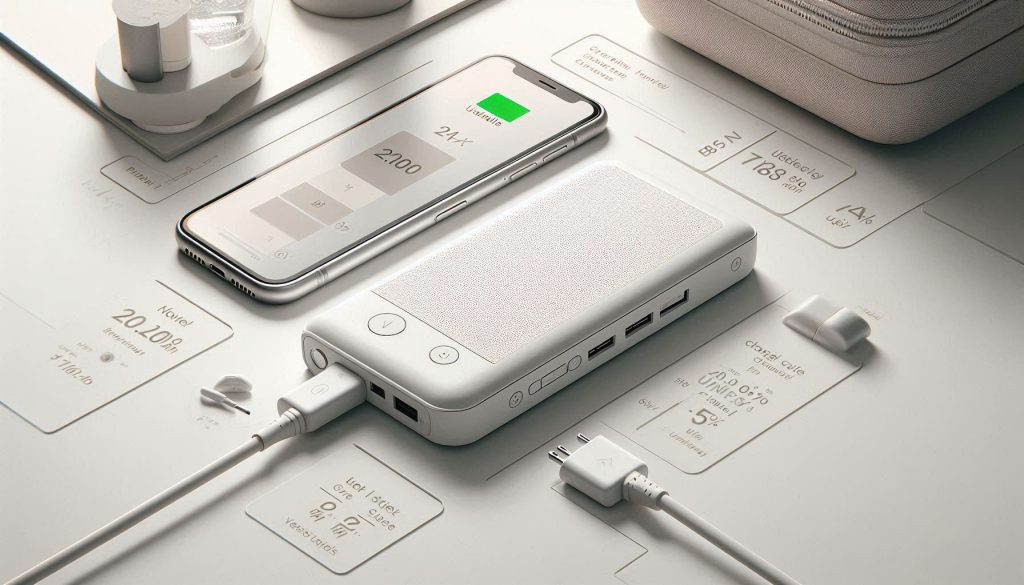
Understand key metrics — capacity, usable energy, and cycle life — when selecting a designer power bank for reliable travel charging.
Battery capacity and usable energy (mAh → Wh)
You need to translate specs into real-world charges. Use these quick steps:
Convert rated mAh to watt-hours (Wh): Wh = (mAh ÷ 1000) × 3.7.
Expect 60–75% usable energy at the output due to conversion losses and heat.
Example: a 20,000 mAh pack ≈ 74 Wh. At typical 65% usable efficiency that gives ~48 Wh delivered — roughly 1.5 full charges for a 4,000 mAh phone. Rule: target rated capacity 1.5–2× the number of full charges you want, then adjust for the 60–75% factor.
Charge cycles and longevity
Look for cycle life (how many full charge/discharge cycles before ~80% capacity). Good baselines:
For phones/tablets: 18–30W PD or QC gives fast charge; 30W+ is ideal for larger phones.
For laptops: require 45W–65W PD minimum; many ultrabooks need 60W–100W.Decision rule: match max output (W) to your highest-power device. If you carry a laptop, prioritize PD 45W+; for phones alone, 18–30W suffices.
Fast-charging standards and compatibility
Prefer universal standards:
USB Power Delivery (PD) for phones and laptops.
Qualcomm Quick Charge (QC) for some Android phones.Check device compatibility — many designer banks (Anker PowerCore Slim PD, Zendure SuperTank) list supported protocols. Score higher if PD & QC are both present.
Ports and simultaneous charging
Count usable outputs, not just port icons:
Multiple ports let you charge phone + watch + earbuds. Look for combined output ratings (e.g., 65W total across ports).
Pass-through charging (bank charges while powering devices) is convenient but increases heat and can shorten cell life. Prefer it only if thermal management is explicit.
Safety, firmware, and efficiency
Prioritize certified protection:
Temperature control, over-charge/over-current, short-circuit protection, and certifications (UL, CE, FCC, UN38.3).
Firmware-driven features (smart charging, port negotiation) improve efficiency — brands with active firmware support (Anker’s PowerIQ, Zendure) usually deliver more stable output.Decision rule: require at least two safety certifications and documented thermal management; add points for active firmware/firmware-update policies.
Use these measurable filters (usable Wh, max W, supported protocols, ports, cycle life, certifications) to score and rank designer power banks quantitatively — so looks don’t outweigh real-world performance.
3
Top Design Styles and Materials — Match Your Aesthetic and Durability Needs
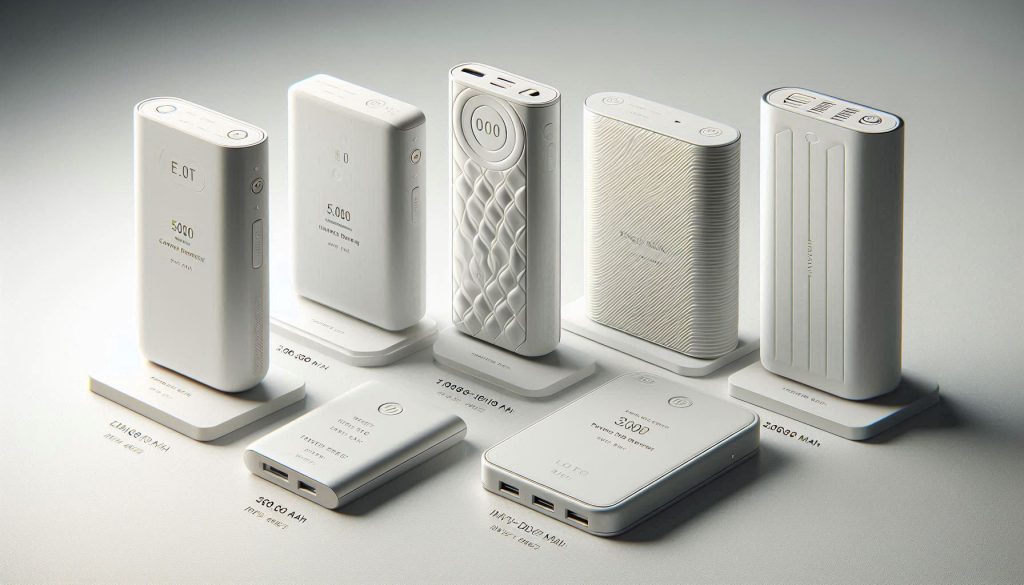
ompare design styles and materials to match travel habits, capacity needs, and aesthetic preferences when choosing a premium power bank.
Design goes beyond branding — it determines how a power bank fits your travel habits. Below you’ll find clear comparisons of common shapes, materials, finishes, and tactile features so you can pick a pack that matches your routine.
Styles at a glance: fit for purpose
Slim card-style (5,000–10,000 mAh): slips into a pocket or passport folio. Ideal for daily carry and short flights. Example: Anker PowerCore Slim PD models.
Cylindrical: easy to grip, often durable; works well in side pockets or camera bags. Good if you prefer a rod-like shape for stability.
Compact brick (10,000–30,000 mAh): high capacity in a palm-sized body. Best for carry-on when you need multiple phone/tablet charges; don’t put these in checked luggage if capacity approaches airline limits.
Multi-device hub (30,000 mAh+, laptop-capable PD): heavier, with many ports — think Zendure SuperTank or Omnicharge — designed for checked or carry-on with strict Wh awareness.
Materials — pros and cons
Aluminum: excellent heat dissipation and premium feel; resists impact but shows scratches and adds weight.
Vegan leather/faux leather wraps: stylish, good grip, hides scuffs; can stain and traps dirt.
Fabric wraps (nylon, woven): excellent grip and aesthetics, but collects lint and can retain moisture.
Finishes, colors, and tactile features
Choose matte or bright colors if you frequently search in dark bags; glossy black looks sleek but shows scratches. Prefer textured grips, rubberized edges, or raised port surrounds to protect connectors. Integrated cables (like Mophie Powerstation Plus or Native Union models) remove the “where’s my cable?” problem — useful for commuters and minimalists.
Practical trade-offs and quick tips
If you value style and premium feel, expect more weight/cost (aluminum + leather).
If you prioritize weight and scratch resistance, choose polycarbonate or fabric.
Always check Wh rating before flying: multi-device hubs often need carry-on, not checked.
Next, you’ll translate these design choices into performance expectations — matching capacity and output to real-world charging scenarios.
4
Performance Metrics: Capacity, Output, and Real-World Charging Scenarios
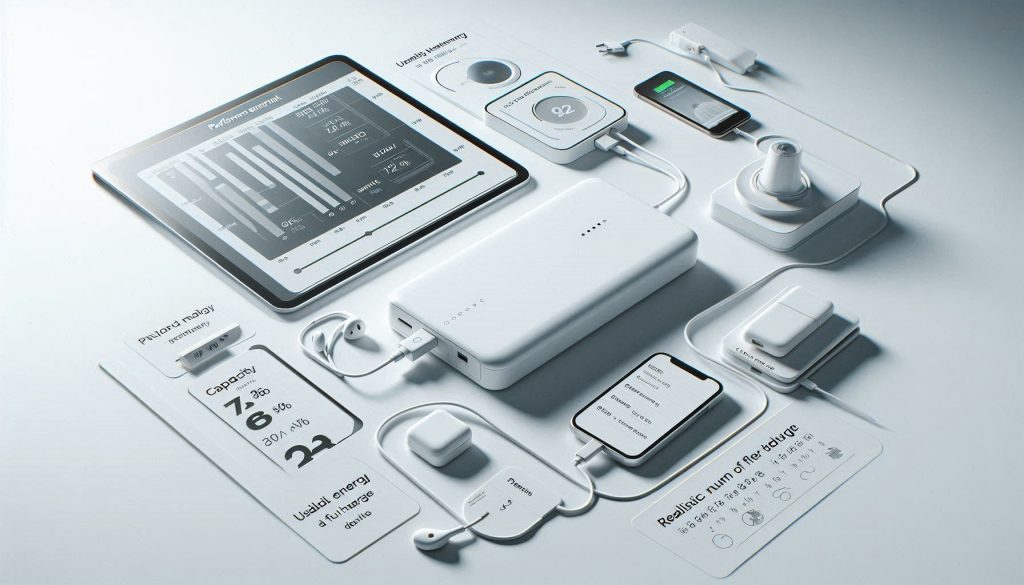
Translate rated capacity into real-world charging performance, showing how efficiency and device size affect usable energy.
This data-driven section translates specs into what you actually experience on the road. Use the short formulas and benchmarks below to estimate what capacity and output you really need.
Converting mAh to usable energy (quick formula)
Wh = (mAh / 1000) × 3.7
usable_Wh ≈ Wh × conversion_efficiency (typical 0.75–0.90; use 0.85 for conservative PD estimates)
For phones (practical shortcut): usable_mAh ≈ powerbank_mAh × 0.7
Expected full charges ≈ usable_mAh / device_battery_mAh
Example: a 20,000 mAh bank → usable_mAh ≈ 14,000. That’s ~4.3 full charges for an iPhone 13 (~3,240 mAh).
Continuous vs peak output — why it matters
Peak output (advertised): short bursts (e.g., “100W peak”) useful for marketing but not sustained.
Continuous output matters for laptops and power-hungry devices — check the manufacturer’s continuous PD rating (e.g., 45W, 65W, 100W). A laptop that needs 60W won’t charge well from a 30W continuous port even if the bank lists a higher peak.
Practical tip: if you want to power/charge a laptop while working, choose a designer bank with a guaranteed continuous PD port ≥ your laptop’s input (examples: Zendure SuperTank family for higher-W needs; Anker PowerCore 20100 for phones only).
Heat, throttling, and simultaneous charging
Multiple devices + high-power draw = more heat → banks throttle or switch off to protect cells.
To avoid throttling: prioritize one high-power device on the main PD port and put lower-draw devices on secondary ports; don’t cover the bank; keep it in airflow.
Traveler scenarios (benchmarks)
Long-haul flight (10–12 hrs): 20,000–30,000 mAh with at least one 45–65W PD port to top a laptop once and give phones 3–6 charges. Example: 26,800 mAh (≈99 Wh) usable Wh ≈ 84 Wh → ~1 full 60Wh laptop + phone top-ups.
Day-long city exploration: 10,000–15,000 mAh with 18–30W output for fast phone/top-up and camera battery swaps; light and pocketable (Anker PowerCore Slim or similar).
Photographer / multi-device day: 30,000 mAh+ with multiple outputs or a 100W PD port for camera, phone, and small drone batteries.
Use the formulas above on the specific models you like to match capacity, continuous output, and weight to your itinerary. Up next: how those performance choices intersect with portability, weight, and airline rules.
5
Portability, Weight, and Airline Regulations
Visual guide to choosing a portable power bank that balances capacity, weight, and airline compliance.
Practical travel constraints often determine whether a power bank is actually usable on your trip. This section gives clear, actionable rules of thumb so you avoid surprises at security and choose a bank that fits your packing style.
Weight and packing comfort
Smaller-capacity banks are lighter and pocketable; high-capacity bricks add meaningful bulk.
10,000 mAh — typically 150–250 g: pocketable, good for day trips (examples: Anker PowerCore Slim-style units).
20,000–27,000 mAh — typically 350–500 g: carry-on friendly, fits in a secondary pocket or pouch (Anker PowerCore 20100, many Zendure 26–27k models).
30,000 mAh+ — typically 600 g+: bulky, best in a dedicated pouch; may be impractical for minimalist packing.
Tip: weigh how you usually carry gear. If you already have a small daypack, a 20k–27k bank is reasonable; if you want pocket carry, stay near 10k–15k.
Use Wh = (mAh / 1000) × 3.7 to check the label; manufacturers often list Wh directly.
Up to 100 Wh: allowed in carry-on without airline approval (common: 10k–27k mAh banks).
100–160 Wh: allowed in carry-on only with airline approval (typically limited to two batteries per passenger).
Over 160 Wh: prohibited on passenger aircraft.
Examples: 20,000 mAh ≈ 74 Wh (OK); 26,800 mAh ≈ 99 Wh (OK); 30,000 mAh ≈ 111 Wh (seek approval).
Handling, documentation, and security tips
Always carry power banks in your carry-on — never in checked luggage.
Keep the rated Wh visible (label, box, or a screenshot of specs). If asked, present the spec sheet or a picture from the manufacturer’s site.
Protect terminals from short-circuit (cover or store in a pouch).
If your bank is 100–160 Wh, contact the airline before flying and get written approval when required.
Be prepared to remove the bank from your bag for X-ray inspection; keep it accessible in a top compartment or pouch.
Real travelers’ anecdote: one photographer had a 30k mAh brick confiscated because they didn’t know the Wh; carrying a screenshot of the spec would likely have prevented the hassle.
Next, you’ll learn how to match these portability and regulatory choices to your budget, usage patterns, and long-term care strategies.
6
How to Choose Based on Use Case and Budget; Maintenance and Longevity Tips
Guide to choosing a designer portable power bank by travel scenario: day trips, international travel, digital nomad workdays, and photography-heavy itineraries.
Match capacity, output, and design to how you travel, then protect the battery so it lasts. Below are quick mappings, a simple decision flow, and practical care steps so your designer power bank pays back over many trips.
Ask: What devices do you need to charge and how many full charges per trip?
Convert need to mAh/Wh (phone ≈ 3,000–4,000 mAh per full charge).
Check port power needs: do you need laptop PD (45–100W)?
Compare airline Wh rules before picking >100 Wh.
Choose a designer model that meets specs and fits your carry style.
Maintenance to extend lifespan
Storage state: keep at ~40–60% charge for long-term storage; avoid 0% or leaving at 100% for months.
Charging habits: use quality chargers and cables; avoid constant extreme fast-charging if possible.
Temperature: store and use between ~5–35°C; avoid hot cars or freezing luggage.
Cycle and test: run a full charge/discharge every 3–6 months if unused.
Verify capacity & replacement indicators
Verify real capacity with an inline USB power meter or by checking independent reviews; expect ~70–90% of rated mAh in real-world output.
Replace if you see bulging, excessive heat, rapid capacity loss (<70–80% of original), or charging failures.
With the right match of capacity, port power, and sensible care, your designer power bank becomes a dependable travel companion—next, we’ll wrap up how to choose the perfect unit for your journeys.
Making the Right Choice for Your Travels
Wrapping up, you now have a clear, data‑driven framework to evaluate designer power banks objectively: prioritize capacity, output and real‑world runtime to match your travel patterns, weigh design and material trade‑offs for durability and aesthetics, and adopt simple maintenance to preserve long‑term performance.
Use the structured checklist in this guide when comparing models, balance beauty with quantifiable power, and favor certified batteries and airline‑compliant capacities. Choose the unit that complements your kit and travel habits so your power bank becomes an unobtrusive, reliable companion. Test it before extended trips and replace aging cells proactively.