

The emergence of Qi2 wireless charging marks a significant milestone in the evolution of luxury home electronics, offering a sophisticated alternative to traditional wired power. By utilizing the new Magnetic Power Profile (MPP), Qi2 technology ensures perfect alignment between the device and the charger, delivering consistent speeds up to 15W—and reaching 25W in the latest 2026 flagship models. This universal standard, developed by the Wireless Power Consortium, provides the same “snap-to-charge” convenience once exclusive to Apple’s MagSafe but extends it to a wide range of premium Android devices and high-end smart home accessories.
For the modern high-end estate, integrated wireless charging is no longer just a utility; it is a fundamental element of luxury interior design. Discerning homeowners are increasingly opting for invisible power solutions that embed Qi2 technology directly into marble countertops, solid walnut nightstands, and custom office furniture. By eliminating unsightly cable clutter, these premium charging solutions maintain the minimalist aesthetic of a smart residence while ensuring that every device remains powered and accessible. Whether you are retrofitting a designer suite or planning a new build, upgrading to Qi2-certified hardware is the definitive way to future-proof your home’s technological ecosystem with elegance and efficiency.
Why Premium Qi2 Wireless Charging Matters in Luxury Residences
A single mismatched charger can undermine a million-dollar aesthetic. You need a charging strategy that is seamless, reliable, and elegant. This introduction frames why integrating premium Qi2 wireless charging elevates owner experience, preserves design intent, and improves long-term property value. You will evaluate technical capability, installation impact, safety, and return on investment.
In the sections that follow you will get: a technical primer on Qi2 performance and metrics; design strategies to integrate charging into bespoke interiors; electrical planning and system architecture for reliable operation; safety, electromagnetic compliance, and regulatory guidance; vendor selection and lifecycle procurement practices; and a business-case model showing operational costs, benefits, and pricing considerations for high-end residential properties.
Understanding Qi2: Technical Foundations and Performance Metrics
What Qi2 actually changes for you
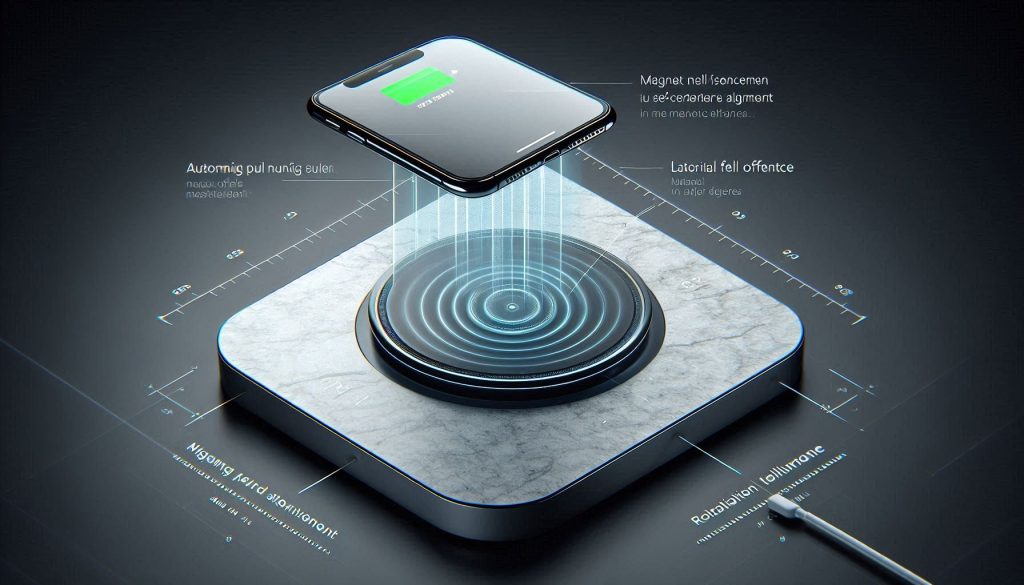
Qi2 standardizes magnetic alignment, authenticated power negotiation, and tighter performance guarantees compared with legacy Qi. In practice that means chargers can reliably deliver higher sustained power to modern phones while reducing the “move the phone a few millimetres” user step—critical in luxury settings where convenience equals perceived quality.
Magnetic alignment and mechanical tolerances
Qi2 specifies a magnetic mechanical interface so devices self-center. When you evaluate a product, ask for:
A real-world tip: request a field demo using typical leather or stone surface samples from your finishes—magnet strength and alignment behavior change when chargers sit beneath veneer or marble.
Power delivery classes and device mapping
Qi2 maps power profiles to device classes (phones, earbuds, wearables). For residences you’ll most often need:
Confirm vendor interoperability lists (iPhone 12+ family, Pixel, Samsung S-series) and how they handle legacy Qi devices.
Link-layer communication and authentication
Qi2 adds authenticated handshakes to prevent mis-negotiation and improve safety. Ask vendors for:
Performance indicators to request and test
Request these lab curves and run brief field checks yourself:
How to interpret results: prefer flat efficiency curves and minimal thermal derating. In-situ testing should mirror lab setups but include real phone cases, stacked metal objects, and your surface material. A single data point (e.g., “15 W”) is meaningless without efficiency, thermal, and alignment profiles.
Designing Luxury Spaces Around Wireless Charging: Integration and Aesthetics
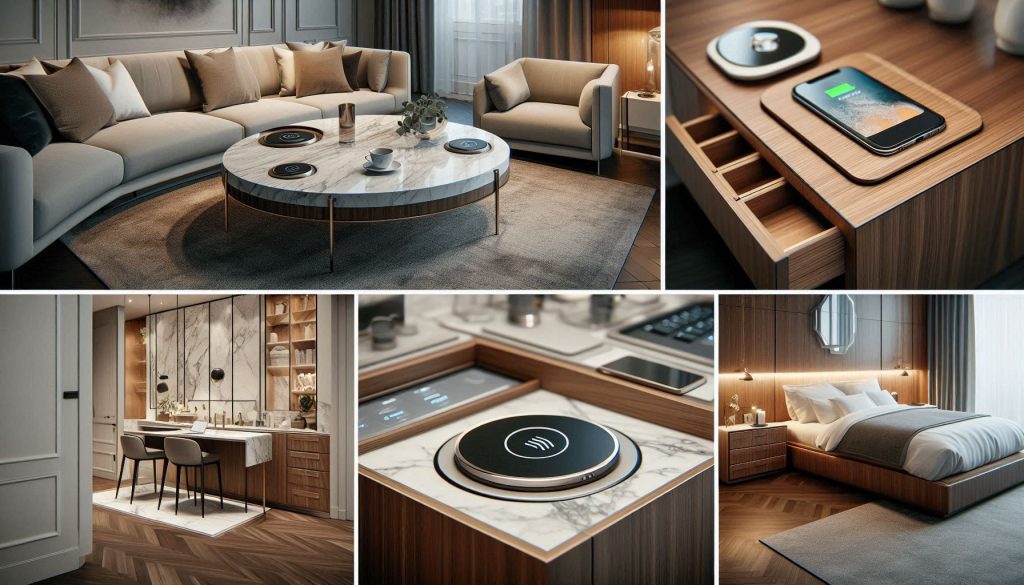
Placement strategies by room
You want chargers where people naturally set devices—without forcing unnatural behavior. Typical, proven placements:
A quick anecdote: one client moved a charger 200 mm closer to the sofa’s center and saw a 60% increase in correct placements in a week—small offsets matter.
Flush-mounted and hidden installations
Flush and hidden installs preserve sightlines but need planning:
Materials, heat and lighting
Material and finish choices impact efficiency and comfort:
Interior coordination & user experience
Coordinate with designers to preserve finishes and predictable ergonomics:
Next, you’ll map these aesthetics and placement plans onto electrical layouts and system architecture in the Infrastructure and Installation section.
Infrastructure and Installation: Electrical Planning and System Architecture
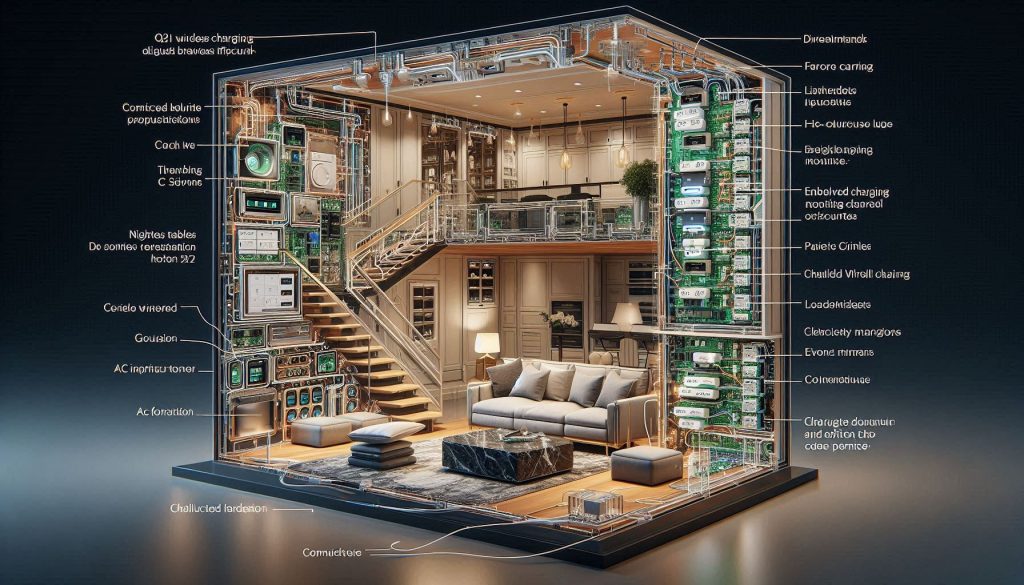
Sizing circuits and distribution: a practical method
You’ll begin by adding up the maximum simultaneous input power for all pads in a cluster, then apply manufacturer inefficiency and code margins:
Example: six 30 W pads → 180 W × 1.3 = 234 W → 234 W ÷ 120 V ≈ 1.95 A. Even with small currents, plan dedicated branch circuits where furniture clusters are heavily used or share with other loads minimally. A real-world fix: one luxury installation tripped repeatedly until the integrator split eight pads from a single 20 A branch onto two circuits—simple redistribution eliminated nuisance trips.
Routing, enclosures and serviceability
Design for future access and minimal finish disruption:
Recommended products: NuCurrent coil modules for embedded furniture, WiTricity solutions for higher-power resonant installs; pair with a Siemens/Schneider/Leviton smart load center for energy integration.
Thermal management and spacing
Heat reduces efficiency and shortens life:
Use a thermal camera during commissioning to spot hotspots and verify derating assumptions.
Wiring concealment and interference avoidance
Seamless finishes require planning, not improvisation:
Commissioning and compliance
Engage licensed electricians and commissioning professionals to validate wiring, grounding, EMC, and thermal performance. Test with clamp meters, IR imaging, and functional load tests tied to the energy management platform before handover.
Safety, Electromagnetic and Regulatory Considerations
Foreign-object detection (FOD) and thermal thresholds
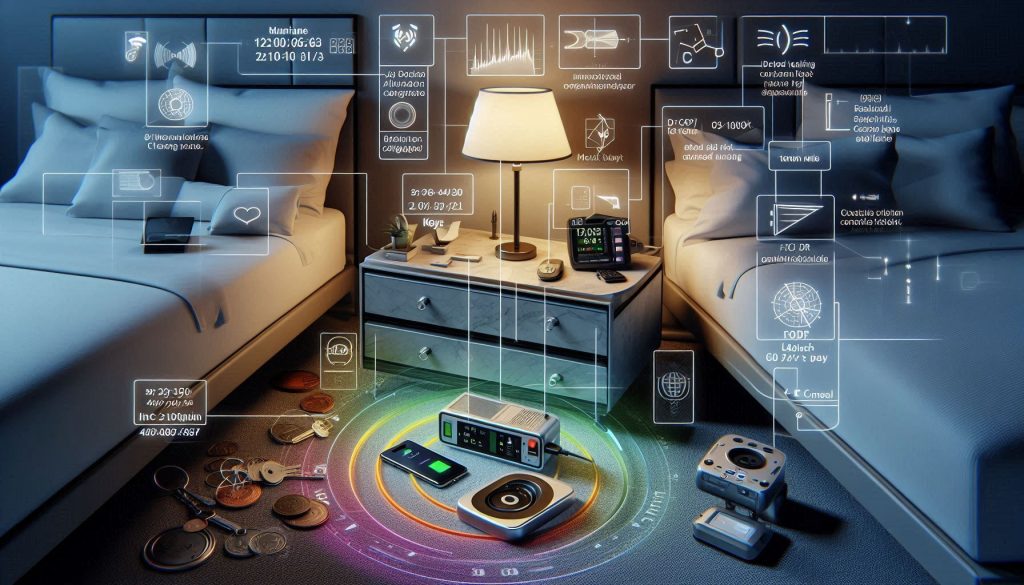
You must treat FOD and heat as primary safety risks. Require vendor FOD test reports showing reliable detection of thin metal (0.1–0.5 mm) and common items (keys, coins) across expected pad alignments. Insist on published thermal derating curves and maximum surface temperatures — many vendors limit pad surface temps to 45°C–60°C under continuous load. During design, place pads so a failed FOD event cannot overheat nearby finishes or stored materials.
Electromagnetic emissions and medical-device safety
Qi2 increases allowable power and coupling; control emissions to avoid interference with pacemakers or medical devices. Ask for:
Practical tip: when a resident with an implanted device moved a high-power pad into a bedside table, a site-level check using a spectrum analyzer (e.g., Narda SRM series) identified a narrowband emission that vendor firmware later mitigated.
Shielding and interference mitigation
Use non-ferrous construction where possible; if shielding is needed, employ thin aluminum or copper shields per vendor guidance — avoid ferrous plates that detune coils. For sensitive areas (home theaters, medical rooms), specify mu-metal or engineered ferrite shields and maintain manufacturer minimum separation distances. Label pads where medical-device users may be present, and provide a wired charging alternative.
Certifications and required documentation
Before purchase, obtain:
Pre-installation and post-installation procedures
Pre-installation: perform a site survey (materials, nearby electronics, occupant medical-device inventory), map coil placement, and identify potential high-risk zones.
Post-installation: run EM emissions scans, IR thermal imaging under worst-case loads, FOD challenge tests, and interoperability checks with a device matrix; produce a commissioning report and safety labels.
These steps protect occupants and equipment and set the stage for procurement decisions and lifecycle procedures discussed next.
Vendor Selection, Procurement and Lifecycle Management
You’ll follow a disciplined, vendor-neutral process to protect value and minimize operational risk. Below are pragmatic criteria, negotiation levers, evaluation tools, and a maintenance rhythm you can apply immediately.
Procurement criteria and negotiation points
Negotiation tip: tie a portion of payment to successful commissioning and a 6‑month operational acceptance window; require spare-unit pools or consignment for the first year.
Quick vendor-evaluation template
| Vendor / Model | Qi2 cert. | Max W | Firmware Policy | Warranty | MTTR target |
|---|---|---|---|---|---|
| ExampleCo Pad X | Yes | 15W | Signed, 5 yrs | 3 yr on-site | 48 hrs |
| AnotherBrand Pad Pro | Pending | 30W | Cloud updates, 3 yrs | 2 yr depot | 72 hrs |
Use this template to compare responses to RFPs and record vendor test artifacts (FOD reports, thermal curves, EMC traces).
Maintenance & lifecycle plan
KPIs to track (monthly / quarterly)
These concrete procurement requirements and an actionable maintenance cadence will keep your Qi2 ecosystem performing — next, you’ll convert these inputs into budgets and operational models in the business-case section.
Business Case and Operational Modeling for Luxury Residences
You’ll now build a clear, defensible business case for premium Qi2 so stakeholders can see costs, ongoing commitments, and measurable benefits.
Quick financial framework
Sample usage & energy model (practical example)
Assume ExampleCo Pad X (15W rated, ~10W delivered average) and 3 active devices per residence:
Adjust numbers for heavy users or larger tablets; even doubling usage keeps energy trivial. Wireless inefficiency margin: add 20–30% to account for transmitter losses.
Example CAPEX/OPEX snapshot (per unit, illustrative)
Sensitivity analyses to run
Presenting ROI and payback
With these models and a pilot plan, you’ll be ready to present a concise, data-driven case to owners and move into the implementation planning covered in the Conclusion.
Next Steps: Implementing Premium Qi2 Charging with Confidence
You should now be positioned to assess whether premium Qi2 wireless charging fits your residence or project. Start by defining user requirements (device mix, power levels, placement), demand profiles, and aesthetic priorities. Require vendor test data for Qi2 interoperability, misalignment performance, thermal behavior, and EMI measurements. Engage certified installers and electrical engineers to validate site-ready plans and wiring infrastructure.
Contractually incorporate safety, EMI, and lifecycle clauses, plus maintenance and remote-monitoring requirements. With these steps you will minimize risk, satisfy liability and warranty obligations, and deliver a charging experience aligned with luxury expectations.