

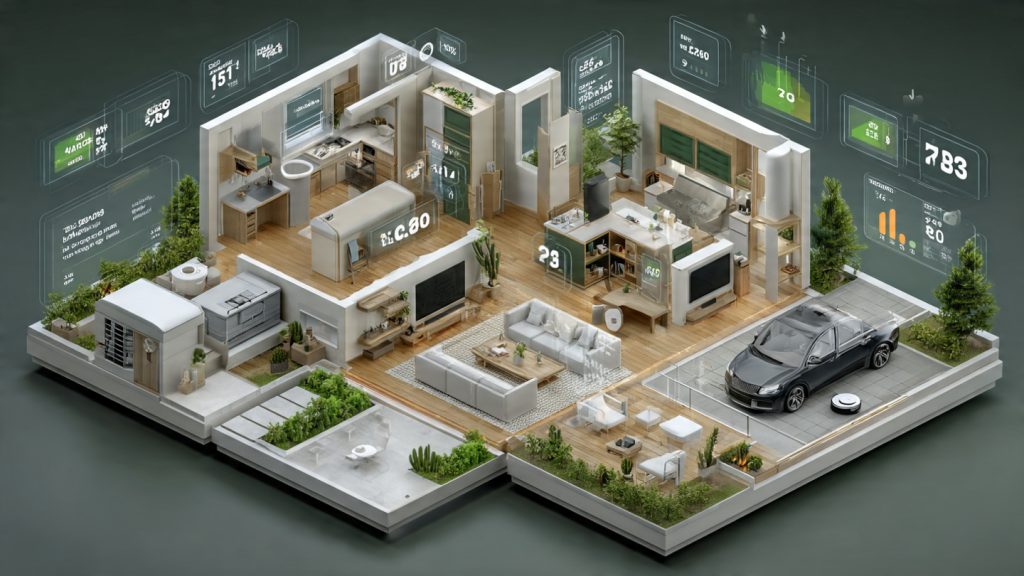
The days of manually scheduling your thermostat or yelling commands at a smart speaker are officially over. In 2026, we are moving beyond basic automation and entering the era of Agentic Living. Unlike traditional smart homes that wait for your input, agentic systems use proactive reasoning to handle everything from optimizing your energy grid to restocking your kitchen before you even realize you’re low on supplies. This evolution represents a fundamental shift from “connected” to “autonomous living,” where AI agents function as invisible digital stewards, managing the complexities of a modern household with minimal human intervention.
You are entering a new era where your home doesn’t just follow instructions—it makes choices. By leveraging advanced AI agents and machine learning, these systems analyze real-time data from environmental sensors and personal habits to optimize comfort, energy efficiency, and security routines. While this transition offers unprecedented convenience and significant financial savings on utility bills, it also introduces new considerations regarding data privacy and digital autonomy. This guide explores the core technologies enabling these decision-making systems and provides practical steps on how to retain meaningful control over your home while embracing the power of proactive, agentic technology.
Why Your Home Will Start Making Choices for You
You are entering a new era of agentic living, where systems in your home do more than follow commands — they make choices for you. These autonomous agents optimize comfort, energy, and routines using sensors, models, and continuous data. The result: more convenience and efficiency, but also new risks and ethical trade-offs that affect privacy, autonomy, and safety.
This article maps what agentic homes mean for your daily life and finances, explains the core technologies that enable decision-making, examines where your data goes, and explores governance, control, and fail-safes you can demand. Read on to learn how decisions shift from you to systems, what to watch for, and practical steps to retain meaningful control over your home today, safely, proactively.
What Agentic Living Means for Your Home
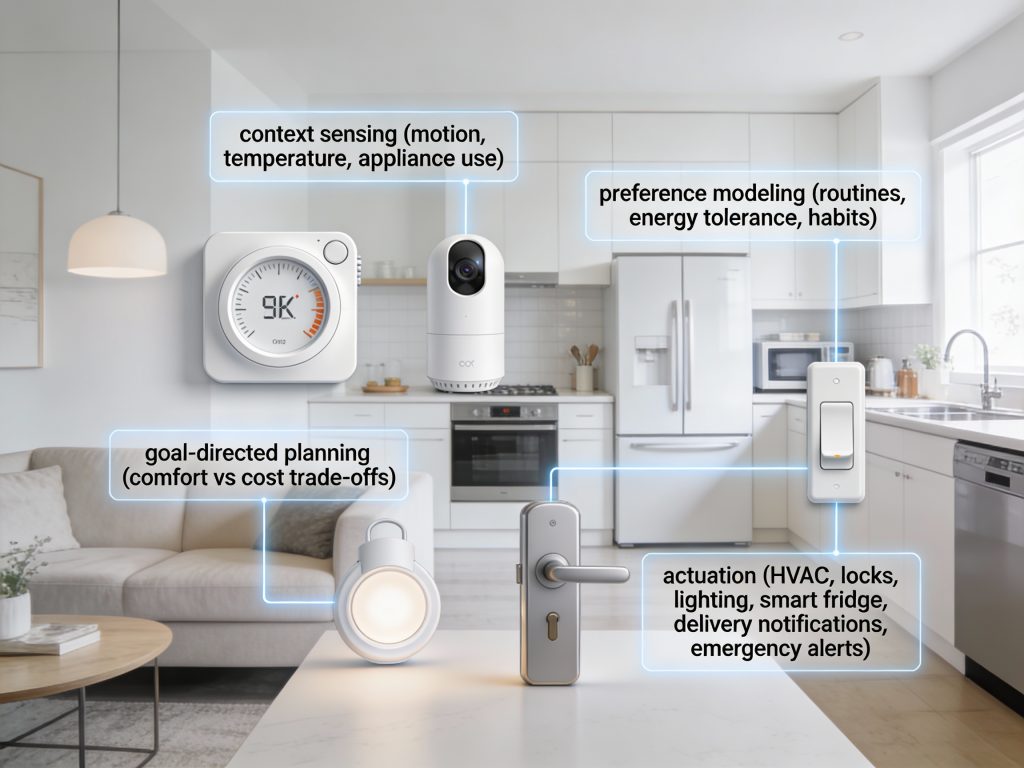
Agentic systems vs. automated devices
You already know automated devices: a smart light that turns on when you press a button. Agentic systems go further. They perceive (sensors), predict (models), decide (planning), and act (controls) without moment‑to‑moment commands from you. Think of a thermostat that learns not just your schedule but anticipates a cold front and preheats only the rooms you’re likely to use.
Core capabilities (concrete)
Typical tasks you’ll delegate
Potential benefits — what to expect
Quick how‑to start (practical)
The Core Technologies That Enable Autonomous Homes
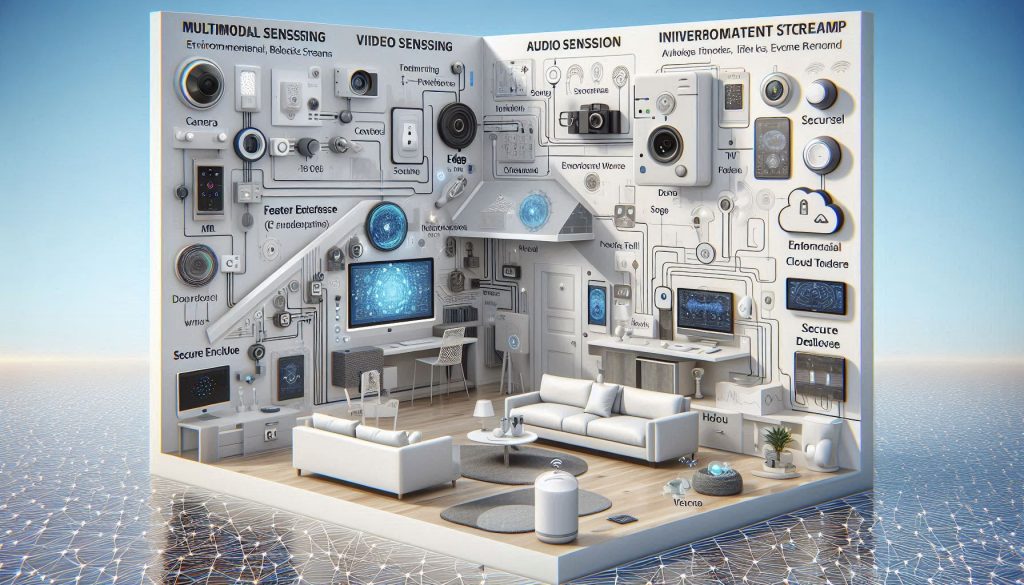
Multimodal sensing: the raw inputs
Your home’s “sense” layer combines audio, video, environmental (temperature, CO2, humidity), motion, and biometric streams (wearables like Apple Watch, Oura, Withings). Each sensor type has different bandwidth, privacy risk, and failure modes—cameras give rich context but high privacy cost; a motion sensor is cheap and low‑risk. Real homes mix these streams to reduce false alarms and preserve privacy.
The ML stack: from pixels to plans
Data moves through a pipeline: ingestion → preprocessing → feature extraction → model inference → decision/action. Lightweight models (TensorFlow Lite, ONNX Runtime) run on devices; larger models train in the cloud (PyTorch, TensorFlow). Continuous learning matters: if your system never retrains, it drifts—missed patterns, stale recommendations. Techniques like federated learning or periodic server-side retraining keep behavior aligned with you without exporting raw data.
Edge vs. cloud: performance and privacy trade-offs
On‑device inference (Apple Neural Engine, Google Edge TPU, NVIDIA Jetson) gives low latency and better privacy—critical for door locks, fall detection, voice wake words. Cloud inference enables heavier personalization and cross‑household improvements (recommendation models) but adds latency and exposure of metadata. Design rule of thumb:
Reliability, metrics, and trade-offs
Measure model behavior with accuracy, precision/recall (false alarms vs. misses), latency (ms), and system uptime/MTBF. For example, a fall detector must prioritize recall (catch every fall) even if precision drops; a kitchen appliance scheduler prioritizes lower latency tolerance but can tolerate occasional false positives.
Identity, authentication, and interoperability
Secure identity anchors (TPM, Secure Enclave), mutual TLS, and OAuth2 protect device identities. Choose ecosystems that support industry standards—Matter, HomeKit Secure Video, Zigbee/Z‑Wave bridges—to avoid vendor lock‑in and enable graceful fallback when one cloud goes down.
Practical tips you can apply now
These technologies together determine not only what your home can do, but how reliably and privately it will act on your behalf.
Daily Life: How Decisions Shift from You to Systems
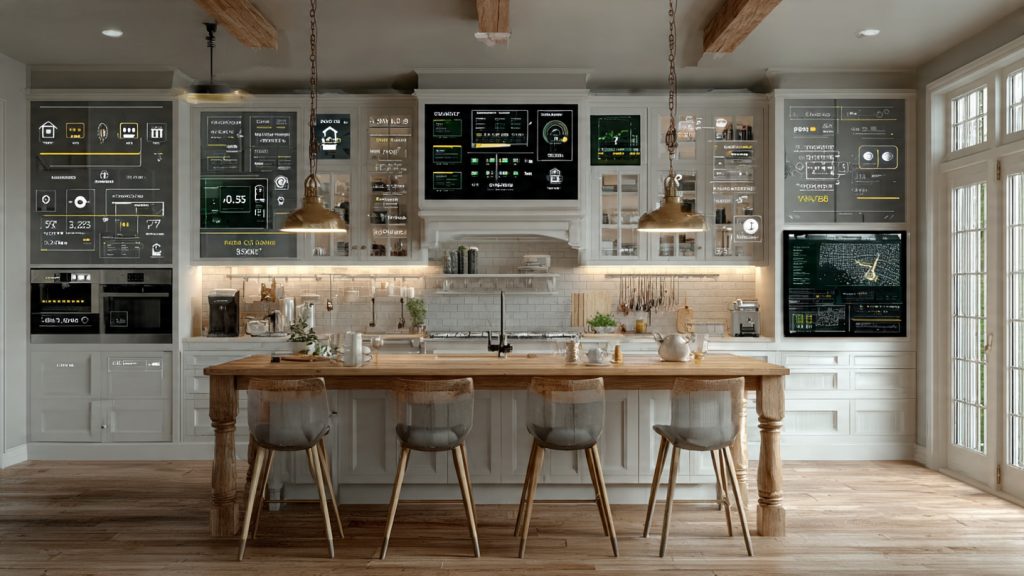
Mornings: wake, climate, and nutrition
Data → inference → decision → action: sleep stage (wearable) + calendar + indoor temp → infer optimal wake time and comfort needs → nudge alarm, preheat bedroom, start coffee machine, suggest breakfast from fridge inventory.Autonomy: your home may decide wake time within a window, set thermostat to your preferred temp, and auto‑brew.Your control: quick dismiss, “snooze” or manual temp override; set hard constraints (no wake earlier than X).Failure modes: misread sleep stages (wearable accuracy ~70–85% vs lab tests) can wake you too early; failed device starts. Typical time saved: 10–20 minutes/day.
Energy management: load balancing and demand response
Data → inference → decision → action: real‑time meter + weather + appliance schedule → optimize load, shift EV charging, send/accept DR signals → reduce peak use.Autonomy: stagger appliances, pre‑cool/pre‑heat, bid into utility DR programs (Tesla Powerwall, Sense, Enphase).Your control: blackout lists for critical loads, opt‑out of specific DR events.Failure modes: shed essential load (hot water off), incorrect price signals. Typical savings: 10–30% on peak costs; thresholds tuned higher reduce false positives but miss savings.
Security incidents: intrusion detection and automated responses
Data → inference → decision → action: cameras, door sensors, audio → classify event → lock doors, flash lights, notify you or emergency services (Ring, Arlo, Nest Cam).Autonomy: immediate lock/alert and phone push; can escalate to local alarms or 911.Your control: require confirmation before contacting authorities; choose sensitivity.Failure modes: false positives from animals (~increasing with high sensitivity) or missed intrusions with occluded cameras. Modern person‑detection models trade precision for recall—you’ll get fewer misses at cost of more alerts.
Health and eldercare: monitoring and interventions
Data → inference → decision → action: wearables, bed sensors, pill dispensers → detect falls, irregular vitals, missed meds → call caregiver, auto‑dispense meds, trigger local aid (Apple Watch, Lively, MedMinder).Autonomy: immediate interventions for high‑risk events.Your control: designate contacts, set escalation rules, disable auto‑dispatch.Failure modes: high false alarm rates (20–40% in some fall systems); missing subtle declines if sensors aren’t worn. Benefit: reduces routine checks, saving caregivers hours/week.
Household logistics: shopping, maintenance, scheduling
Data → inference → decision → action: pantry sensors + usage patterns + calendar → auto‑reorder, schedule Roomba/iRobot, book repairs, sync family calendars (Amazon Subscribe, iRobot Roomba i7).Autonomy: routine purchases and bookings.Your control: approval thresholds for purchases, weekly digest.Failure modes: duplicate orders, mis‑identified low‑stock items. Tip: set spend limits and require approval for >$X.
These everyday pipelines make trade‑offs between convenience and control; next you’ll see how privacy, security, and trust shape which choices your home should be allowed to make.
Privacy, Security, and Trust: Where Your Data Goes
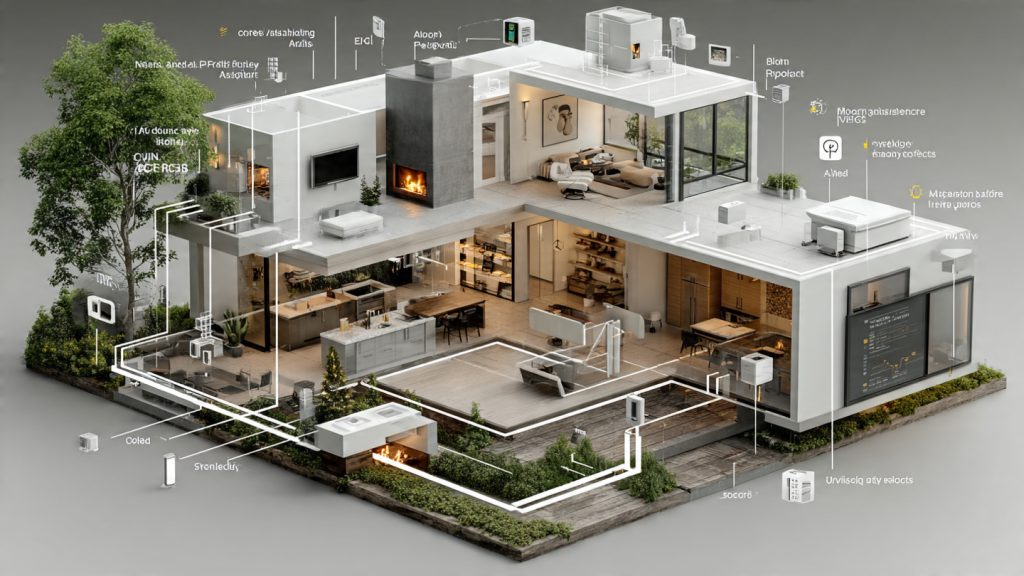
Data flows and risk points
Your home creates a steady stream: sensors → local processing → cloud services → third parties (utilities, insurers, service providers). A typical chain: door sensor/Camera → hub or edge device (HomePod/Hub) → vendor cloud (Ring/Nest/AWS) → analytics partners or emergency services.
Key risk points:
A real example: camera footage cached in cloud services has led to unauthorized access and questionable sharing in past Ring/Nest incidents — a cautionary tale about cloud risk.
Technical mitigations — what they do and where they fall short
Trust mechanisms you should demand
Quick how-to: ask vendors for architecture diagrams, enclave/edge support, audit certificates, and a sample access log. Insist on granular consent and a kill‑switch that forces full local operation.
These technical and governance choices shape more than privacy — they influence what agentic homes cost, who benefits, and how household power shifts in the economy.
Economic and Social Impacts on Households
Direct financial effects: costs, savings, and business models
Agentic devices change how you pay. Up‑front hardware (Nest Learning Thermostat, ecobee SmartThermostat, iRobot Roomba i7) plus ongoing subscriptions (cloud storage, advanced features — typically $3–15/month) replace the one‑time purchase model. Realistic arithmetic helps: a smart thermostat (~$200–$300) can cut HVAC use roughly 8–15% on average; with a $1,200 annual heating/cooling bill, that’s $100–180 saved yearly. Subscriptions and occasional maintenance (battery, filter, brushes) reduce net savings — factor them in.
Quick cost‑benefit checklist you can run:
Example scenario: $250 thermostat + $60/yr subscription, $150/yr energy savings → ~6–7 year simple payback, faster with utility rebates.
Labor shifts: who works and what they do
You’ll outsource repetitive chores (robot vacuums, dishwashers scheduled to run off‑peak) but create demand for new tasks: firmware updates, sensor cleaning, troubleshooting, and occasional professional diagnostics. That can shift paid labor from housecleaners to tech support and local installers. If you value your time at $15–25/hour, a Roomba that saves 1–2 hours weekly can justify its cost quickly; but expect recurring consumable expenses (filters, brushes) and software maintenance.
Distributional concerns and behavioral effects
Benefits concentrate where you can afford devices, own property, and have reliable broadband. Renters, low‑income households, and digitally excluded older adults risk being left behind. Behavioral effects complicate this: dependency and skill erosion (you stop learning to balance thermostats or fix basic clogs), and rebound behavior — comfort increases that offset energy gains.
Practical equity tips:
Policy and adoption trade-offs
When you assess adoption, weigh quantified savings against hidden costs (subscriptions, data risks, repair skill needs). Choosing interoperable, local‑first systems and checking for rebates can shift the balance in your favor — and these design choices are the bridge to governance and fail‑safe mechanisms discussed next.
Designing for Control: Governance, Choices, and Fail-safes
Give yourself adjustable autonomy
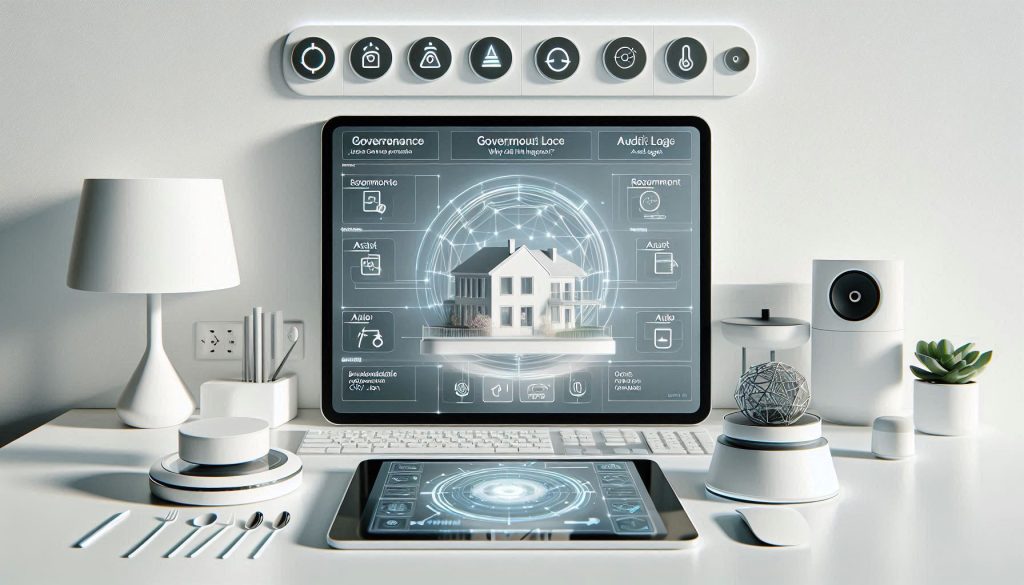
You should be able to choose how much decision-making your home does. Look for systems with explicit autonomy levels (Off / Assist / Recommend / Auto). Practical choices:
Make systems explainable and auditable
Demand clear, exportable audit trails and plain‑language explanations for actions (why the thermostat lowered at 2 a.m.). Useful features:
Consent, defaults, and privacy-preserving settings
Default to the safest option. Expect:
Safety fail-safes and recoverability
For safety‑critical actions (gas stove shutoffs, door locks, fire response) require technical and physical fallbacks:
Regulatory and industry mechanisms that help
Reference standards and rules when negotiating:
Actionable checklist to negotiate with providers
Combine these technical requirements with contractual terms and everyday habits (periodic log reviews, test drills) so you can oversee and recover control when things go wrong — then move on to reclaiming choice in your home in the final section.
Taking Back Choice in an Agentic Home
Agentic homes trade convenience and efficiency for trade-offs in privacy, safety, and autonomy; you must weigh time saved against who controls decisions and data. Evaluate systems by checking data flows, control interfaces, failure modes, and vendor policies before installation. Set boundaries: limit sensors, require explicit consent for new actions, keep manual overrides accessible, and compartmentalize accounts and networks. Demand safeguards such as transparent logs, auditable decision trails, revokeable permissions, and independent third‑party security and privacy audits.
You remain the ultimate decision‑maker when you define policies, use opt‑in defaults, and insist on clear recourse for errors. Take a moment now to assess your priorities, run through the checklist in this article, and delay adoption until systems meet your minimum standards. That simple discipline preserves your autonomy while letting useful automation improve daily life. Apply the checklist, insist on rights, and choose systems that serve you—not the reverse. Start today: prioritize control, safety, and transparency.